
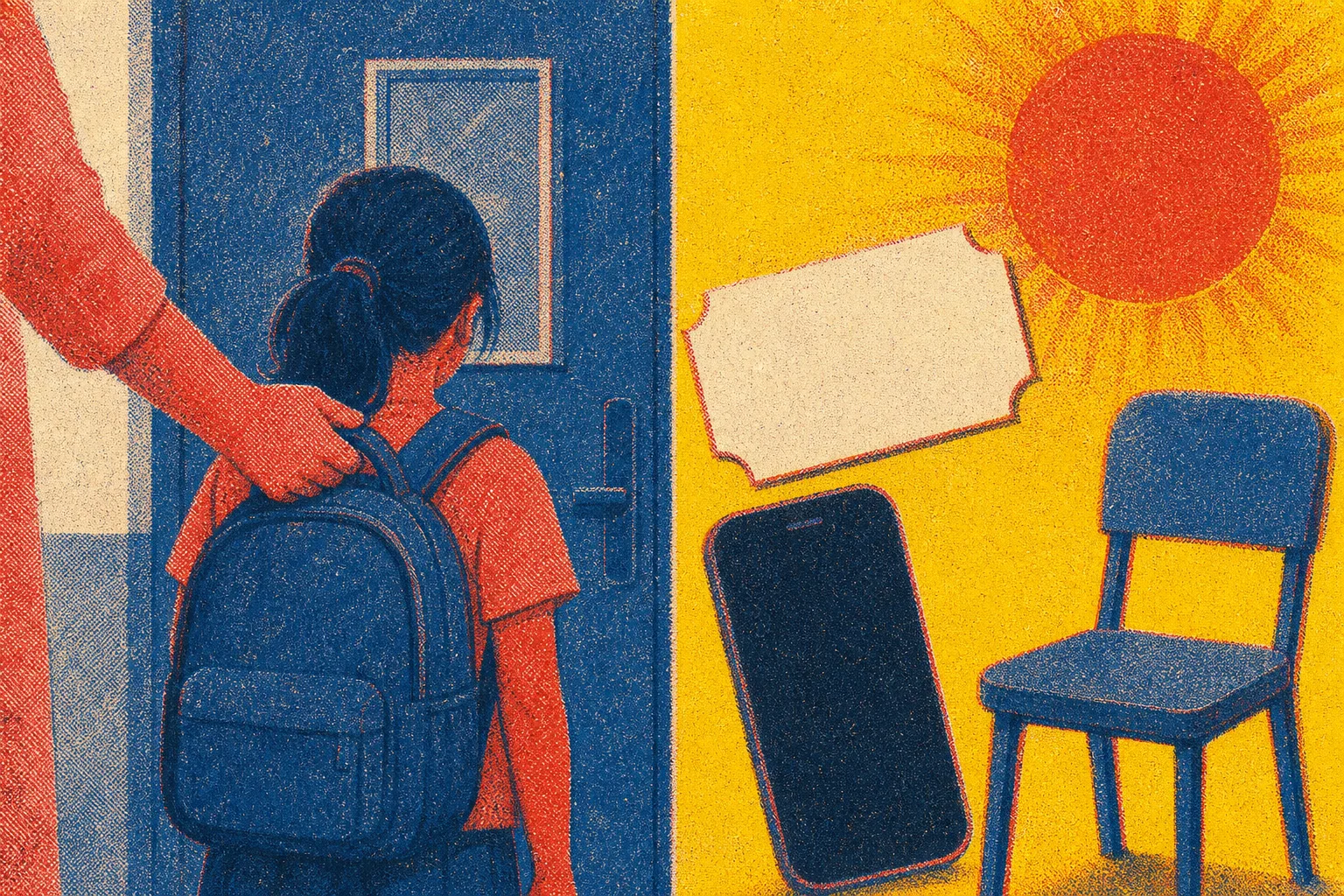
The start of school is bringing parents a familiar problem in a sharper form: decisions made far from the classroom are landing as family logistics.
A heat plan is only as useful to parents as the notice that comes with it.
In Texas, a new private school voucher program is sorting tens of thousands of families into awards and waitlists. In Philadelphia, heat can still send students in some buildings home to learn remotely. In New Mexico, a judge has ordered Meta to fund remedies for alleged youth harms. In New York City, a federal grant cancellation has disrupted sexual health and youth development programs that worked in schools and community settings.
Texas vouchers are popular before the final numbers are in
More than 85,000 families are participating in Texas’ first-year private school voucher program, and more than 121,000 students are on a waitlist, The 74 reported. The state invested $1 billion in the program, which provides education savings accounts for private school or home-school expenses.
The early report from the comptroller’s office shows that white families make up the largest share of participants so far, and low-income families also make up a large share, The 74 reported. Children with disabilities make up roughly 24% of participating students, while pre-K families make up 11%, the largest share of any grade level.
The money varies by student. Families using the program for private school are set to get about $10,500 a year, while home-school expenses are capped at $2,000 and students with disabilities can qualify for as much as $30,000, The 74 reported. The full $30,000 amount went to fewer than 30 students with disabilities.
The open question for parents is not only whether a voucher is available. It is whether the award matches the actual cost and support a child needs. If your child has a disability, ask what services the private option will provide, what it will not provide, and what happens if the award is less than the full cost.
Heat plans can change the school day with little warning
Around 50 Philadelphia schools, nearly one quarter of district schools, still will not have what the district considers adequate cooling when the school year begins later this month, The 74 reported. The number has fallen from 118 to 52 over the last four years.
Philadelphia’s district has an extreme heat plan for buildings without adequate cooling: if the forecast shows outdoor temperatures hitting at least 85 degrees before 9 a.m., students in those schools shift to remote learning, The 74 reported. Near the close of the last school year, that rule was used twice and affected roughly 50 schools without adequate air conditioning.
That matters because remote learning is not just a building decision. It becomes a family plan. If your child’s school lacks adequate cooling, ask now how the school will notify families, what work students are expected to complete remotely, and what happens for students who cannot easily learn from home.
A heat plan is only as useful to parents as the notice that comes with it.
New Mexico’s Meta ruling puts youth online harm in court
A New Mexico judge ordered Meta to pay $567 million into an abatement fund to address harms the state says the company has done to youth, The 74 reported. The case centered on state justice officials’ claim that Meta’s Facebook, Instagram and WhatsApp platforms created a public nuisance affecting teen health in New Mexico.
The ruling followed a Santa Fe jury’s March 24 verdict that found Meta broke New Mexico’s Unfair Practices Act and deceived the public about dangers its platforms posed to underage users, including mental health risks and sexual exploitation, The 74 reported. Meta said it disagrees with the ruling and intends to appeal.
For parents, the practical takeaway is not that a court order will manage a child’s phone. It will not. The useful question is whether your school has a clear plan for how adults respond if you are worried about online behavior affecting school life.
A federal grant cut disrupted school-based health programming
On June 26, the Trump administration ended Teen Pregnancy Prevention Program grants across the country immediately, The 74 reported. Children’s Aid lost $936,700 a year with two years remaining on its grant.
Children’s Aid had used the grant to run sexual health and youth development work in New York City schools, foster care settings and community organizations, The 74 reported. The organization served approximately 1,200 young people annually through that work.
Across New York City, three grantee organizations lost $4.3 million a year, and programs serving more than 19,000 young people were disrupted, The 74 reported. Nonprofits and local governments have sued over the grant cancellations and the administration’s changes to the program’s evidence-based framework.
If your child’s school relies on outside partners for health education or counseling-adjacent programming, ask whether any services have changed. The program name may not appear on a class schedule, but the loss can still show up in who is available to answer students’ questions.
Parents do not need to become policy experts to ask better school questions. Start with the part that touches your child: the award amount, the heat notice, the phone response, the missing program. Then ask who owns the next step.