
Free activities › Middle school
A Second Storm Nears Hawaii After Flooding
Tropical Storm Moke is expected to bring more rain and wind to the Big Island, where many people are still recovering from Hurricane Lala.
Print it
The student packet has no answers in it. The teacher copy is the same pages plus a note on each question and the answer keys.
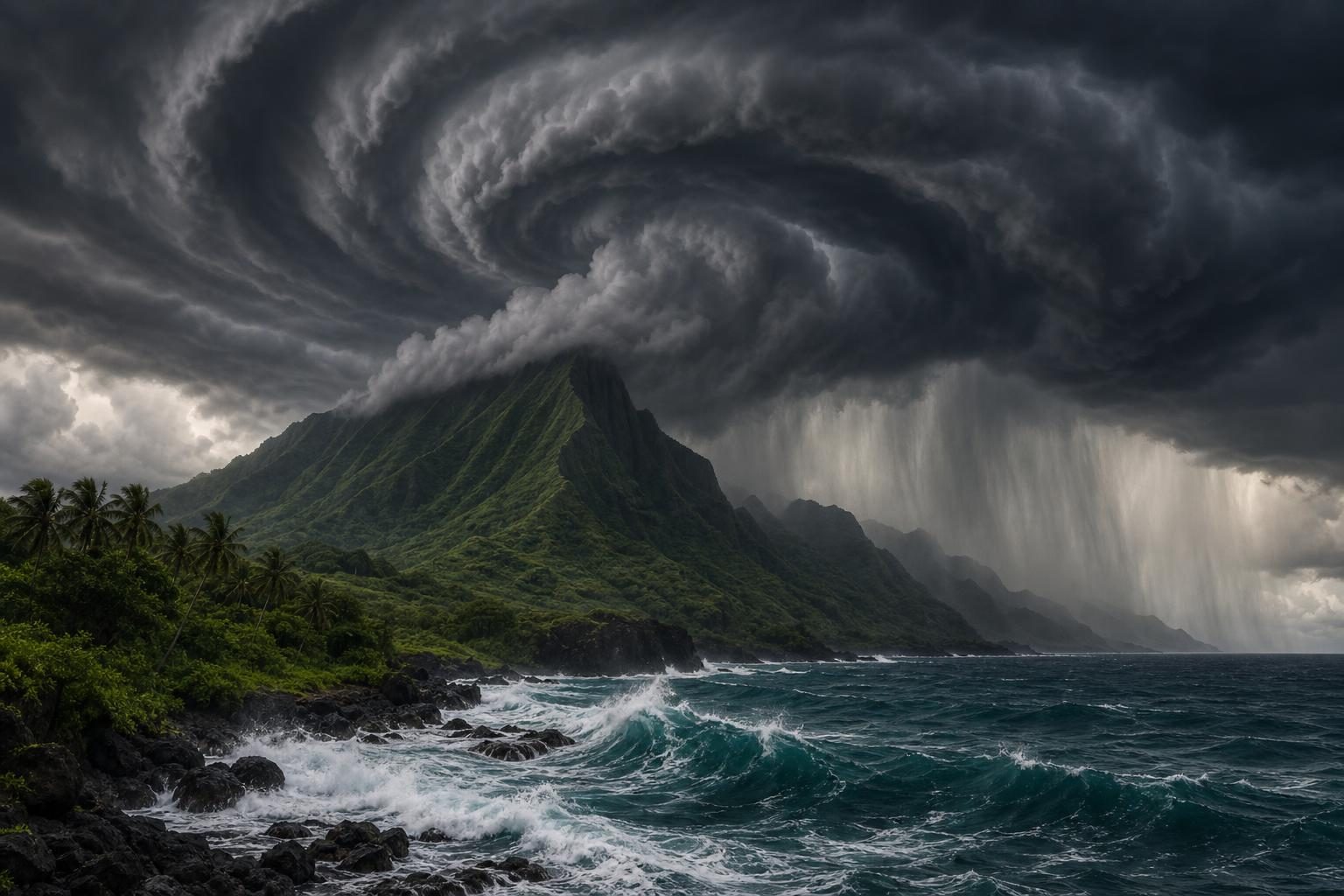
Tropical Storm Moke moved toward Hawaii on Saturday, bringing the threat of more heavy rain and strong wind to the Big Island, according to reporting from the Associated Press published by PBS NewsHour. A tropical storm is a rotating storm system with strong winds, but weaker winds than a hurricane. Moke formed Friday in the Pacific Ocean and was southeast of Hilo, a city on the Big Island, early Saturday morning.
At 5 a.m. in Hawaii, Moke was about 470 miles southeast of Hilo and was moving west-northwest at 12 miles per hour. Its maximum sustained winds, meaning winds that hold steady for a short measured time rather than a single gust, were about 50 miles per hour, the National Hurricane Center said. The National Hurricane Center is the U.S. agency that tracks tropical storms and hurricanes.
The Big Island is expected to feel the strongest effects as Moke passes south of a direct hit late Saturday into early Sunday. That matters because the island is still dealing with damage from Hurricane Lala. Lala knocked down trees, damaged roads and bridges, swept buildings off their foundations, and left roads covered with mud and rocks. About 9,000 customers on the Big Island were still without power Saturday.
Forecasters expected 5 to 10 inches of rain on the southeast and windward sides of the Big Island, with up to 15 inches in some isolated places. Windward means the side of an island that faces the wind, so it often gets more rain when moist air is pushed uphill. The rest of Hawaii was expected to get less rain, though parts of east Maui could receive up to 4 inches.
Rain is not just a number in a forecast. When the ground is saturated, or already full of water, new rain has fewer places to go. That can lead to flooding, especially in low places, and mudslides, which happen when wet soil and rocks slide downhill. The storm could also cause dangerous rip currents, which are fast channels of water that pull away from shore and can surprise swimmers.
There were no coastal watches or warnings in effect early Saturday morning. A watch or warning is an official alert that tells people a hazard may happen or is happening soon. Even without one, officials urged people to follow the storm’s progress. Hawaii Gov. Josh Green and other state officials told people to prepare by restocking food, medicine, and other essentials.
For someone in middle school, this story connects to earth science and geography in a direct way. Storms follow paths shaped by wind, warm ocean water, and land. Islands can have very different weather on different sides because mountains force air upward, which can cool the air and make rain fall. A forecast also shows how science is used when people need to make decisions before all the facts are certain.
Moke was expected to be less damaging than Lala, but that does not mean it is harmless. A smaller storm can still cause trouble when it hits a place that has already been weakened. Roads, power lines, hillsides, and homes may not be ready for another round of rain. That is why emergency planning often depends not only on how strong a storm is, but also on what happened before it arrived.
The situation in Hawaii is also a reminder that weather news is local. A storm may be far from one island and still affect another. One side of an island may flood while another gets much less rain. Reading a forecast carefully means asking where the storm is, where it is going, how fast it is moving, and what conditions already exist on the ground.
Written from reporting by PBS NewsHour, “Tropical Storm Moke advances toward Hawaii as winds strengthen”.
Discussion questions
- When officials warn people about a storm that may be less severe than the last one, how should they balance avoiding panic with making sure people prepare?
- What information would help a family or school on the Big Island decide whether normal plans should continue during Moke?