
A Medicine Boom Is Testing Africa’s Donkey Trade
China’s demand for donkey-hide gelatin supports a market, but it can also strip rural families of animals they depend on.
Print it — all four files
The student packet has no answers in it. The teacher copy is the same pages plus a note on each question and the answer keys. Both languages carry the same story, the same picture and the same vocabulary.
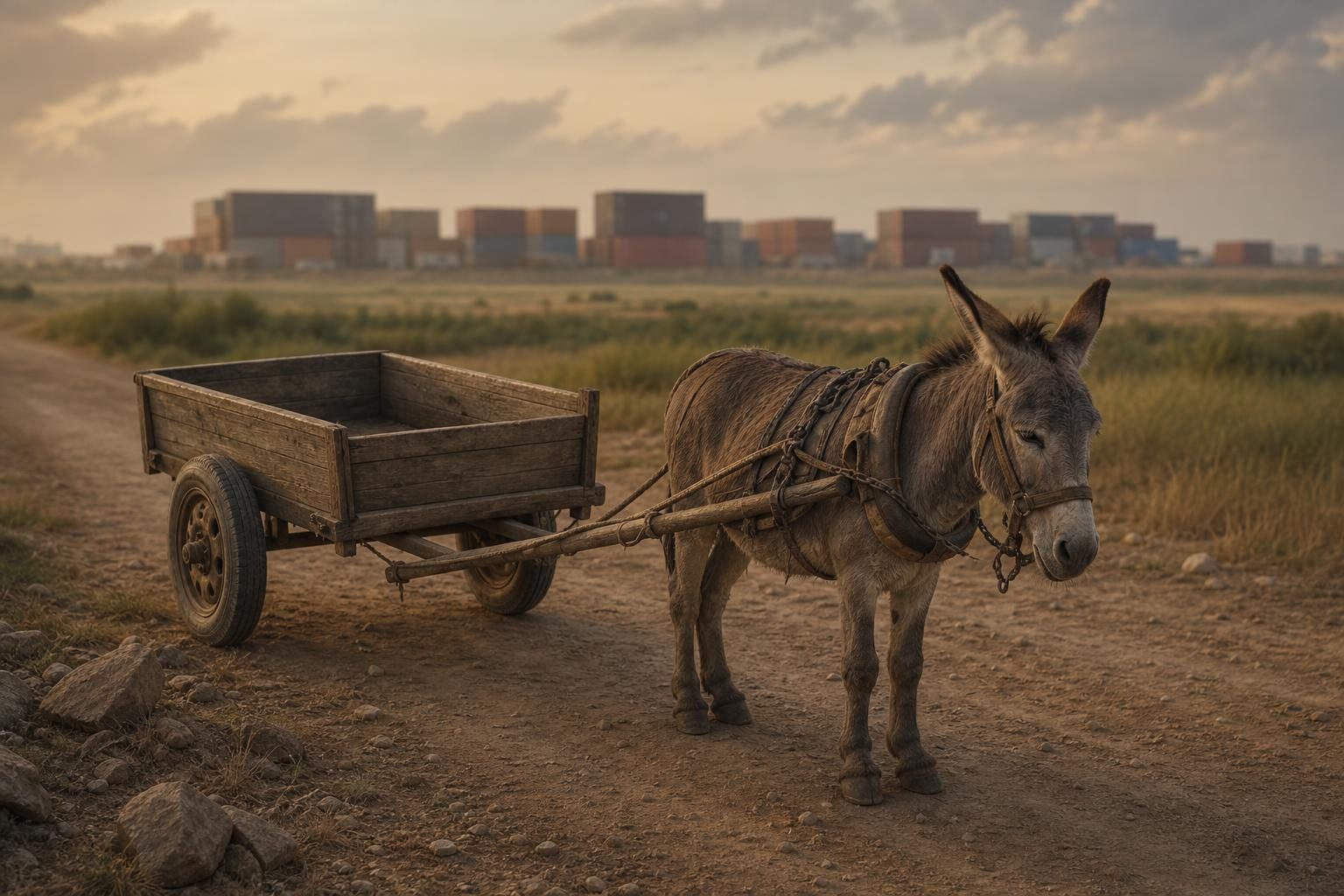
Demand from China for donkey hides has grown sharply over the past 15 years, helping create a trade that reaches deep into rural Africa and has become difficult for governments to control. According to Phys.org’s report on economist Lauren Johnston’s new book, China, Africa and the Market for Donkeys, the boom is driven mainly by ejiao, a traditional Chinese medicine made from gelatin boiled from donkey hides.
Ejiao, pronounced “e-jyow,” has a long history in China as a blood tonic, meaning a medicine or supplement believed to strengthen the blood and improve health. It has been used for fatigue, dizziness, dry cough, irregular bleeding, and women’s wellness. For much of its history, Johnston says, it was handmade and used by a small elite. In recent decades, however, production has become industrial, and ejiao has been turned into many kinds of products, including cakes, drinks, cosmetics, and other wellness goods.
That change matters because donkeys are not just another farm animal in many African communities. They are working animals used for transport, hauling water, moving goods, and helping people reach markets or services. In places where families have few machines or vehicles, a donkey can be part of a household’s economic mobility, which means its ability to earn income or get access to work, school, or trade.
The trade creates a hard conflict. On one side is demand from consumers and companies selling a product with cultural importance and commercial value. Johnston notes that ejiao is sold in pharmacies at accessible prices, but also at premium prices. One donkey hide can fetch more than $400 in China. On the other side are rural families who may lose an animal they rely on, either because prices rise beyond what they can afford or because donkeys are stolen for the hide trade.
The Donkey Sanctuary, a U.K.-based donkey-welfare organization, estimates that China imports more than 3 million donkey hides each year and that 25% to 35% come from stolen animals. The article also says current demand for ejiao requires 4 million to 5 million hides a year, more than China’s own donkey population can supply. Africa holds about two-thirds of the world’s donkeys, so it has become a major target for both legal and illegal supply chains.
The biology of donkeys makes the problem harder. Donkeys breed slowly, so herds cannot quickly recover when many animals are removed. Johnston describes a compounding extinction risk, meaning the pressure can build on itself: high demand raises prices, high prices encourage more selling and theft, and slow reproduction makes replacement difficult. Even when some owners sell willingly, the loss may weaken the family’s ability to work or travel later.
African governments have tried to respond. A 2022 Pan-African Donkey Conference led to the Dar es Salaam Declaration, which called for a 15-year continent-wide pause, or moratorium, on slaughtering donkeys for their hides. In February 2024, the African Union summit backed that call. The article describes this as important for protecting biodiversity and rural poor communities, especially women, who often depend on donkeys for daily household and market tasks.
But a moratorium is not the same as enforcement. Each country must change its own laws, and those laws have to be applied consistently. Borders can be remote or porous, meaning animals and hides can cross with limited inspection. Regulations also differ from country to country. Johnston points to Tanzania’s difficulties, including smuggling across the Kenyan border, problems controlling slaughter numbers and standards, and the failure to build enough breeding programs.
This is where the policy trade-off becomes sharp. A ban can protect animals and communities if it actually stops the trade. But if demand remains high, a ban may also make the trade more secretive and dangerous. The article notes that when South Africa limited the trade, some supply moved through Lesotho, where slaughterhouse standards were lower. In that case, stricter rules in one place may have shifted the burden to another place rather than ending it.
There is also a health and science question. Johnston is careful to say she is an economist, not a nutritional scientist. The article says some pharmacological research has identified potentially beneficial properties in ejiao, but whether those benefits are clinically established remains contested. Clinically established means proven through medical evidence strong enough to guide treatment. The article also raises the question of whether similar benefits could come from other, more sustainable sources of collagen, a protein found in skin, bones, and connective tissue.
The donkey-hide trade is not only about animals or medicine. It is about how a consumer trend in one part of the world can change prices, laws, and daily life in another. It also shows why “just ban it” and “just let the market work” can both be incomplete answers. If governments ignore the trade, rural families may lose animals they need. If governments ban it without coordination and enforcement, smugglers may profit while communities and animals still pay the cost.
Written from reporting by Phys.org, “China imports millions of donkey hides from Africa every year: New book traces the drivers and impact”.
Discussion questions
- If a product has cultural importance and strong consumer demand but harms vulnerable communities abroad, who should carry the main responsibility for fixing the problem: consumers, companies, importing countries, or exporting countries?
- Is a continent-wide moratorium on donkey-hide slaughter more likely to protect rural communities or to push the trade underground, and what conditions would change your answer?
- How should policymakers treat a traditional medicine when its health benefits are debated but its supply chain has clear social and environmental costs?