
Israel Faces Election Fight After Netanyahu Bloc Falls Short
Final results show no easy majority, while unproven fraud claims raise questions about trust, evidence and Arab citizens’ political role.
Print it — all four files
The student packet has no answers in it. The teacher copy is the same pages plus a note on each question and the answer keys. Both languages carry the same story, the same picture and the same vocabulary.
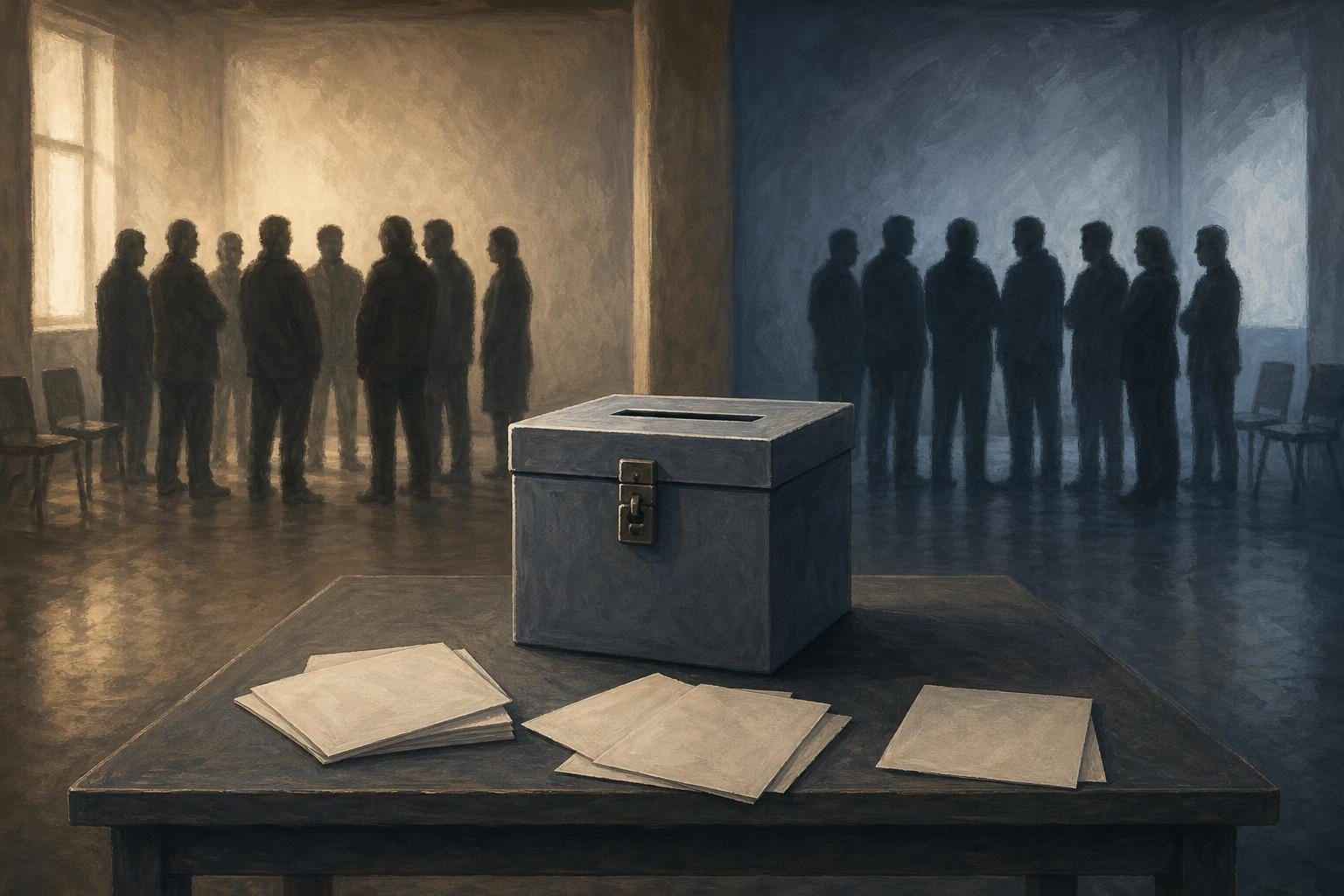
Israeli Prime Minister Benjamin Netanyahu’s party claimed the country’s election had been stolen after final results showed his political bloc losing its majority in parliament, according to Associated Press reporting published by PBS NewsHour. The official count is complete, though the results still must be certified and sent to Israel’s president next Wednesday.
The results leave Israel in a tense place: Netanyahu remains prime minister for now, but his path to staying in power has narrowed. His bloc won 53 seats in the Knesset, Israel’s 120-seat parliament. A governing majority requires 61 seats. His main opposition won 48 seats, while Arab-led parties won 19. That means Netanyahu’s opponents could potentially form a government if they join with Arab-led parties, a rare alliance that would be politically difficult but mathematically possible.
The fight is not only over who has the votes. It is also over whether the public accepts the election as legitimate. Netanyahu’s Likud party spread unsubstantiated claims that Arab-led parties had stolen the election, possibly with foreign help. The party said, “The elections in Israel have been stolen!” The Associated Press reported that Likud did not provide evidence for its sweeping claim.
At the same time, the story is not as simple as one side making claims and the other side dismissing all concerns. The head of Israel’s election committee, Supreme Court Justice Noam Sohlberg, said that serious suspicions of foreign interference had been brought to him. He also said he could not verify them. Because the allegation was serious, he asked Shin Bet, Israel’s internal security agency, to investigate. That creates a difficult balance: a democracy should investigate real security concerns, but investigations can also be used politically if leaders exaggerate what is known.
Israel’s election commission tried to draw that line. Its acting director general said the investigation was based on classified intelligence, meaning information not released publicly because officials say it involves security. He did not give details. But he also said the issue did not affect the final results and did not concern any particular sector of the population. The election committee also said allegations of systematic violations of electoral integrity were baseless.
That distinction matters because the claims have centered on Arab-led parties and Arab citizens. Arab citizens of Palestinian descent make up about 20 percent of Israel’s population. Many participate in Israeli civic life and elections, while also often facing suspicion because of their connection to the broader Palestinian people. Netanyahu and Likud had already portrayed Arab-led parties as dangerous before the vote, according to the Associated Press. Critics say the new election claims continue that pattern by treating Arab political success as suspicious.
For Netanyahu’s opponents, the accusation is a direct attempt to weaken the election result. Former military chief Gadi Eisenkot, Netanyahu’s main rival, accused Likud of trying to delegitimize the results because it lost. Leaders of Arab-led parties also said Netanyahu was trying to stir up anger and fear instead of accepting the vote. Mansour Abbas, who leads the Arab-led Ra’am party, said he welcomed an investigation into interference but denied his party had any involvement.
Qatar became part of the dispute because Israeli media reported that Likud members were accusing it of interference. Qatar denied the allegation, calling it dangerous and absurd. Qatar is a sensitive name in Israeli politics because many Israelis view it as a patron of Hamas, the militant group based in Gaza. Netanyahu himself has faced accusations that former top aides accepted money from Qatar, which made the accusation politically explosive.
President Isaac Herzog called the moment sensitive and urged a full investigation. He also warned against tarnishing an entire community that had voted and taken part in democracy. Shin Bet made a similar point, saying its investigation was not meant to cast suspicion on a whole part of the population that had exercised its right to vote lawfully.
The next political question is whether Netanyahu’s opponents can build a majority. A government backed by Arab-led parties would be historic and controversial in Israel. Some Jewish parties may be hesitant to rely on Arab-led parties, even if they oppose Netanyahu. Other parties that campaigned against Netanyahu could decide it is safer or more useful to work with him instead. Until a new government is formed, Netanyahu remains in charge.
The deeper issue is how democracies handle close or surprising elections. Claims of interference deserve attention when there is credible information behind them. But broad claims without public evidence can damage trust, especially when they target a minority group whose votes are legal and politically important. Israel’s institutions are now being asked to do two things at once: examine a security concern and protect the legitimacy of an election whose results have changed the balance of power.
Written from reporting by PBS NewsHour, “Netanyahu's party claims Israeli election 'stolen' as results show him losing majority”.
Discussion questions
- When election officials receive a serious but unverified security allegation, how much information should they share with the public before an investigation is complete?
- Is it ever legitimate for political leaders to challenge election results before presenting public evidence, or does that always harm democracy?
- What risks and benefits would come with a governing alliance that depends on parties representing a minority group that many voters distrust?