
A Tick Bite Can Turn Meat Into a Mystery Allergy
Alpha-gal syndrome is rising, but scientists are still working out why it breaks the usual rules of food allergies.
Print it — all four files
The student packet has no answers in it. The teacher copy is the same pages plus a note on each question and the answer keys. Both languages carry the same story, the same picture and the same vocabulary.
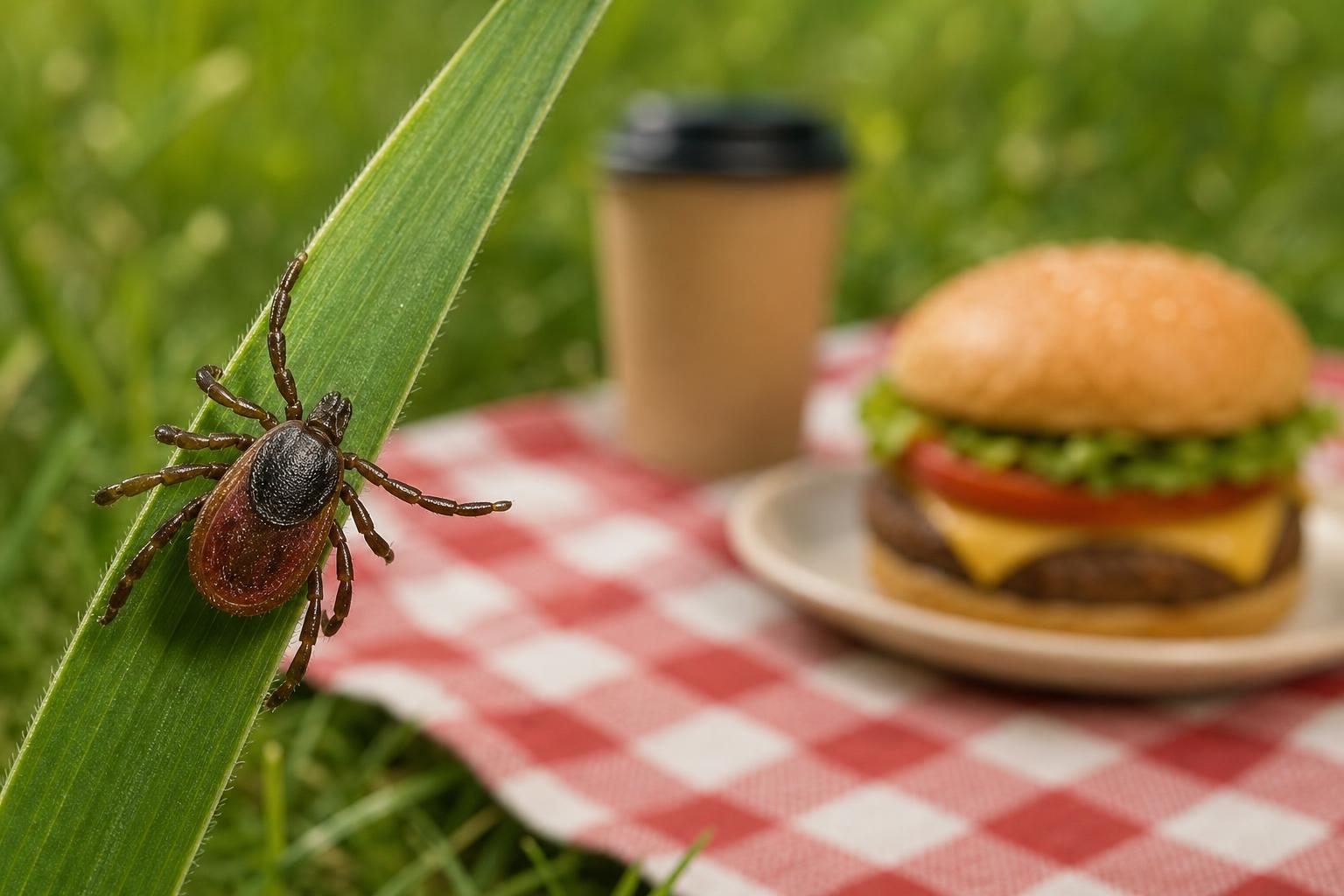
A red-meat allergy linked to tick bites is becoming more visible in the United States, and scientists still do not fully understand why it behaves so differently from other food allergies, according to reporting by Live Science. The condition is called alpha-gal syndrome. Alpha-gal is a sugar molecule found in most mammals, and the syndrome happens when a person’s immune system reacts to that molecule after eating red meat or using some mammal-derived products.
The article opens with the case of Sandra Tiguila, a nurse in Carbondale, Illinois, who had been bitten by ticks twice in June 2025. Later that summer, she ate a bison sausage breakfast sandwich and developed a rash. Days later, after eating steak, her face swelled and she went to the emergency room. Tests for tick-borne diseases led to the diagnosis: alpha-gal syndrome. The next morning, she realized that even the bovine collagen supplement in her coffee came from a mammal, and she threw the drink away.
That story matters because it shows both the seriousness and the confusion of the condition. Symptoms can be relatively mild, such as a rash or stomach upset. They can also be dangerous, including anaphylactic shock, a severe allergic reaction that can make breathing and blood pressure fail. Live Science reports that in 2025, alpha-gal syndrome was blamed for the death of an otherwise healthy 47-year-old man. The Centers for Disease Control and Prevention estimates that up to 450,000 people in the United States may have been affected since 2010.
The condition is also becoming more important because ticks have spread northward, and diagnoses have spread with them. That does not mean every tick bite causes the allergy, or that every stomachache after dinner is alpha-gal syndrome. It does mean doctors and patients face a difficult problem: a rare-sounding condition may not be rare enough to ignore, but it is still unfamiliar enough that people may miss the connection.
Food allergies usually have a more obvious pattern. A person eats a problem food, the immune system reacts, and symptoms appear quickly. Alpha-gal syndrome often does not follow that pattern. Maya Jerath, an allergist and immunologist at Washington University in St. Louis, told Live Science, “Alpha-gal follows none of the rules that I was taught in training about how a food allergy behaves.” One of the strangest features is that symptoms often appear hours after eating meat. That delay makes the cause harder to spot. If someone eats a hamburger at dinner and wakes up itchy or sick much later, the meal may not be the first suspect.
The biology is unusual, too. Humans and several other primates do not make alpha-gal, but most mammals do. When the immune system wrongly treats alpha-gal as a threat, it can produce IgE antibodies, which are immune proteins involved in allergic reactions. Scientists linked those antibodies to alpha-gal while investigating another mystery: why some cancer patients, especially in the Southeastern United States, reacted badly to the drug cetuximab. Cetuximab is designed to attach to cancer cells and slow their growth, but it was made in lab-grown mouse cells. Those mouse cells added alpha-gal molecules to the drug, and some patients’ immune systems reacted.
That discovery helped connect several clues: reactions to a cancer drug, delayed reactions to red meat, and earlier tick bites. But it did not answer every question. Scientists still want to know exactly why tick bites can set off this immune response in some people and not others. The article describes how early reports of delayed red-meat allergy after tick bites were first met with disbelief in scientific circles. That history is a reminder that medicine sometimes advances by taking strange patterns seriously before all the mechanisms are understood.
The central tension is how to act when the evidence is strong enough to change behavior but incomplete enough to leave major questions open. For a diagnosed person, avoiding mammal products may be the main way to manage the allergy, but that can mean rethinking ordinary foods and supplements. For doctors, the challenge is to recognize a condition that may show up long after a meal and may not look like a textbook allergy. For public health officials, the challenge is to warn people about tick bites and possible symptoms without creating the impression that every outdoor activity is dangerous.
There is also a scientific trade-off in the story. Researchers can now explain part of the syndrome: alpha-gal exists in most mammals, some people develop IgE antibodies against it, and tick bites are often part of the pattern. But the unanswered questions still matter, because they affect testing, diagnosis, treatment advice, and how urgently the public should respond. Too little attention could leave people undiagnosed until a severe reaction happens. Too much certainty could make the science sound more settled than it is.
Alpha-gal syndrome is not just a story about ticks or meat. It is a story about how bodies, environments, medicine, and uncertainty overlap. A bite from a tiny animal can change what a person can safely eat. A cancer drug can reveal a hidden immune reaction. A delayed rash can become a clue. The science is still developing, but the practical question is already here: how should people make careful choices when the warning signs do not arrive on schedule?
Written from reporting by Live Science, “'Alpha-gal follows none of the rules': Why a red-meat allergy triggered by tick bites is perplexing scientists”.
Discussion questions
- When a health risk is real but still not fully understood, how should doctors and public health officials balance warning people against alarming them?
- Alpha-gal syndrome can require people to change ordinary habits, but not everyone bitten by a tick develops it. What level of evidence should be enough to justify major lifestyle changes?
- What does this story suggest about how science should respond to unusual patient experiences that do not fit existing rules?