
U.S. Turns Up Financial Pressure on Iran
A planned bank sanction shows how foreign policy can move through the global financial system instead of, or alongside, military force.
Print it — all four files
The student packet has no answers in it. The teacher copy is the same pages plus a note on each question and the answer keys. Both languages carry the same story, the same picture and the same vocabulary.
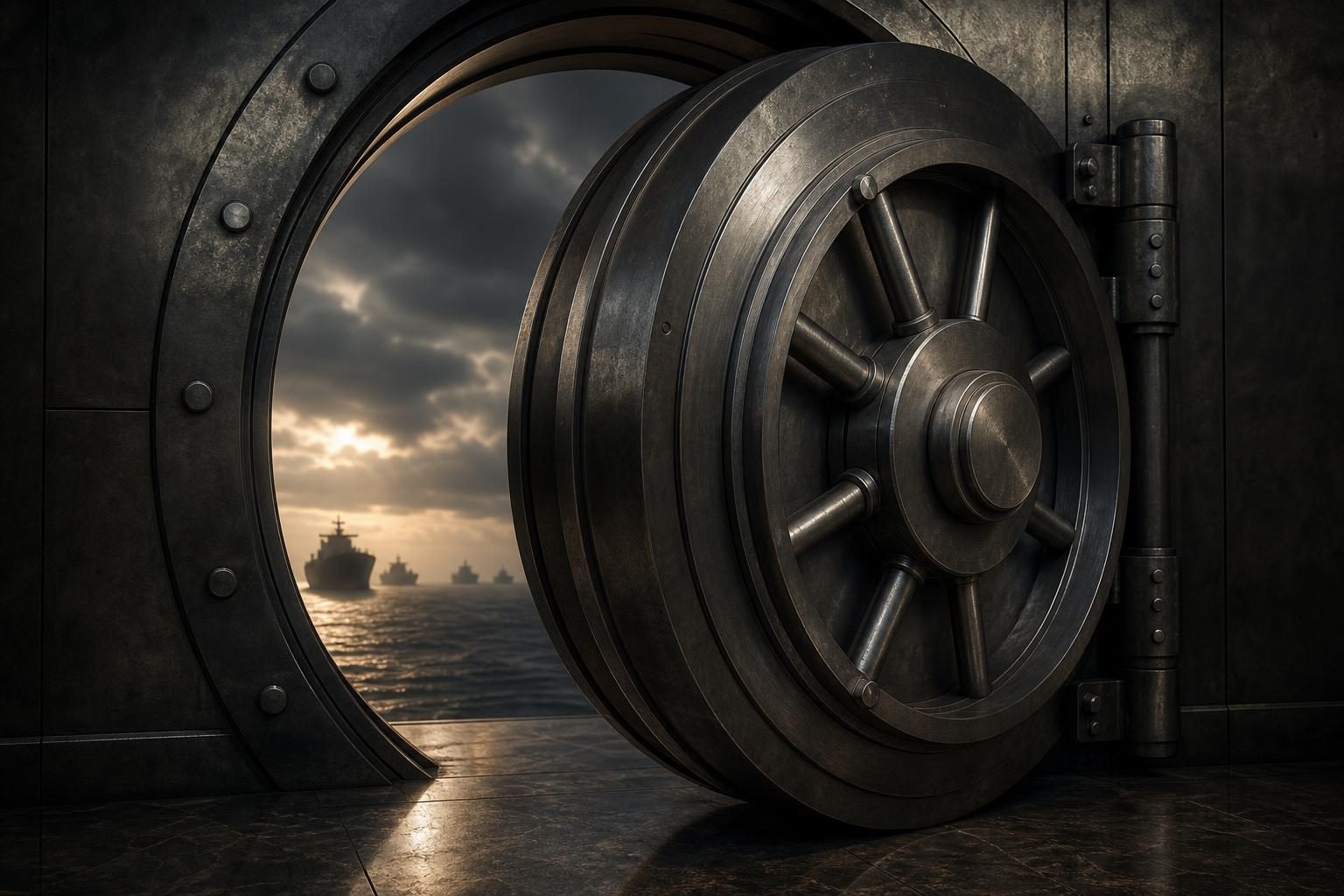
The U.S. government plans to sanction another bank this week as part of a campaign to economically isolate Iran, Treasury Secretary Scott Bessent told the Associated Press in reporting published by PBS NewsHour. Sanctions are penalties, often financial, that a government uses to pressure another country, company, or person without directly using military force. Bessent spoke ahead of Group of 20 meetings in Asheville, North Carolina, where finance leaders from major and developing economies were gathering. He said he would push other governments to cooperate with the U.S. effort.
The move matters because the United States is trying to use the banking system as a tool of foreign policy. Banks depend on trust, access to currencies, and connections to other banks. Losing access to the U.S. financial system can be a serious punishment, because many international transactions depend on U.S.-linked finance. That is why sanctions can reach beyond the country directly being targeted. A bank outside Iran may still face consequences if U.S. officials believe it is helping Iran move money.
Bessent described the approach in unusually blunt language, calling it “financial violence” if necessary. The phrase captures the central tension in the story. Supporters of sanctions often argue that economic pressure is better than bombs because it can punish a government while avoiding direct attacks. But sanctions can also spread pain through businesses, banks, workers, and customers who may not be making government decisions. They can also push other countries to resist U.S. pressure if they think Washington is overusing its power in global finance.
The timing is complicated because the administration has said it is shifting from military strikes to economic pressure during a war that recently reached the six-month mark. Yet the AP reported that hostilities flared again Sunday when U.S. forces struck Iranian rocket launchers on the Strait of Hormuz, the narrow waterway between the Persian Gulf and the Gulf of Oman. Iran vowed to retaliate and called the attack deadly. That means the financial campaign is not happening in a calm diplomatic setting. It is taking place while military action remains possible.
The Treasury Department’s first official action in this new campaign was not a full sanction on a bank. Instead, it was a proposed rulemaking aimed at the Emirati branches of Banque Misr, Egypt’s second-largest bank. A proposed rulemaking is a formal step in which an agency announces a rule it may adopt after a process. If finalized, the rule would cut those branches off from the U.S. financial system. The distinction matters: stopping short of full sanctions can send a warning while leaving room for negotiation or correction.
That restraint also raises a question about how far the United States is willing to go. The AP noted that the administration has mostly relied on warnings rather than new sanctions against Iran’s trading partners. China is the biggest issue. The article says China is Iran’s largest trading partner and the leading buyer of its oil. Bessent said he would speak with Chinese counterparts at the G20 meeting and that all options were available when it came to possible sanctions over continued purchases. He also rejected the idea that the administration was reluctant to confront China.
This is where the trade-off becomes sharper. If the United States targets smaller banks but avoids major trading partners, the campaign may look limited. If it sanctions China or Chinese institutions, the pressure on Iran might increase, but so could tension between the world’s two largest economies. Bessent said the U.S. and China agree on the need to reopen the Strait of Hormuz and prevent Iran from developing a nuclear weapon. Agreement on broad goals, however, does not automatically mean agreement on penalties, timing, or who should bear the costs.
For banks and governments, the message is that transactions with Iran may carry growing risk. A bank may have to decide whether business connected to Iran is worth the possibility of losing access to U.S. finance. A government may have to decide whether cooperating with Washington protects stability or gives the United States too much say over its economic relationships. Those are not simple legal questions. They are political choices made through financial systems that most people rarely see.
The broader issue is whether economic pressure can reduce conflict or deepen it. Sanctions can be presented as a middle path between doing nothing and using force. But when they are strong enough to matter, they can also become a form of coercion that other countries experience as hostile. The planned bank sanction is one piece of a larger test: whether the United States can build international cooperation against Iran while avoiding a wider confrontation with the countries and banks that still do business with it.
Written from reporting by PBS NewsHour, “U.S. plans to sanction another bank in effort to clamp down on Iran transactions, Bessent tells AP”.
Discussion questions
- When is economic pressure a more responsible tool than military force, and when might it become its own form of escalation?
- Should the United States risk conflict with major trading partners such as China in order to make sanctions on Iran more effective?
- What information would you want before judging whether this sanctions campaign is likely to succeed?