
A Century of Recipes Shows Seafood Choices Shrinking
A study of Good Housekeeping recipes shows how supply chains and food habits can change the work of cooks, buyers, and fisheries.
Print it — all four files
The student packet has no answers in it. The teacher copy is the same pages plus a note on each question and the answer keys. Both languages carry the same story, the same picture and the same vocabulary.
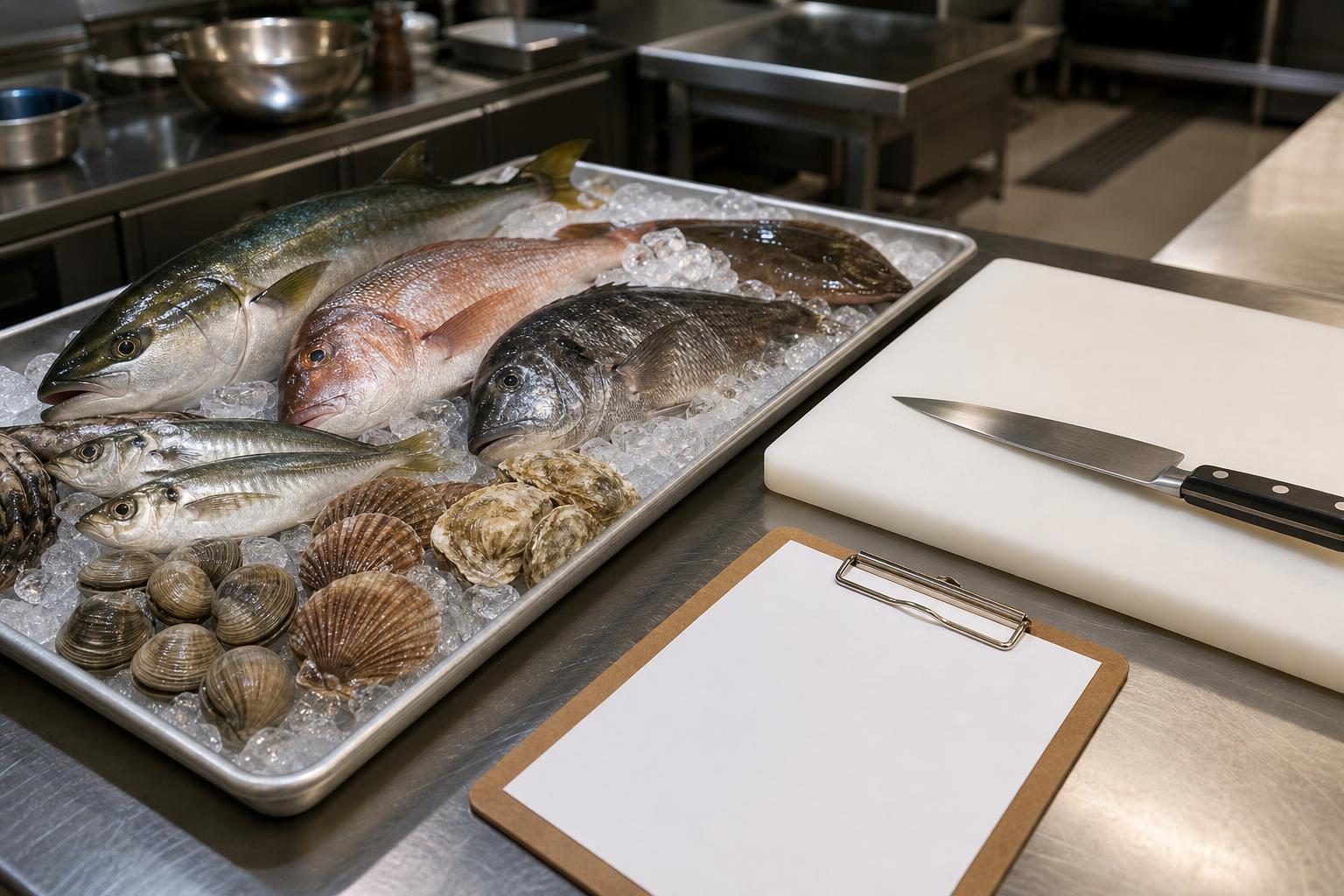
A new study found that seafood recipes in a major U.K. magazine became much less varied over the past century, with cod, haddock, tuna, salmon and shrimp now dominating what many readers are shown how to cook. According to reporting by Phys.org on research published in the journal People and Nature, Dr. Ruth Thurstan of the University of Exeter studied seafood recipes in British Good Housekeeping from 1923 to the present and collected 1,192 recipes.
The finding matters beyond home kitchens because recipes are part of the food business. What gets published affects what shoppers recognize, what restaurants can sell easily, what grocery stores stock, and what culinary workers practice. A recipe is not proof of what every person ate, and the study says that clearly. But recipes can show what foods editors expected readers to know, find, afford, and want to cook.
Thurstan found that older issues showed a wider range of fish and shellfish, while recent decades leaned heavily on today’s “big five”: cod, haddock, tuna, salmon and shrimp. The source says those five now make up about 80% of seafood eaten in the U.K. Some seafood that became less common in the magazine, such as herring, oyster and lobster, can still be bought. That means the narrowing was not only about whether certain species existed in the market. It also reflected changes in supply, trade, price, convenience, and culture.
For career and technical education, the useful part of this story is how many jobs sit between a fish in the water and a plate on a table. Fishers and aquaculture workers produce seafood; aquaculture means raising fish or shellfish in controlled conditions instead of catching them wild. Processors clean, cut, freeze, pack, and label the product. Cold-chain workers move seafood through refrigerated storage and transportation; a cold chain is the temperature-controlled system that keeps perishable food safe. Buyers for restaurants, grocery stores, and distributors decide what to order. Chefs and line cooks turn those ingredients into food customers will actually buy.
When the market narrows around a few familiar items, the work can become more standardized. A cook who has handled salmon hundreds of times knows how it behaves on a grill or in an oven. A buyer can compare prices across suppliers more easily. A distributor can build efficient routes around high-volume products. Standardization can lower waste and make training simpler, because workers repeat the same cuts, cooking methods, storage rules, and quality checks.
But standardization can also create risk. If a kitchen depends on only a few species, a price jump, shortage, import delay, or quality problem can disrupt the menu. A chef who knows how to substitute another local fish may keep service running. A seafood buyer who understands seasonality, which is the time of year when a product is most available or highest quality, may be able to switch suppliers or adjust the menu before costs get out of control. A marketing or front-of-house worker may need to explain an unfamiliar fish to customers in plain language without overselling it.
The study also points to a strange supply-chain pattern: the U.K. exports much of the diverse fish caught there and imports much of the smaller set of fish people commonly eat. Export means sending goods to another country for sale, and import means bringing goods in from another country. That pattern can make business sense if different markets pay different prices or prefer different products. But it also means local skills and local eating habits can drift apart. A fish may be landed nearby, processed by local workers, and still be more likely to appear on a plate somewhere else.
For someone training for culinary or hospitality work, this is a reminder that cooking skill is not only knife cuts and recipes. It is also product knowledge. Employers may value workers who can identify seafood quality, store it safely, reduce trim waste, follow allergen procedures, and adapt a recipe when the exact item is unavailable. Allergen procedures are the steps used to prevent a food that can cause an allergic reaction, such as shellfish, from accidentally contacting another dish.
For someone interested in logistics, manufacturing, or natural-resources careers, the story shows that consumer demand shapes technical work. If most customers ask for the same few seafood products, processors may invest in equipment, packaging, and training for those items. If restaurants and retailers try to broaden demand, the work changes: staff may need new specifications, which are written standards for size, cut, quality, packaging, and delivery. They may also need new safety plans and new sales materials.
The research does not say people should never eat the familiar five. It says food habits are not fixed. They are built over time by media, trade, supply chains, cost, and comfort. That is important for careers because workers do not just follow trends after they happen. Through purchasing, menu design, safe handling, and customer communication, they help decide which ingredients become normal.
Written from reporting by Phys.org, “100-year magazine study reveals 'narrowing' of U.K. seafood recipes”.
Discussion questions
- If a restaurant wanted to add more underused local seafood to its menu, what trade-offs would managers need to weigh before making the change?
- Is it better for a food business to specialize in a few familiar products or build skill with a wider variety of ingredients? Defend your position.
- What information is missing from the recipe study that a seafood buyer, chef, or supply-chain manager would need before changing purchasing decisions?