
Wildfire Smoke Gets a New Wildlife Sensor
A low-cost collar device could help researchers see what animals actually breathe during smoke events.
Print it — all four files
The student packet has no answers in it. The teacher copy is the same pages plus a note on each question and the answer keys. Both languages carry the same story, the same picture and the same vocabulary.
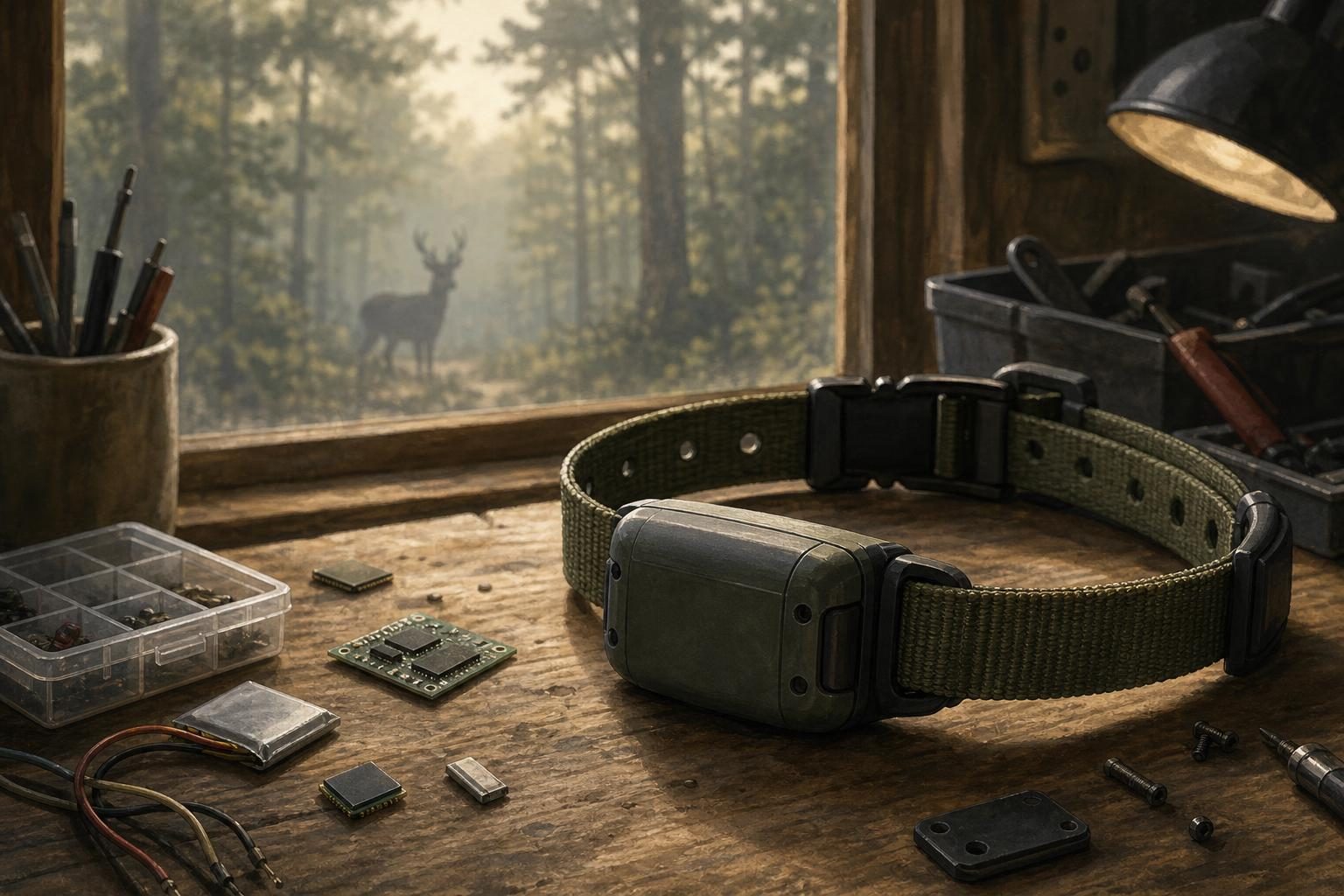
Colorado State University researchers have developed a small air-quality sensor that can ride on wildlife collars, according to reporting by Phys.org. The device is meant to measure the smoke and fine particles that free-roaming animals actually breathe during wildfires. That matters because people can often go indoors when smoke gets bad, but wildlife cannot, and many wilderness areas do not have nearby air-quality monitors.
The new device, called a smoke logger, is designed to work alongside collars that already track an animal’s location and sometimes its body data, such as heart rate. A logger is any instrument that records measurements over time for later download. In this case, the sensor records air-quality data every 30 minutes, storing the information until researchers recover the collar. The design and programming have been published as an open-source tool, meaning other researchers can use and modify the plans without paying a license fee.
This is not just a lab gadget. The work sits at the intersection of wildlife biology, electronics, fabrication, programming, and field operations. Wildlife studies that use collars are resource-intensive because animals may have to be captured, fitted with equipment, monitored, and sometimes recaptured so the equipment can be removed and the data downloaded. The smoke logger is meant to be added to projects that are already doing that work, so the same field effort can collect a new kind of information.
The sensor measures particulate matter 2.5, often written as PM2.5, which means microscopic particles with a diameter of 2.5 micrometers or less. A micrometer is one-millionth of a meter, so these particles are small enough to get deep into lungs and are linked to respiratory and cardiovascular health problems. The researchers repurposed a low-cost commercial sensor similar to those used in PurpleAir air monitors, which use a laser to detect tiny particles in the air.
One important design decision was to store data instead of transmitting it live. Sending data from a collar in a remote wildland would cost more power, shorten battery life, and often fail because there is no reliable connectivity. The smoke logger is solar-powered, but it still has to save energy. That kind of trade-off is familiar in technical work: a stronger feature, such as live data transmission, can make a device less useful if it drains the battery or raises the cost too much.
The researchers say the materials cost about $100 per unit, which is low for scientific field equipment. That price matters because wildlife research often needs multiple units, and each unit may be exposed to weather, rough movement, dust, impact, and animal behavior. A tool for this job cannot just work once on a bench. It has to survive outdoors, be light enough for a collar, and produce data accurate enough to compare with an animal’s movement and body signals.
Early testing on mule deer showed why collar-mounted sensors could change the work. Air-quality readings from deer-borne sensors differed by an order of magnitude from the nearest monitoring stations. An order of magnitude means a tenfold difference, so the animal’s actual exposure could be much higher or lower than what a distant station suggests. That is a major issue for anyone trying to connect smoke exposure to animal behavior or health.
The deer monitored in Colorado and Utah this year were not exposed to unhealthy wildfire smoke levels, but the sensors were sensitive enough to detect small pollution spikes from traffic around urban-dwelling deer. That finding points to a larger lesson in environmental measurement: conditions can vary at a very small scale. A monitor miles away may be useful for regional trends, but it may not describe what one animal, worker, or neighborhood is actually breathing.
The team is working with researchers across the western United States to add sensors to studies of cougars, deer, and elk. They also placed sensors in habitat used by the endangered Sierra Nevada fisher, a small mammal related to weasels, to learn more about air quality in that animal’s range. The article says those results will be published in future studies, so the device is at the stage where the tool has been developed and the bigger biological questions are now being tested.
For career and technical education, the most useful part of the story may be how many kinds of work are inside one project. A wildlife ecologist helps decide the biological question. A programmer writes and tests the code that tells the device when to record and how to store data. Someone with electronics skills selects sensors, manages power, and packages components so they can function outdoors. Field researchers handle animal-collar logistics and make sure the data matches the right place and time.
The article does not list job postings or hiring requirements, but the work described rewards practical competence: careful assembly, troubleshooting, safe field procedures, clean data handling, and the ability to work across specialties. In a project like this, a good device is not enough by itself. The measurement has to answer a real question, survive real conditions, and produce data that wildlife managers can use when planning conservation work or timing prescribed burns, which are planned fires used to manage forests and reduce the risk of more severe wildfires.
Written from reporting by Phys.org, “New collar sensor could reveal how wildfire smoke affects animal health”.
Discussion questions
- Should researchers prioritize low-cost, recoverable sensors like this one, or spend more on devices that transmit data live from the field?
- What skills would make someone most valuable on a project that combines wildlife collars, air sensors, and field data, and why?
- If air quality can vary tenfold between an animal and the nearest monitor, how should that change decisions in other fields, such as construction, agriculture, or emergency response?