
Endangered Fish Ruling Puts Seafood Jobs Under Scrutiny
Australia will keep allowing commercial catch of redfish, raising questions about how seafood work changes when a stock collapses.
Print it — all four files
The student packet has no answers in it. The teacher copy is the same pages plus a note on each question and the answer keys. Both languages carry the same story, the same picture and the same vocabulary.
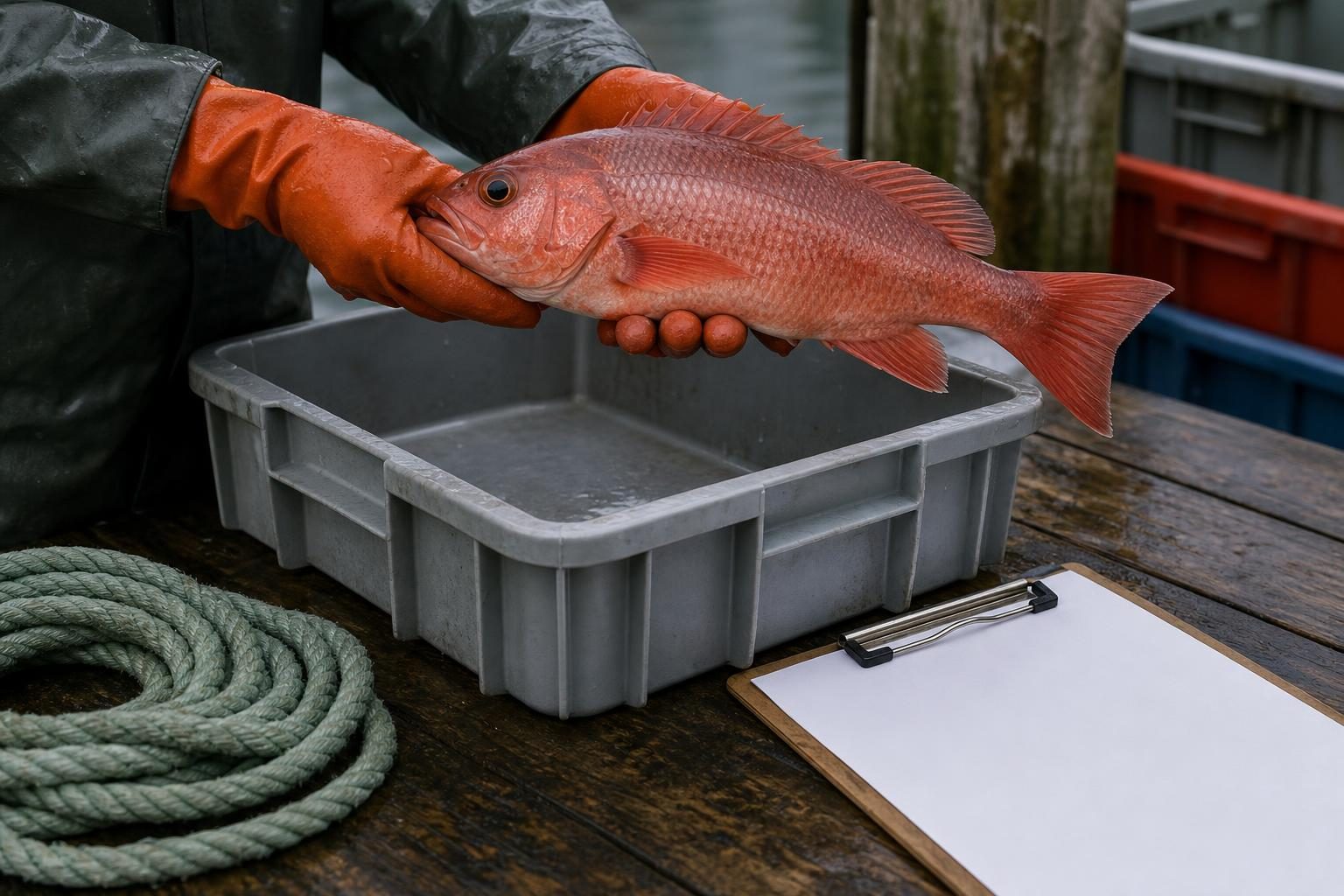
Australia will continue allowing redfish to be caught and sold even though the species qualifies for a critically endangered listing, according to Phys.org. The decision keeps redfish in a category called conservation-dependent, which means the species is officially recognized as needing protection but can still be commercially harvested under management rules. For people who work in seafood, this is not just an argument about nature. It affects what can be caught, what can be sold, what restaurants can put on menus, and what skills workers need when a resource becomes scarce.
The fish at the center of the decision is Australian redfish, Centroberyx affinis. According to the article, Australia’s Threatened Species Scientific Committee recommended that redfish be listed as critically endangered, a term for a species facing an extremely high risk of extinction. The committee pointed to a population decline of more than 96% over three generations, from 1974 to 2023. The article also says historical overfishing and current management settings have left only about 3% of the population thought to remain.
That kind of decline changes the job site. Commercial fishing is not simply a boat leaving the dock and returning with product. It is a regulated workplace that depends on stock assessments, which are scientific estimates of how many fish are in a population and whether it can support harvest. When a stock drops, crews may face tighter limits, buyers may need substitutes, processors may have less predictable supply, and chefs may have to rewrite menus. A deckhand, skipper, seafood buyer, fishmonger, or culinary manager may all be affected by a decision made by fisheries managers.
The article focuses on a legal category that critics call a loophole. Conservation-dependent status applies only to fish, according to the Australian Marine Conservation Society, and it allows catch and sale to continue for species that might otherwise receive stronger protection. The source says redfish is one of several species from the Southern and Eastern Scalefish and Shark Fishery in this category. A fishery is not just the fish; it is the whole system of boats, gear, permits, workers, landing sites, markets, and rules built around catching that species or group of species.
For a person trying to get hired in this field, the technical side matters. Modern seafood work can involve knowing catch limits, which are rules that cap how much of a species can be taken; bycatch controls, which are practices meant to reduce unwanted catch; and traceability, which is the recordkeeping that follows seafood from vessel to buyer to final customer. Even workers who never set foot on a boat may need to understand these terms. A line cook choosing a special, a purchasing assistant ordering fillets, or a quality-control worker checking product labels can all be part of the chain that either supports or ignores conservation rules.
The government’s own assessment, as reported in the article, did not give a simple all-clear. It said it was uncertain whether continued overfishing is occurring. Overfishing means fish are being removed faster than the population can replace itself. The assessment also said there was no confidence that the stock would rebuild with the level of fishing mortality applied in the 2024–25 fishing season, listed as 21.4 tonnes. Fishing mortality is the amount of fish death caused by fishing, not by predators, disease, or old age.
That uncertainty is exactly where workplace judgment becomes important. If the rule allows redfish to be sold, a business may legally buy it. But legal does not always mean low-risk for a brand, a supply chain, or a long-term career. A restaurant that advertises sustainable seafood could face customer backlash if it serves a species widely described as near collapse. A seafood wholesaler might have to decide whether short-term sales are worth future supply problems. A fisher may see the issue differently, especially if permits, equipment payments, and crew wages depend on continued access.
This story also shows why science and trade skills increasingly overlap. Fisheries observers collect data at sea. Marine technicians help monitor ecosystems. Compliance officers inspect records and landings. Vessel operators need to understand gear, safety, weather, and regulation. Seafood workers do not have to become biologists, but they do need enough scientific literacy to read a stock-status warning and enough professional judgment to ask what it means for their work.
Five other shark and ray species are also waiting for classification by Australia’s environment minister, according to the article. That means this decision is not an isolated case. The larger question is how a seafood industry keeps people employed while not exhausting the resource that employs them. In a trade built on harvesting a living product, the condition of the stock is part of the condition of the workplace.
Written from reporting by Phys.org, “Loophole listing keeps seafood qualifying as critically endangered on the menu”.
Discussion questions
- If a species is legally allowed to be sold but scientific advisers say it qualifies as critically endangered, should a restaurant or seafood buyer treat it as acceptable product? Defend a position.
- How should fisheries managers balance current jobs against the risk that continued harvest could make future fishing impossible?
- What additional information would a skilled worker in the seafood supply chain need before deciding whether to catch, buy, process, or serve redfish?