
Neil Armstrong’s Ohio Home Becomes a Preservation Job Site
A donation is helping turn the astronaut’s boyhood home into a future public museum, with restoration and maintenance work ahead.
Print it — all four files
The student packet has no answers in it. The teacher copy is the same pages plus a note on each question and the answer keys. Both languages carry the same story, the same picture and the same vocabulary.
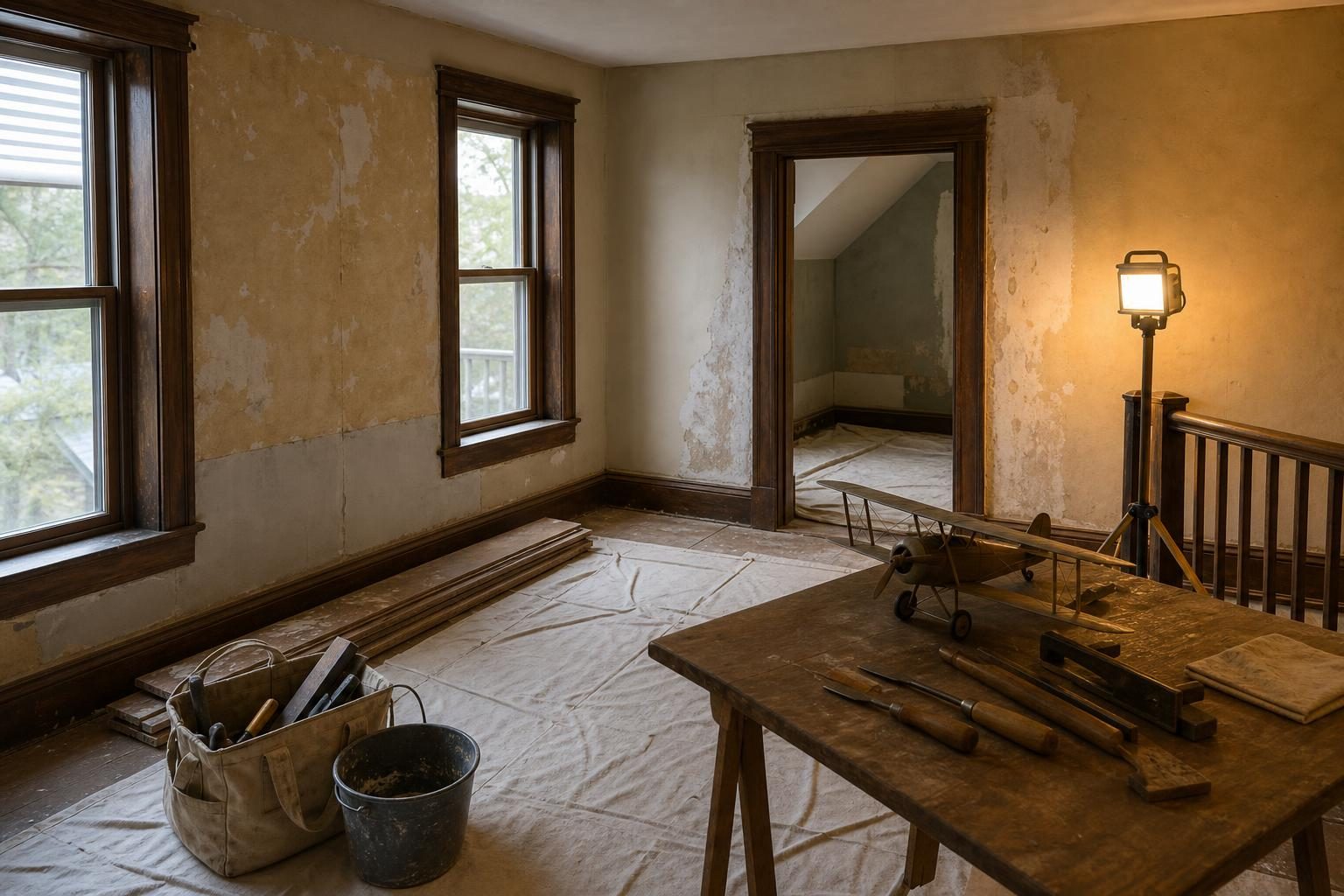
A retired pilot’s $400,000 donation is allowing the Auglaize County Historical Society in Ohio to buy Neil Armstrong’s boyhood home and prepare it for public tours. According to reporting by the Associated Press published by Phys.org, the sale is scheduled to be finalized Monday, and the historical society’s goal is to restore the two-story house in Wapakoneta to the way it looked during Armstrong’s teenage years. Armstrong later became the first person to walk on the moon, but this project focuses on the ordinary house where he built model airplanes, experimented in the basement, made his first solo flight, and earned his pilot’s license at age 16.
That makes the story about more than a famous address. It is also a real example of preservation work, which means protecting an older building while keeping its history believable and useful. The historical society wants the home ready for its first public tours by 2030, the 100th anniversary of Armstrong’s birth. The house has attracted visitors for years because it is near the Armstrong Air and Space Museum, but it has not been open as a public tour site. Turning it into one changes the job from private homeownership to long-term public operations.
The first task is not swinging a hammer. It is research. The historical society has started looking into what the house would have looked like in the 1940s, when Armstrong lived there. In restoration work, that research becomes the basis for the scope of work, meaning the written description of what must be repaired, replaced, preserved, or left alone. A crew cannot simply make the house look old in a general way. If the purpose is public history, choices about finishes, room layouts, paint colors, fixtures, and furnishings have to be based on evidence when possible.
The article says the house is well preserved, and the outside has changed little. The inside layout is also similar, though it has been updated. For tradespeople, that mix is common and challenging. A house can be historically important and still need modern systems, safer visitor pathways, routine repairs, and careful maintenance. Renovation means improving or updating a building; restoration means returning it as closely as practical to an earlier appearance. Those goals can overlap, but they are not the same job. A restored room may need to look like the 1940s while the building still has to function for staff, tourists, cleaning, weather, and wear.
This kind of project can involve carpenters, painters, plaster or drywall workers, flooring specialists, electricians, HVAC technicians, architects, museum workers, maintenance staff, and tour guides. HVAC means heating, ventilation, and air conditioning, and in an older house those systems can affect both comfort and preservation. Too much moisture can damage wood, paint, and paper; too little attention to airflow can make a crowded tour uncomfortable. Even if the article does not list every future contract, the plan to renovate and maintain the home means the historical society will have to think like both a museum and a facilities manager.
The career lesson is that historic sites need people who can work with constraints. In a new build, a contractor may have more freedom to open walls, reroute systems, or choose standard materials. In a historic house, the worker may need to protect existing surfaces, document what was found, and coordinate with people whose job is interpretation, which means explaining the site’s meaning to the public. Good workmanship matters, but so does judgment. A repair that is fast and cheap can be wrong if it destroys the evidence that makes the place worth visiting.
The project also shows how funding shapes the work. The historical society is receiving the house because Ken Schreiber, a retired U.S. Air Force pilot and former American Airlines pilot, stepped in with the donation after reading that the home was for sale. The society’s president said the group is talking with community leaders about raising money to renovate and maintain the property. Buying a building is only the first cost. A public site needs insurance, utilities, repairs, staffing plans, cleaning schedules, visitor safety decisions, and a maintenance budget that lasts longer than the opening day celebration.
For someone in a CTE pathway, the most important part may be how many careers meet at one doorway. Aviation history is the reason people care about the house, but aviation skill is not the only skill needed to save it. The future of the site depends on tradespeople who can respect old materials, museum workers who can tell a clear story, and managers who can keep the building open without wearing it out. Armstrong’s path to the moon began in a regular Ohio house. Preserving that house now becomes a different kind of technical mission: making the past sturdy enough for the public to walk through.
Written from reporting by Phys.org, “Retired pilot helps historical society buy Neil Armstrong's boyhood home for tours”.
Discussion questions
- When restoring a historic house for public tours, how should decision-makers balance historical accuracy against visitor safety, accessibility, and long-term durability?
- If you were helping hire workers for this project, what skills or evidence of past work would matter most, and why?
- Should important local history depend on private donations, or should communities use public money for projects like this? Defend your position.