
Trade Fight Puts Manufacturing Jobs Back in the Spotlight
A G20 split over low-cost exports shows how global policy can affect shop floors, supply chains, and technical careers.
Print it — all four files
The student packet has no answers in it. The teacher copy is the same pages plus a note on each question and the answer keys. Both languages carry the same story, the same picture and the same vocabulary.
Treasury Secretary Scott Bessent said Tuesday that 19 members of the G20 agreed to address streams of low-priced exports that he says are creating global economic imbalances, while China dissented, according to Associated Press reporting published by PBS NewsHour. The G20 is a group of 20 major economies that meet to discuss financial issues affecting global markets. The meeting took place over two days in Asheville, North Carolina, and the disagreement centered on whether countries should push back against what Bessent called “cheap exports.”
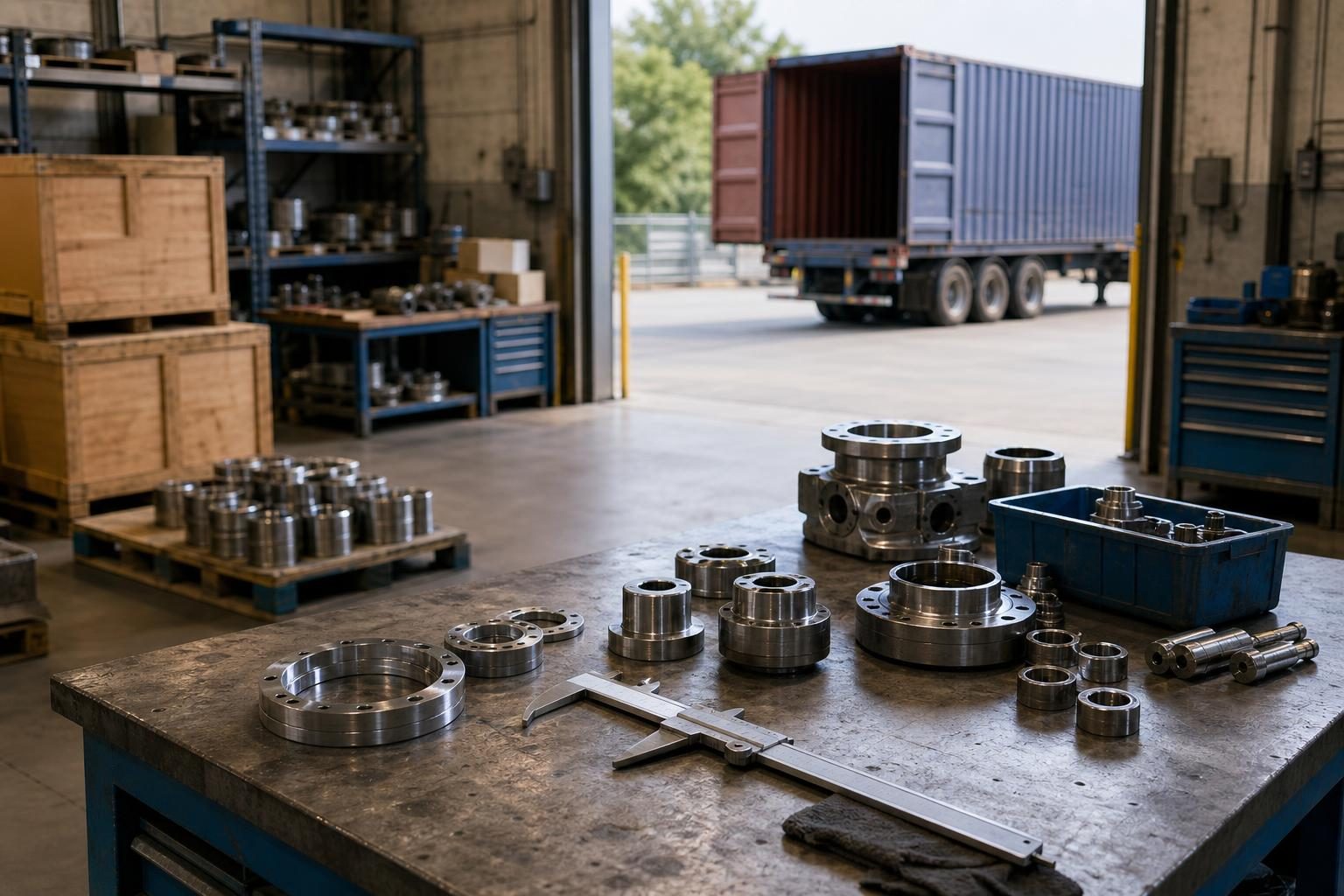
The issue matters because global trade policy can land directly on a shop floor. A tariff is a tax on an imported good, usually paid by the importer and often passed along through higher prices. When governments add tariffs or threaten them, manufacturers may have to recalculate the cost of parts, raw materials, tools, and finished goods. A plant manager, purchasing agent, estimator, logistics coordinator, or small-business owner may not write trade policy, but each has to work with the results: new prices, different suppliers, longer lead times, or a changed bid on a job.
Bessent argued that China is a leading source of the exports he criticized. The administration has blamed China for trade imbalances, meaning a mismatch in how much countries buy from and sell to one another. A trade surplus means a country sells more goods and services abroad than it buys; a trade deficit means it buys more than it sells. The AP reported that Bessent said China’s trade surplus reached a record $1.2 trillion in 2025, while the United States has a sizable deficit. China objected to the G20 statement, showing that even when countries agree there is a problem, they may not agree on who caused it or what to do next.
For career and technical education, the argument is not just abstract economics. If imported finished goods are very inexpensive, U.S. manufacturers may struggle to compete on price. If tariffs raise the cost of imported components, those same manufacturers may also face higher input costs. An input is anything a business uses to make a product, such as steel, electronic parts, packaging, or machine tooling. That creates a trade-off: policies meant to protect manufacturing jobs can also make materials more expensive for the manufacturers they are trying to help.
The AP report notes that economists and politicians have criticized the Trump administration’s tariff policies for raising costs for U.S. consumers and, in many cases, punishing allies. The Tax Foundation, an independent think tank, found that tariffs imposed throughout 2025 raised the overall retail price of imported consumer goods by roughly 7% compared with pre-tariff trends. That number matters in a real workplace because customers react to price. A contractor pricing a job, an auto shop ordering parts, or a fabricator bidding on a production run has to decide whether to absorb higher costs, raise prices, find another supplier, or redesign the job.
The legal side is also changing. The AP reported that the U.S. Supreme Court decided in February that sweeping global tariffs Trump imposed under an emergency powers law during his second term were unconstitutional. The administration is now overhauling its approach and is considering an additional 7.5% tariff on Chinese imports after investigating alleged Chinese excess industrial capacity and forced-labor regulations. Excess industrial capacity means factories can produce more than markets can normally absorb, which can push goods into export markets at low prices. Forced-labor regulations are rules meant to keep products made with coerced labor out of supply chains.
That is where technical work meets paperwork. Modern manufacturing and construction are not only about running equipment safely and accurately. They also require documentation: purchase orders, bills of materials, quality records, shipping forms, and cost estimates. A bill of materials is the list of parts and materials needed to build something. When trade rules change, that list may need a second look. A company may ask whether a part can be sourced domestically, whether a substitute meets the same specification, or whether a delivery schedule is still realistic.
The story also points to what employers may value in new hires. A welder, machinist, mechatronics technician, HVAC installer, or diesel technician still needs hands-on skill first: measurement, safety, tool use, print reading, troubleshooting, and quality control. But the stronger candidate may also understand how a part moves through a supply chain and how cost changes affect a job. Being able to read specifications, track inventory, communicate clearly with suppliers, and use spreadsheets or shop-management software can make a technical worker more useful when prices and suppliers are shifting.
Bessent said President Donald Trump and Chinese President Xi Jinping are expected to discuss AI policy when they meet later this month. That is a separate issue, but it belongs in the same world: governments are trying to set rules for technologies and trade systems that businesses use every day. For people entering skilled work, the lesson is practical. A career can depend not only on what happens at the machine, bench, jobsite, or service bay, but also on decisions made in finance ministries, courts, and international meetings.
Written from reporting by PBS NewsHour, “China dissents as Bessent says 19 finance ministers agree to address 'cheap exports'”.
Discussion questions
- If tariffs can protect some manufacturing jobs but raise prices for parts and consumer goods, when are they worth using?
- How should a technical employer decide whether to keep buying a cheaper imported part or switch to a more expensive domestic supplier?
- What mix of hands-on skills and business skills should CTE programs emphasize if trade rules and supply chains keep changing?