
Wheat Study Shows Timing Matters in Heat Damage
New field research suggests early-season heat waves can hurt wheat yields most, changing how crop workers plan protection.
Print it — all four files
The student packet has no answers in it. The teacher copy is the same pages plus a note on each question and the answer keys. Both languages carry the same story, the same picture and the same vocabulary.
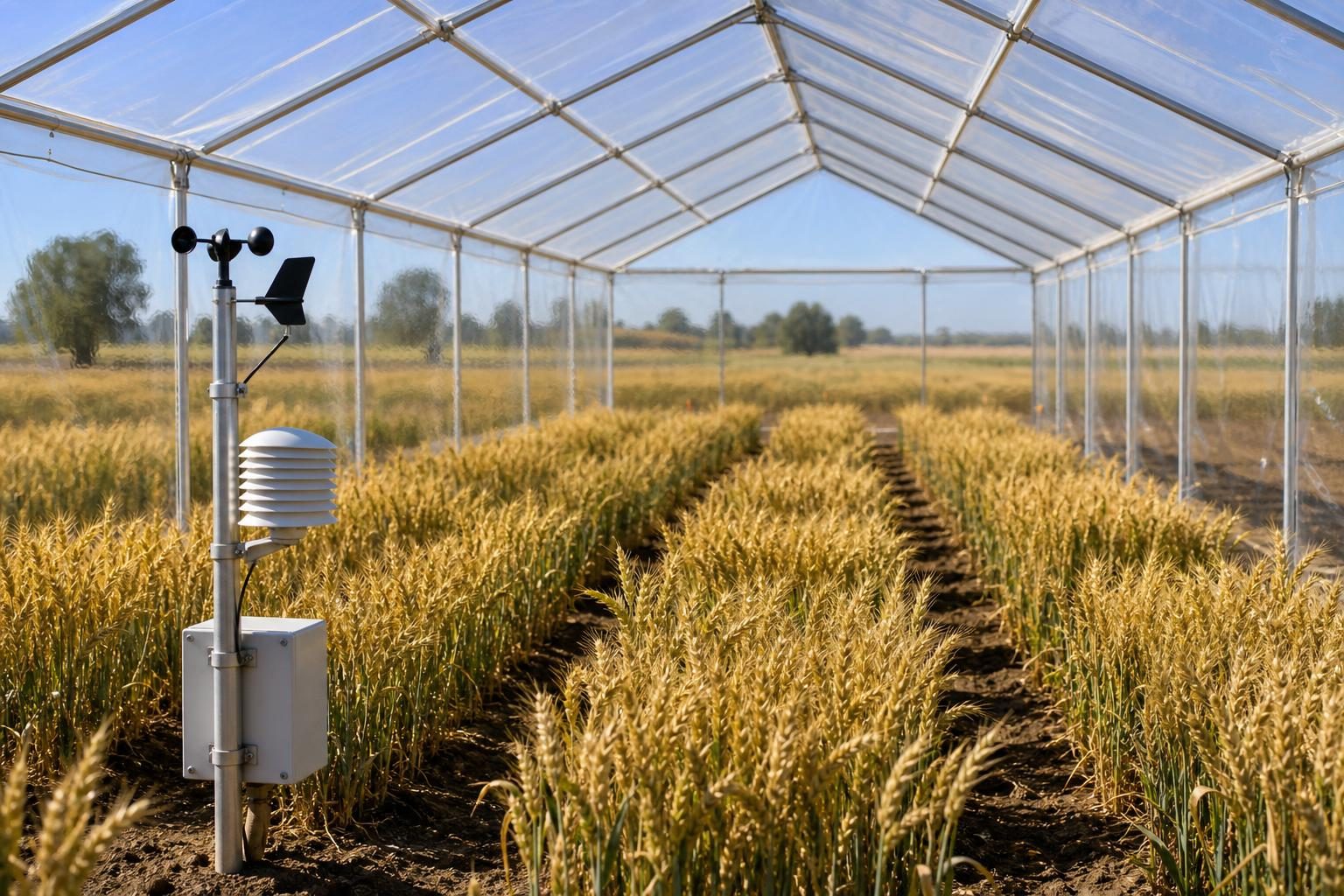
Wheat crops lose more yield when heat waves hit before flowering than when they hit later, according to Phys.org’s report on new research published in the Journal of Experimental Botany. The study also found a more complicated result: wheat exposed to an early heat wave may be partly “primed,” meaning the plant has a kind of physiological memory that helps it respond better if another heat wave arrives later in the same growing season.
That matters because wheat is one of the world’s major staple crops, and heat waves are becoming more frequent, more intense, and long enough to overlap with more stages of crop growth. For people who work in agriculture, the finding is not just a science headline. It affects when a field needs the most attention, what data should be collected, and which adaptation measures are worth paying for.
The research team, from the University of Lleida in Catalonia, Spain, studied two modern wheat varieties over two growing seasons in field experiments. Field experiments are tests done under real outdoor growing conditions rather than only in a lab or greenhouse. The researchers created heat-wave treatments by growing wheat inside transparent tents that raised the daily temperature through a greenhouse effect, the same basic process in which trapped heat builds up under a clear covering.
The key timing was whether the heat came before or after flowering. Flowering is the reproductive stage when wheat shifts from setting up the number of grains it can produce to filling and growing those grains. The study found that heat before flowering mainly reduced the number of grains produced. Heat after flowering mainly reduced the weight of the grains. In production terms, that distinction matters because total yield depends on both grain number and grain weight, and different problems may call for different management decisions.
The researchers also measured heat load, which means the extra heat the crop experienced over time compared with a control treatment that did not get the added heat. In this study, heat load counted added hourly degrees over an average day, with more emphasis on heat above 32°C. That kind of measurement is important for agricultural technicians and crop scientists because a crop’s stress is not just about the high temperature on one afternoon. It is also about how long the crop stays above damaging temperatures.
The surprising part was the priming effect. Wheat that had already experienced a heat wave before flowering suffered less damage from a later heat wave after flowering than wheat that only faced the later heat wave. This does not mean the first heat wave was helpful overall. The early heat still reduced yield by cutting grain number. But it suggests that a plant’s response to repeated stress can be different from its response to a single stress event. For crop modelers, who use weather, soil, and plant data to predict yields, that means a forecast may be wrong if it treats each heat wave as a separate event with the same expected damage.
This is where the work connects to hiring and job skills. Farmers and farm managers make the final decisions, but they often depend on crop consultants, agronomists, irrigation specialists, seed-company field representatives, and agricultural research technicians. An agronomist is a crop-production specialist who studies how plants, soil, weather, and management practices affect yield. A field technician may set up plots, install sensors, record growth stages, check treatments, collect plant samples, and keep accurate records so the data can be trusted. Those jobs require comfort with outdoor work, measurement tools, basic plant biology, spreadsheets or data systems, and careful communication with growers.
The study points toward a more timing-based way of protecting crops. If wheat is most vulnerable when grain number is being determined, then adaptation measures may be most valuable around flowering and the stages leading up to it. The source article does not name a specific practice to use, and that is important: the research identifies when wheat is sensitive, not a universal fix for every farm. In real production, a grower would still have to weigh soil moisture, variety, planting date, equipment, labor, and cost before changing a management plan.
The findings may also matter beyond wheat. The article says the results may be relevant to other temperate field crops such as barley, oats, and rye, though exact heat thresholds will likely differ by crop species. Temperate crops are plants adapted to cooler or moderate growing regions, so their heat response can differ from crops with tropical origins. For CTE agriculture programs, the larger lesson is that climate adaptation is becoming hands-on work: scouting fields at the right growth stage, understanding stress data, helping run trials, and turning research into decisions that can survive real weather, real budgets, and real harvest deadlines.
Written from reporting by Phys.org, “Early heat waves hit wheat yields hardest but boost resilience to subsequent heat waves”.
Discussion questions
- If a farm has limited money for heat protection, should it focus most of that spending around the pre-flowering stage, or spread it across the whole season? Defend your choice.
- How should crop consultants change their scouting or data collection if repeated heat waves do not affect wheat the same way as single heat waves?
- What information is missing from this study before a grower in a different region should change planting or management decisions?