
A New Moon Crater Is as Wide as Two Soccer Fields
NASA images show where a space rock hit the Moon and changed the dusty ground around it.
Print it — all four files
The student packet has no answers in it. The teacher copy is the same pages plus a note on each question and the answer keys. Both languages carry the same story, the same picture and the same vocabulary.
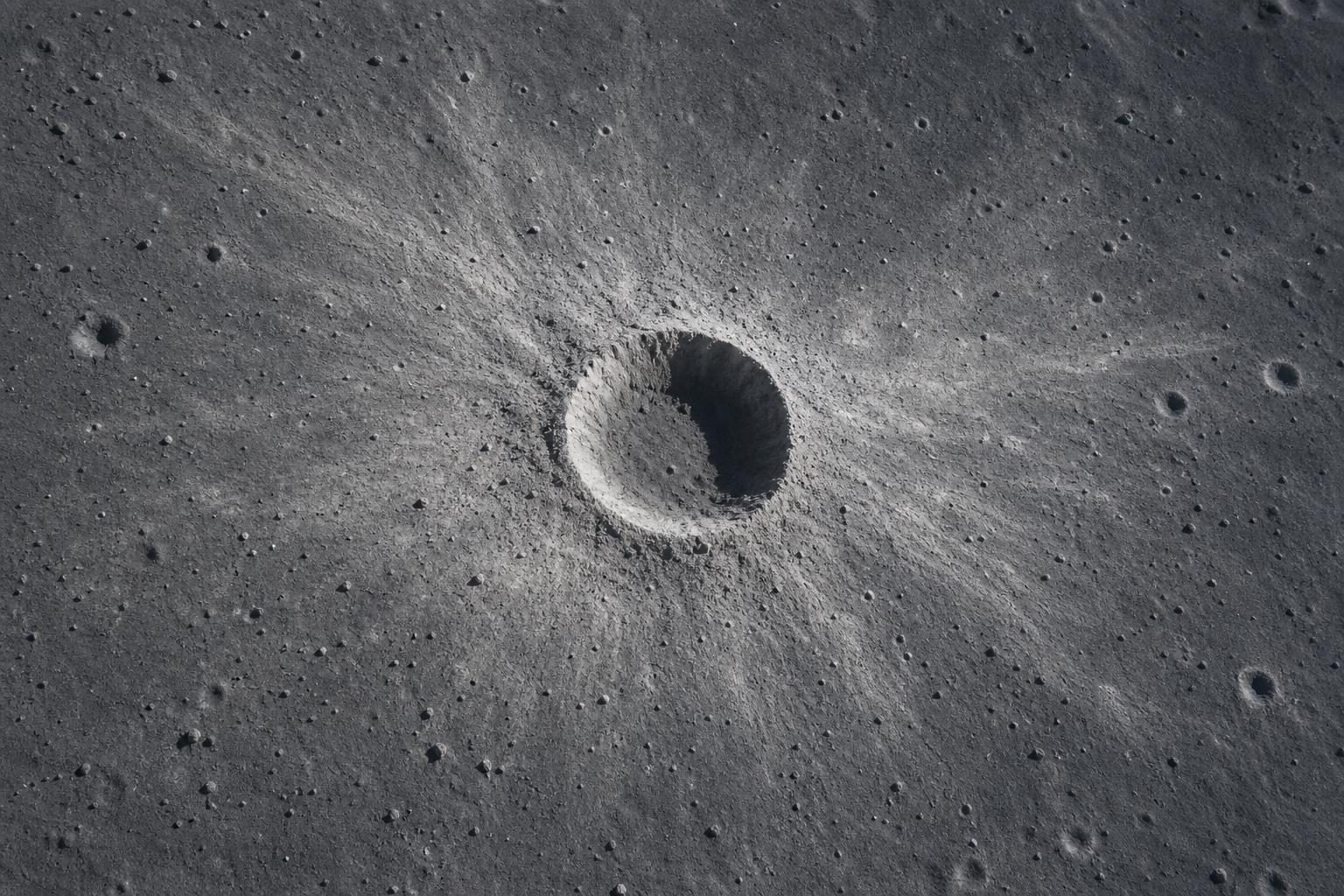
A new crater has been spotted on the Moon, according to NASA’s Astronomy Picture of the Day. A crater is a bowl-shaped hole in the ground. This one was made when a comet or asteroid hit the Moon. An asteroid is a rocky object in space. A comet is an icy object in space.
NASA says the object was about the size of a humpback whale. That means it was about 30 to 60 feet across. It hit the Moon sometime between April and May of 2024. The crater it made is much wider than the object. NASA says the crater is about two soccer fields across.
Scientists found it by using the Lunar Reconnaissance Orbiter. That is a spacecraft that circles the Moon and takes pictures. It checks the Moon about every month. Its pictures showed the same place before and after the hit.
That matters because scientists rarely get such a clear before-and-after view. NASA says craters this size are expected only once every 132 years. The crater has been named McGetchin. It honors a lunar scientist from the Apollo time, when people first visited the Moon.
The Moon’s surface is covered with loose gray dust and broken rock. Scientists call this regolith, which means loose lunar dirt. When the object hit, it did not just dig a hole. It puffed up the loose ground around the crater.
NASA also used thermal imaging, which shows heat instead of regular light. The crater itself looked warm. Around it was a large colder area. NASA says the puffed-up regolith was less packed together. That made it harder for the ground to hold heat.
Think about jumping into dry sand or powdery snow. Your feet leave marks. But they also change a wider area around the mark. The Moon hit did something like that, but on a huge scale.
This helps scientists learn how the Moon’s surface changes over time. It also shows why Earth’s atmosphere matters. An atmosphere is the blanket of air around our planet. Many small space rocks burn up there before they reach the ground.
Written from reporting by NASA, “APOD: 2026 September 23 – A New Lunar Crater: McGetchin”.
Discussion questions
- NASA found this crater because a spacecraft kept watching the Moon month after month. Is it worth spending time and money to keep watching places when nothing special may happen?
- The crater changed more than the hole we can see. How should that idea change the way people study sudden events in nature?
- The crater was named to honor a Moon scientist. What should people think about when choosing names for places in space?