
A Robot Explorer Finally Reaches Mercury
After eight years in space, BepiColombo is now circling the closest planet to the sun.
Print it — all four files
The student packet has no answers in it. The teacher copy is the same pages plus a note on each question and the answer keys. Both languages carry the same story, the same picture and the same vocabulary.
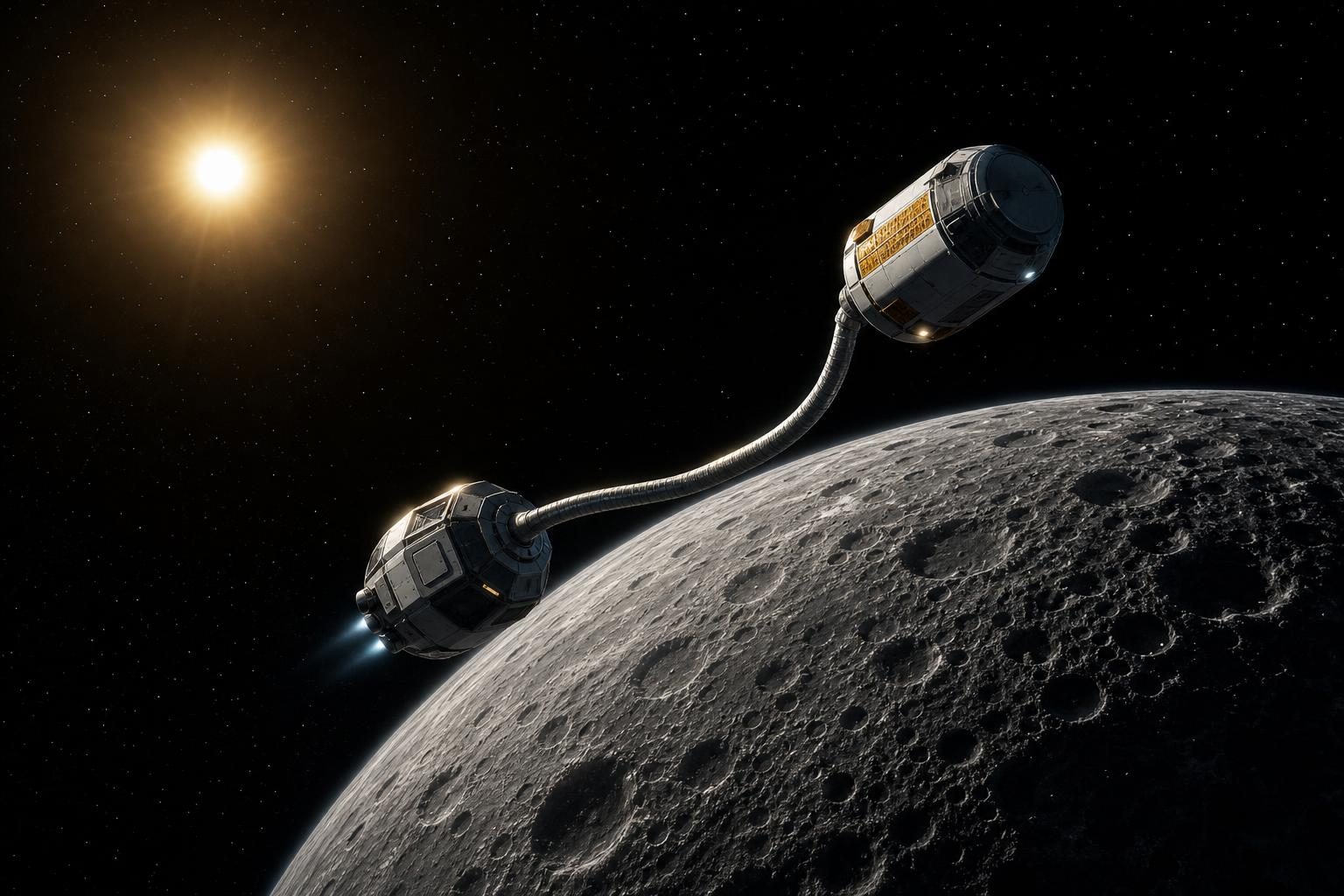
A robot spacecraft named BepiColombo has reached Mercury, the planet closest to the sun. According to reporting by Live Science, mission scientists confirmed that it entered orbit on Saturday, November 21. Orbit means it is moving around a planet, pulled by gravity instead of flying past.
This is a big space moment because Mercury is hard to reach. It is so close to the sun that the sun’s gravity can pull a spacecraft off course. BepiColombo took eight years to get there. It launched in October 2018. On the way, it flew past Earth, the moon, Venus, and Mercury itself. Those flybys helped change its path and speed, like careful pushes in space.
Only one other spacecraft has ever orbited Mercury before. That was NASA’s MESSENGER probe, which circled the planet from 2011 to 2015. A probe is a robot explorer that carries tools instead of people. BepiColombo is really two probes riding together. One was built by the European Space Agency. The other was built by Japan’s space agency.
The trip was not perfect at the end. A software glitch, or computer problem, kept the spacecraft’s thrusters from firing for the full planned time. Thrusters are small engines that help steer and slow a spacecraft. The European Space Agency said BepiColombo is safe. Scientists are checking exactly where it is and what happens next.
If the mission continues as planned, the two probes will soon split apart. They will take different paths around Mercury. That lets them study the planet from different places. One probe is expected to begin its main science work in April.
The probes will make the most detailed map of Mercury yet. They will measure things people cannot see with eyes, including X-rays and ultraviolet light. They will also study Mercury’s magnetic field. A magnetic field is an invisible force around a planet.
Inside a control room, the scene would not look like a rocket launch. It would be quieter. People would watch screens. Tiny signals would travel across space from a machine near Mercury to Earth.
This matters because every careful space trip teaches scientists how planets work. Mercury is the least-explored planet in our solar system, according to the report. Learning more about it may help scientists understand how rocky planets form and change. Earth is a rocky planet too.
Written from reporting by Live Science, “BepiColombo ends 8-year interplanetary journey to Mercury. What's next for the ambitious spacecraft?”.
Discussion questions
- Was it worth spending eight years to send a robot to Mercury? Defend your answer.
- Why might two probes be better than one for studying the same planet?
- What should scientists do when a mission has a problem but the spacecraft is still safe?