
A Drone Learns to Land by Touch
A new flying robot can grab a perch like a bird, which could help drones save energy while they work.
Print it — all four files
The student packet has no answers in it. The teacher copy is the same pages plus a note on each question and the answer keys. Both languages carry the same story, the same picture and the same vocabulary.
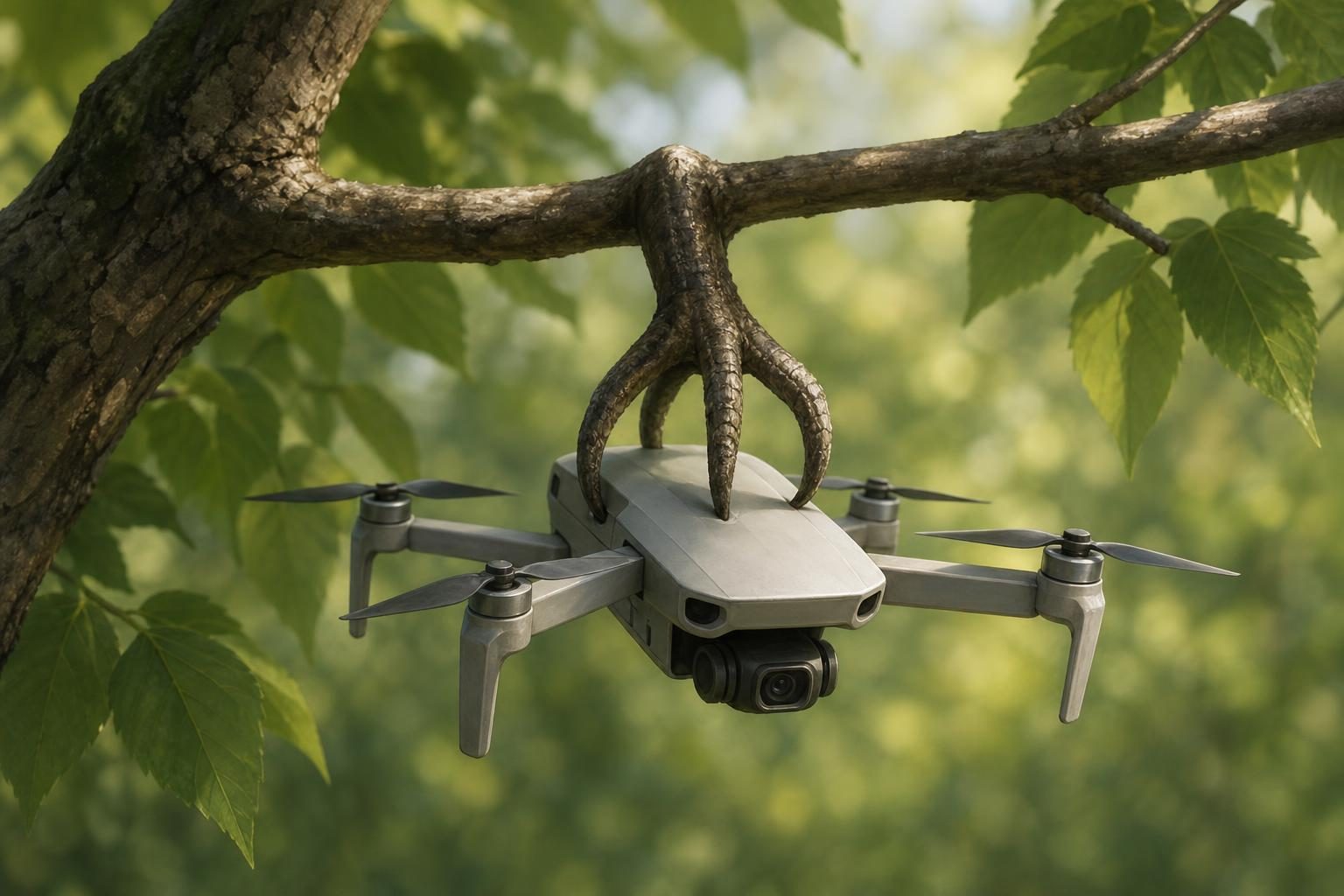
Engineers have built a flying robot that can land by touch and perch on a branch. According to Science News Explores, the drone, or flying robot, uses three fingers with touch sensors, which are parts that can feel contact.
That matters because most small drones cannot fly for very long. Their batteries run down. If a drone can perch, it can stop flying and save energy. It might wait near a power line, a factory, or a hard-to-reach forest. Then it could watch, measure, or explore without buzzing in the air the whole time.
The team works at Delft University of Technology in the Netherlands. They wanted a drone that could help study vulnerable ecosystems. An ecosystem is a place where plants, animals, water, soil, and air work together. Vulnerable means it can be easily harmed. To be useful there, the robot would need to stay for a while.
The idea came from birds. A bird may see a branch from far away. But in the last moment, its feet feel the branch. Touch helps the bird grab the right place.
The new drone hangs below its perch. Its three fingers are arranged a little like a thumb, pointer finger, and middle finger. Each finger has soft pads and touch sensors on the inside. When the fingers touch something, the drone can decide how to move and when to close its grip.
Springs help the fingers stay closed. Think of a clothespin. You use energy to open it. Then the spring holds it shut. This drone works in a similar way. It needs a motor to open the fingers. Once it is hanging on, it does not need extra energy to keep holding.
So far, the drone has been tested only in a lab. That is important. A lab is much simpler than a windy forest. In the lab, the drone grabbed many things, not just branches. It also grabbed a traffic cone and a T-shaped piece of metal. In 26 tests, it grabbed on successfully in less than 70 seconds each time.
Scientists who study robots say nature can still teach engineers. This drone is not as skilled as a real bird. But it shows a useful idea. Sometimes a robot does not need a bigger computer first. It may need a better way to touch the world.
Written from reporting by Science News Explores, “A new flying drone uses touch to perch like a bird”.
Discussion questions
- Should engineers try to copy animals when they build robots, or should they design in totally new ways? Defend your view.
- Before this drone is used outside a lab, what would be the most important thing to test next, and why?
- Would you rather have a drone that sees better or a drone that feels better when landing? Explain the trade-off.