
Frozen Squirrel Poop Opens an Ice Age Window
Ancient squirrel droppings from Canada are helping scientists rebuild a lost world of plants, insects, and animals.
Print it — all four files
The student packet has no answers in it. The teacher copy is the same pages plus a note on each question and the answer keys. Both languages carry the same story, the same picture and the same vocabulary.
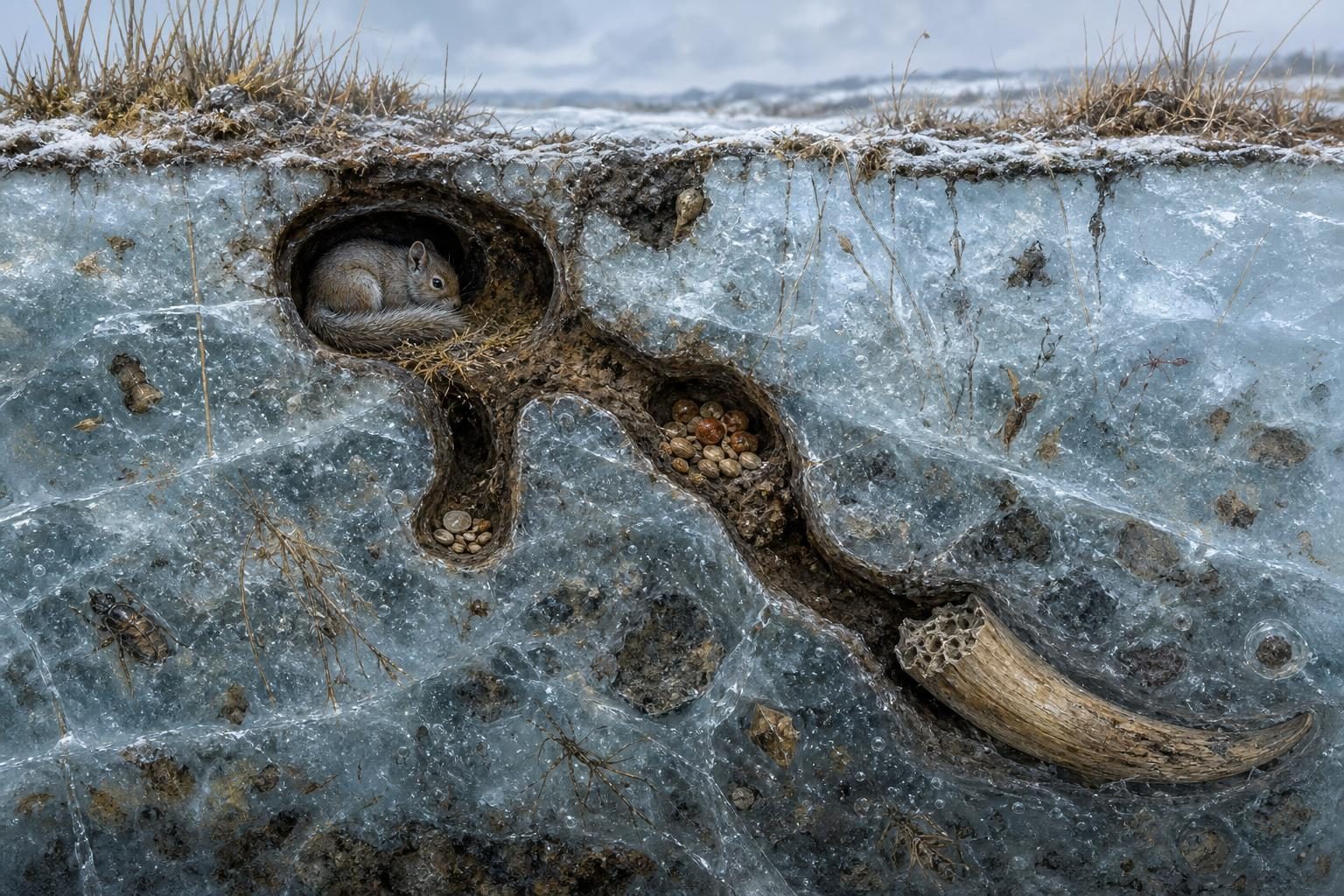
Scientists have learned about Ice Age animals from something small and silly: frozen squirrel poop. According to Science News Explores, researchers studied ancient droppings from ground squirrels in Canada’s Yukon. The droppings were found in frozen ground where miners had exposed old squirrel burrows. Some samples were thousands of years old. One was nearly 700,000 years old.
The frozen ground is called permafrost, which means soil that stays frozen for a long time. It can keep old plants, bones, and animal homes from rotting away. These squirrel homes were like tiny time capsules. They had tunnels, food storage spots, and latrine areas, or bathroom spots. The poop did not smell much while frozen. It smelled more when it thawed in the lab.
Inside the poop, scientists found DNA. DNA is the instruction material inside living things. It can help show what an animal was, and what it ate. The team studied 13 pieces of prehistoric poop, called coprolites. They expected mostly squirrel DNA. Instead, they found clues from many plants and animals.
The menu included grasses, willows, beetles, grasshoppers, bison, horses, wolves, and mammoths. That does not mean squirrels hunted huge animals. Scientists think the squirrels may have chewed old bones for calcium. Calcium is a mineral that helps build strong bones. Some rodents do the same thing today.
The findings also changed an old idea. Scientists had thought the ancient Yukon squirrels were the same kind as squirrels there now. The DNA suggested something different. The oldest sample may even come from a squirrel line not known today. Its closest known relatives may be squirrels now found in China.
This matters because big fossils tell only part of a place’s story. A mammoth bone can show that a mammoth was there. Squirrel poop can show a busy neighborhood. It can point to plants, insects, and other animals sharing the same land. That is an ecosystem, or a community of living things and their surroundings.
The discovery shows why scientists study ordinary things, not just giant bones or shiny rocks. A squirrel’s bathroom spot can hold a record of a lost world. It is messy evidence, but it helps scientists imagine a real place. There were tunnels underfoot, plants nearby, insects moving, and hungry squirrels storing food for later.
Written from reporting by Science News Explores, “Frozen poop reveals Ice Age squirrels’ ecosystem”.
Discussion questions
- If you were choosing what to study from an ancient site, would you spend time on tiny messy samples or focus on big fossils? Defend your choice.
- How can one small clue change the way scientists understand a whole place? Explain with this story or another example.
- What would scientists need to know before saying the oldest sample came from a new kind of squirrel?