
Tiny spotted cat adds a new branch to the family tree
Scientists say a small wild cat from Bolivia is the first new living cat species described in more than 100 years.
Print it — all four files
The student packet has no answers in it. The teacher copy is the same pages plus a note on each question and the answer keys. Both languages carry the same story, the same picture and the same vocabulary.
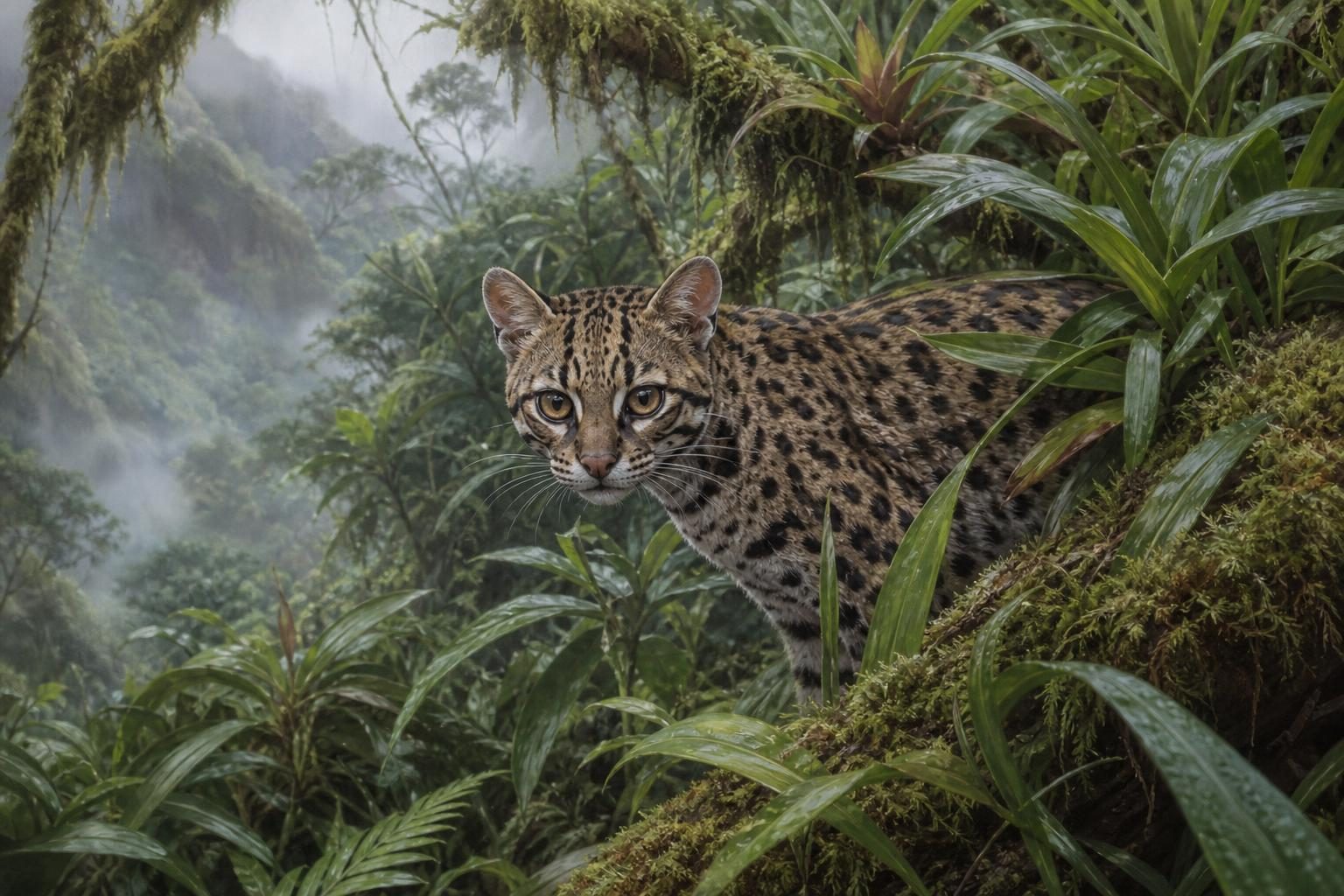
Scientists have named a new living cat species in Bolivia, according to Science News Explores. A species is one kind of living thing, such as a lion or a house cat. This new wild cat is called Leopardus tilcayo.
The cat is small and spotted. It has a slim body and a tail with rings. It weighs about 4.4 pounds. That is about the weight of a four-month-old house kitten.
The cats appear to live in the Yungas forests of Bolivia. The Yungas are mountain forests in the central Andes. The Andes are a long mountain range in South America. In a place like that, a small cat can be hard to spot. It may move through thick plants and shadows.
This matters because scientists had not described a new living cat species in more than 100 years. The last one was described in 1923. That does not mean this cat suddenly appeared. It means scientists now have enough evidence to give it its own name.
The research team was not trying to find a brand-new cat. The scientists were studying tiger cats. These are small wild cats from the American tropics. Many tiger cats look alike. Their spots can fool the eye.
So the team looked at genetics. Genetics is the study of instructions inside living things. Those instructions can show how animals are related. The scientists studied 38 species in the Leopardus group. That group includes tiger cats and ocelots.
They expected to find a few tiger-cat species. Instead, their work pointed to five. One of them had not been described before.
So far, the new cat is known from only two animals. One was a female that was cared for at a sanctuary after being hurt. A sanctuary is a safe place for animals. She was later released back into the wild. The other is a male named Tigrino, who still lives at the sanctuary.
A cat conservationist noticed that Tigrino looked a little different from cats she expected to see there. A conservationist works to protect living things and their homes. She had him genetically tested. Then she shared the information with the research team.
The discovery shows that even familiar animals can still surprise people. Cats are some of the most loved animals on Earth. Yet one small spotted cat was still waiting to be recognized.
Written from reporting by Science News Explores, “Meet the first new living cat species described in more than a century”.
Discussion questions
- Should scientists announce a new species when they have studied only two animals? Why or why not?
- If two animals look almost the same, what kinds of evidence should matter most when deciding whether they are different species?
- How could naming a new species change the way people think about protecting its forest home?