
Beavers Return as Unlikely Drought Helpers
Wetlands made by beavers can store water and slow fires, but they can also flood land and require careful management.
Print it — all four files
The student packet has no answers in it. The teacher copy is the same pages plus a note on each question and the answer keys. Both languages carry the same story, the same picture and the same vocabulary.
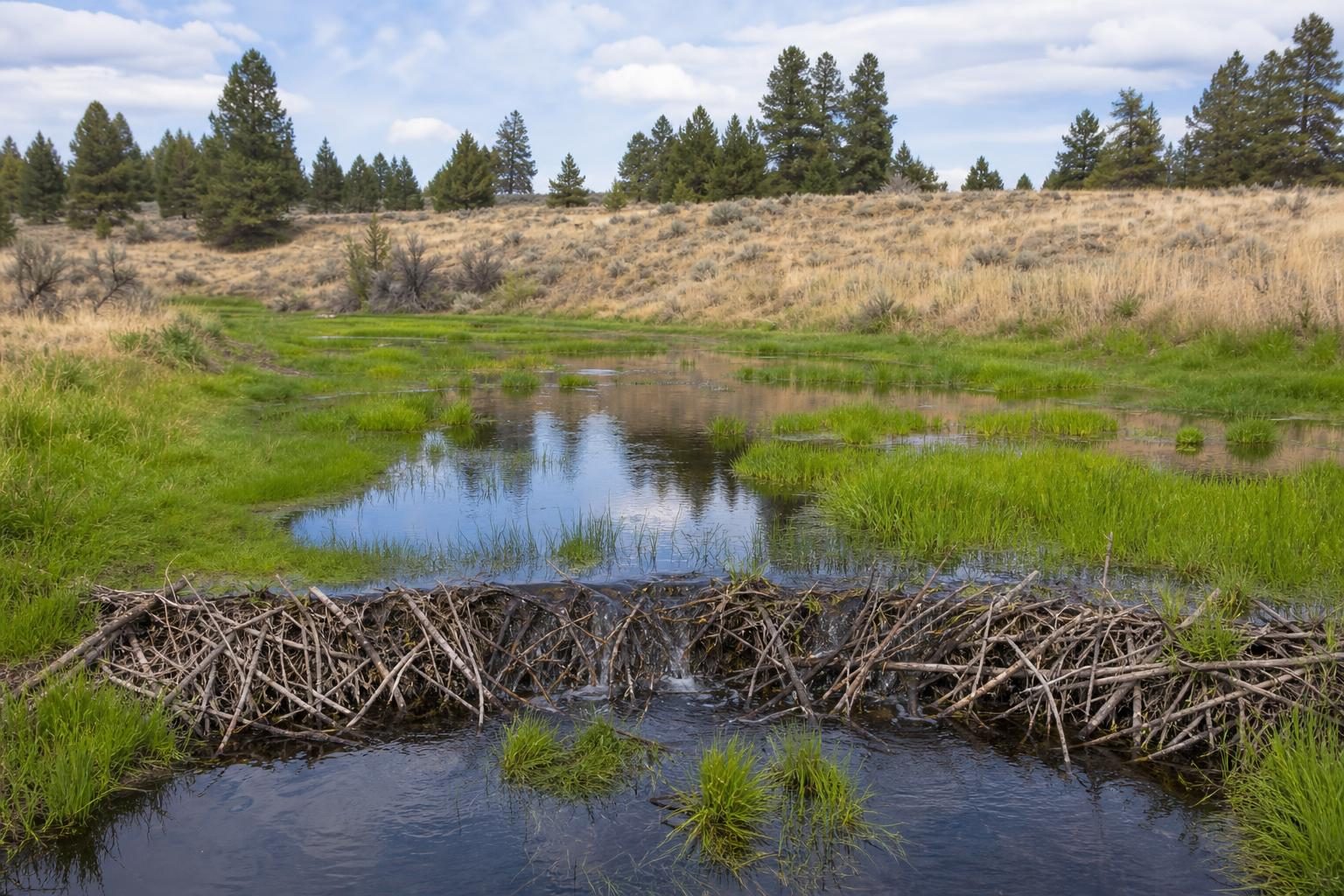
A dry summer has left much of the countryside around the Holnicote estate in Somerset, in southwest England, dusty and brown, but one corner remains green because beavers have changed the way water moves through it. According to a Phys.org article republished from The Conversation, beavers were reintroduced there six years ago, centuries after the animals were hunted out of Britain in the 16th century. By building dams and cutting channels, they have helped turn a small stream area into a wet meadow.
That matters because Britain, like many places, is trying to prepare for hotter, drier summers and more extreme weather. The basic idea is simple: landscapes that hold water longer are less vulnerable when rain stops. The contested part is also simple: the same animal that can make a useful wetland can also flood a field, block a drainage pipe, or damage trees. Beavers are not just cute wildlife in this debate. They are living infrastructure, and infrastructure always raises the question of who benefits, who pays, and who gets a say.
Beavers are often called ecosystem engineers, meaning animals that physically reshape their surroundings in ways that affect many other species. They cut small trees, build dams from branches and mud, and dig channels. Those dams slow streams, letting water back up, spread across low ground, and soak into nearby soil. Over time, sediment and woody debris collect, and wetland plants move in. Instead of one fast-draining channel, the land can become a patchwork of ponds, marshes, wet woods, and side channels.
Research cited in the article suggests that this can make a real difference, though not the same difference everywhere. A 2008 Canadian study of Elk Island National Park in Alberta looked at aerial photographs over 54 years after beavers returned there in 1954. The number of active beaver lodges, which are the structures where beavers live and raise young, explained more than 80% of the variation in open-water area. In the driest year studied, 2002, wetlands with beavers held nine times more open water than wetlands without them.
That Canadian result cannot simply be copied onto Britain. The article points out that Britain has different landscapes, different land uses, and a different species of beaver. A catchment, meaning the area of land that drains into a stream or river, can change how much effect a beaver colony has. Soil type, valley shape, farms, roads, and drainage systems all matter. Still, British research points in the same direction. In Devon, researchers studying a beaver enclosure on heavily managed grassland found in 2011 that 13 dams stored about 1 million liters, or 264,000 gallons, of additional water. More recent work across four wild beaver territories in Devon estimated that their wetlands held more than 24 million liters, or 6.3 million gallons.
The fire argument is newer but important. Damp, healthy vegetation is harder to burn than dry vegetation, so a beaver wetland can create a green strip through a dry area. A 2020 study of five wildfires in the western United States found that streamside vegetation in beaver-dammed areas was affected one-third as much as similar areas without beavers. That does not mean beavers are a firefighting plan by themselves. The article is careful on this point: British fires, plants, and landscapes differ from the western United States, and a wet strip along a stream cannot replace fire prevention, emergency response, or land management.
The strongest case for beavers is that they add one more layer of protection in a landscape humans have spent centuries draining. The United Kingdom, like many developed places, has often treated wet ground as a problem to be fixed. Ditches, pipes, and straightened streams move water away quickly, which helps farming and building in some places but can leave less water stored for dry months. Beaver wetlands push in the opposite direction. They slow water down.
The strongest case against uncontrolled beaver reintroduction is that water does not stay neatly inside an environmental plan. A flooded meadow may look like climate resilience to one person and lost income to a farmer. A culvert, which is a pipe or tunnel that carries water under a road or path, can be blocked by beaver building. Trees that matter to a landowner or community can be cut. These are not imaginary objections; they are the reason England now requires a license and a management plan for beavers released into the wild.
That is why the debate is not really beavers versus no beavers. It is planned reintroduction versus accidental, illegal, or unmanaged reintroduction; public climate benefits versus private costs; and nature-based solutions versus traditional engineering. The article notes that in Norfolk, two wild beavers that appeared mysteriously on the River Wensum have produced the county’s first kits, or young beavers, in more than 500 years. Some suspect an illegal release. For supporters, that may sound like nature correcting an old mistake. For regulators and landowners, it shows exactly why planning matters.
Beavers will not end drought, stop wildfires, or repair an entire landscape. Other work still matters: restoring peatlands, ponds, and marshes; reconnecting rivers to floodplains; and keeping strips of vegetation along waterways. But the beaver question is powerful because it asks whether people are willing to let an animal help manage water, even when that help is messy, local, and unevenly shared.
Written from reporting by Phys.org, “How beavers can help create fire breaks as part of a drought preparation plan”.
Discussion questions
- If beaver wetlands reduce drought and fire risk for a region but create flooding problems for some landowners, how should the costs and benefits be divided?
- Should governments favor nature-based approaches like beaver reintroduction over built engineering projects, or should they treat them as separate tools for different problems?
- What information would you want before approving a beaver release in a specific community, and who should have the power to decide?