
New Car Rules Reopen a Fight Over Cost, Gas and Climate
The administration says looser fuel standards could lower car prices, but critics warn drivers may pay more at the pump.
Print it — all four files
The student packet has no answers in it. The teacher copy is the same pages plus a note on each question and the answer keys. Both languages carry the same story, the same picture and the same vocabulary.
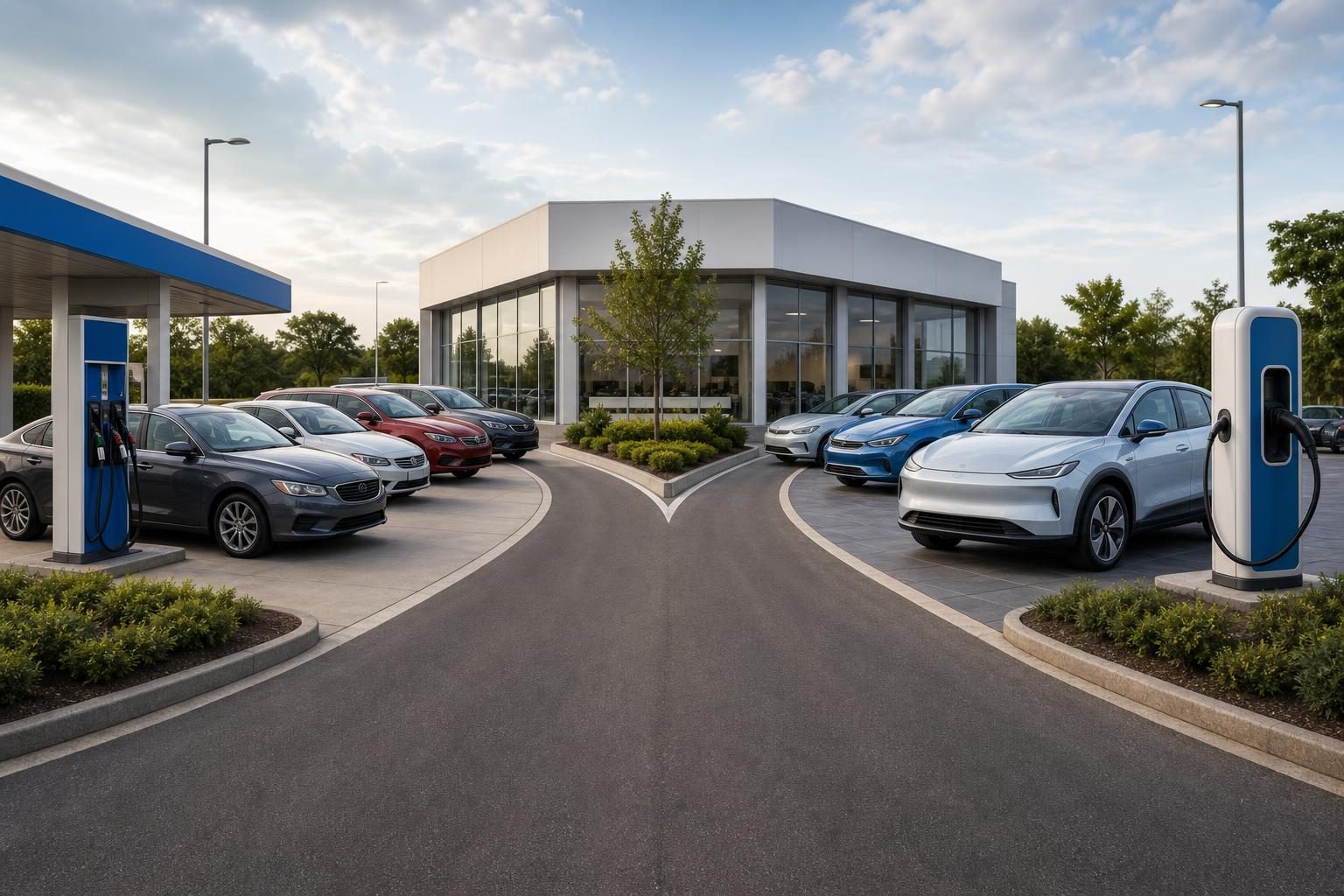
The Trump administration is rolling back federal fuel economy standards for new vehicles, according to a PBS NewsHour interview with Reuters transportation reporter David Shepardson. Fuel economy standards are rules that tell automakers how far, on average, their vehicles must travel on a gallon of fuel. The new policy gives car companies more flexibility and reverses stricter rules from the Biden administration that were designed to push the auto industry toward more efficient vehicles and more electric vehicles.
The change matters because it reaches into several parts of ordinary life at once: the price of a car, the cost of gasoline, the amount of pollution from transportation, and the speed at which the country moves toward electric vehicles. The administration says the fleet-wide average, meaning the average across an automaker’s mix of cars and trucks, will be 34.9 miles per gallon in 2031. Under the earlier Biden-era rules, that average would have been over 50 miles per gallon.
Supporters of the rollback argue that the stricter rules pushed automakers to build vehicles Washington wanted, not necessarily the vehicles many buyers wanted. Transportation Secretary Sean Duffy said the change would let automakers make the vehicles Americans want to buy. That argument is partly about consumer choice and partly about price. New vehicles are expensive, and the PBS segment noted that the average vehicle costs more than $50,000. If rules require automakers to install more fuel-saving technology, the companies say that adds costs before the vehicle ever reaches the dealership.
The administration says the rollback will reduce the cost of a new vehicle by about $1,300. Shepardson said the government’s estimate is that technology costs for automakers would fall by about $1,289 per vehicle. That difference matters: a cost saving for a company is not automatically the same thing as a price cut for a buyer. There is no requirement that automakers pass the savings along. A company could lower prices, keep more of the savings, spend them elsewhere, or respond differently depending on competition.
The opposing argument starts with what happens after a person buys the car. A less efficient vehicle may cost less at the dealership, but it burns more gasoline over time. Shepardson said the administration’s own estimate is that fuel costs over the life of the vehicles would rise by about $1,600 on average. That means the same rule could look helpful or harmful depending on whether someone focuses on the purchase price today or the total cost of owning the vehicle for years.
The environmental trade-off is also central. Less efficient vehicles burn more fuel, and burning gasoline releases pollution, including greenhouse gases that trap heat in the atmosphere. According to the PBS interview, the administration’s own documents estimate that the rule would increase gasoline use through 2050 by close to 5 percent. One estimate cited in the segment put the added fuel use at about 120 billion gallons between now and 2050, costing drivers roughly $300 billion to $400 billion.
Automakers have their own stake in the change. Under stricter rules, companies that sold many gasoline-powered vehicles could have needed to buy credits from companies that sold more electric vehicles, such as Tesla or Rivian. Credits are a compliance tool: one company can use another company’s cleaner vehicle sales to help meet government requirements. By loosening the standards, the administration reduces pressure on traditional automakers to rely on those credits or to shift quickly toward electric vehicles.
That is why the rule is not just about miles per gallon. It is also about whether government should speed up a market transition toward electric vehicles, which run on batteries instead of gasoline, or step back and let consumer demand lead more of the change. Shepardson said many of the federal triggers pushing automakers toward more electric and more efficient vehicles are now gone. The $7,500 federal electric-vehicle tax credit, which made some electric vehicles cheaper for buyers, is also no longer part of that push, according to the interview.
California remains an exception, at least for now. The PBS segment said California still has authority to regulate vehicles and require electric vehicles, though Republicans in Congress are trying to revoke that power. That sets up another conflict: whether states with different air-quality and climate goals should be allowed to set tougher rules than the federal government, or whether automakers should face one national standard.
The administration also argues that cheaper vehicles could improve road safety if people replace older cars sooner with newer ones. Newer vehicles can include updated safety features. But the overall balance is hard to measure because the numbers are huge: millions of vehicles sold each year, hundreds of billions of dollars in fuel spending, and pollution effects that build up over decades. The core disagreement is not whether efficiency, affordability, and cleaner air are all good. It is which goal should carry more weight when a single rule pushes them in different directions.
Written from reporting by PBS NewsHour, “What Trump's rollback of fuel economy standards means for drivers”.
Discussion questions
- If a rule lowers the upfront price of a car but raises fuel costs over time, which cost should policymakers prioritize, and why?
- Should government rules actively push industries toward new technology, such as electric vehicles, or should consumer demand decide the pace of change?
- Should California be allowed to set stricter vehicle rules than the federal government, or is one national standard fairer and more practical?