
When Fitness Posts Send Mixed Messages
A new study asks who should carry the burden when online wellness content motivates some users and pressures others.
Print it — all four files
The student packet has no answers in it. The teacher copy is the same pages plus a note on each question and the answer keys. Both languages carry the same story, the same picture and the same vocabulary.
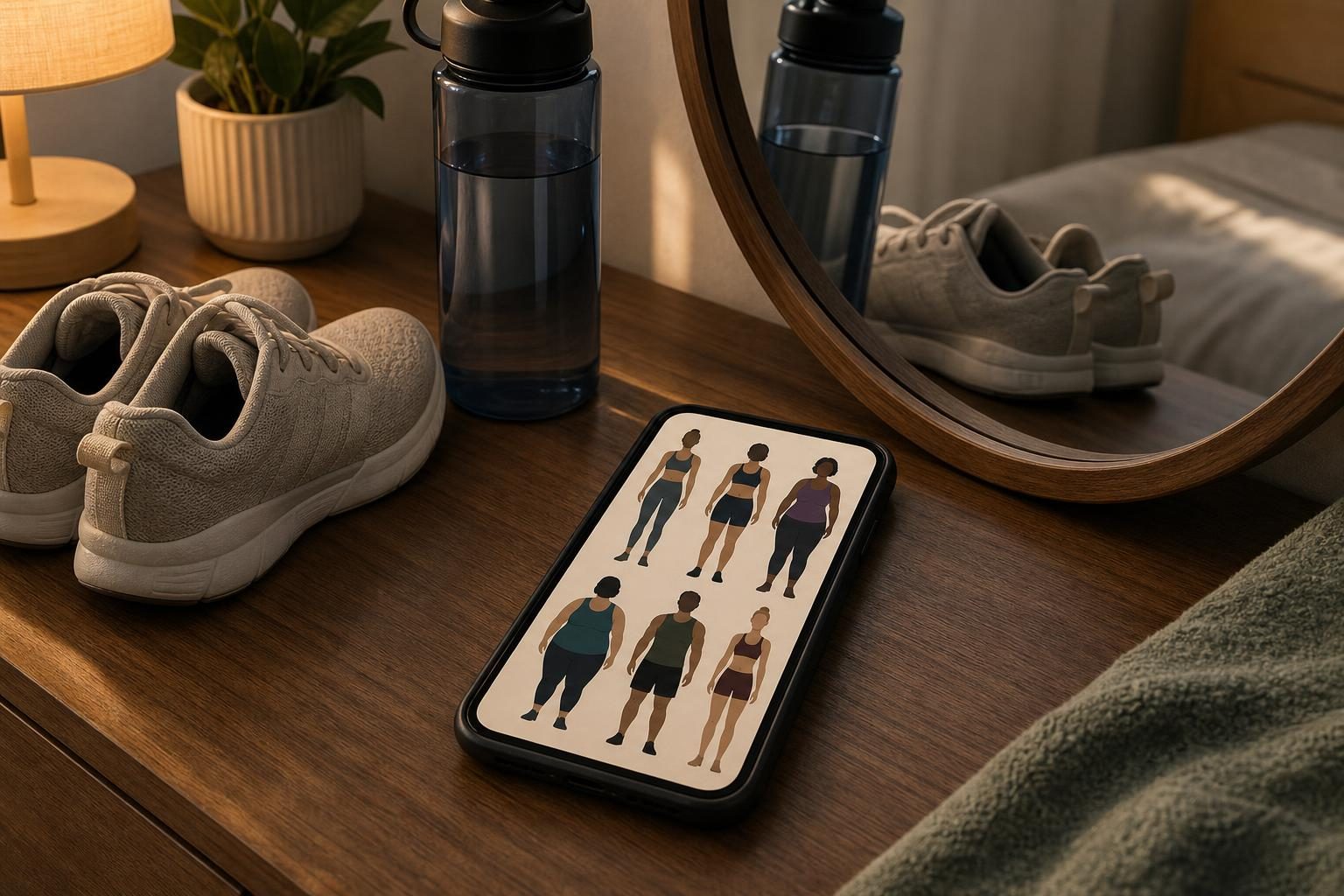
A new study of young women in New Zealand found that social media fitness culture can push several body ideals at once: thin, toned, curvy, muscular, fashionable, and almost free of body fat. The problem is not only that the standards are demanding. It is that some of them contradict each other.
According to a Phys.org article about the research, the study surveyed 200 young New Zealand women about the body ideals they saw online. Researchers found that 57% felt young women were under strong pressure to reach those ideals. Some participants also reported harmful effects: 17% said they had engaged in disordered eating practices, meaning eating behaviors that can damage health even if they are not formally diagnosed as an eating disorder.
The study does not say that every fitness post is harmful, and that is part of what makes the issue hard. Many people use social media to learn workouts, find recipes, follow athletes, or join communities that encourage healthier habits. A person who feels alone at school or in their neighborhood might find support from others trying to run, lift weights, recover from injury, or build confidence. For some users, fitness influencers can make exercise feel less intimidating and more possible.
But the same online spaces can also turn health into constant self-evaluation. The article describes influencers who present carefully edited versions of exercise, food, clothing, beauty, and success. Their posts often connect being healthy with looking a certain way. That can blur the line between advice and advertising, especially when influencers sell activewear, supplements, or workout plans. It can also make the viewer feel that the right body is always one more purchase, routine, or transformation away.
One contested question is where motivation ends and pressure begins. A workout video might inspire one person to move more and make another person feel ashamed. A post about discipline might help one viewer stick with a goal and push another toward extreme control over food or exercise. The content can be framed as empowerment, self-love, or body positivity while still teaching viewers to monitor themselves closely. That contradiction is not always obvious, because the language sounds encouraging even when the result is anxiety.
The study also looked at the “glow up,” a social media trend built around documenting a visible transformation into a supposedly better version of oneself. In focus groups with 15 young women in New Zealand’s North Island, some participants said the trend motivated them to become more active or healthier. But most described pressure to improve many parts of life at once, including sleep, diet, exercise, appearance, and career goals. In that version of wellness, a person’s whole life can start to feel like a project that is never finished.
That raises a second argument: how much responsibility should fall on individual users? Some participants suggested steps such as unfollowing harmful accounts, taking breaks from social media, playing sports, or journaling. Those strategies can help. They also fit with a common message adults give young people: curate your feed, make better choices, and log off when needed.
The researchers caution that this answer is incomplete. If the burden is placed only on individual users, then the people experiencing the pressure are also expected to solve the problem by themselves. Social media platforms shape what people see through algorithms, which are automated systems that decide which posts to recommend based on data such as likes, views, searches, and time spent watching. If those systems repeatedly amplify popular body ideals, then even a user who tries to avoid harmful content may keep encountering it.
There is no easy fix in the study. More platform control could reduce exposure to unrealistic or unsupported health advice, but it could also raise hard questions about who decides what counts as harmful. More personal responsibility respects users’ freedom, but it may ignore how powerful recommendation systems and influencer marketing can be. More education could help people recognize edited images, sales tactics, and unsupported claims, but education alone may not change what appears on a feed.
The research is limited in an important way: it focused on young women in New Zealand, not all teenagers everywhere. Still, the tension it describes is familiar beyond one country. Social media can make fitness information more accessible while also making bodies feel like public projects open to constant comparison. The hard part is deciding who should change first: the user, the influencer, the platform, or the culture that rewards the most extreme transformations with attention.
Written from reporting by Phys.org, “Fit, thin, curvy and toned: The contradictory body ideals young NZ women face online”.
Discussion questions
- If fitness content helps some users but harms others, should platforms restrict more of it, or would that create too much control over ordinary health advice?
- How fair is it to tell users to solve this problem by unfollowing accounts or taking breaks from social media?
- What evidence would you want before deciding whether social media fitness culture is mostly motivating, mostly damaging, or both at once?