
Atlanta’s new pandas carry more than bamboo
Two giant pandas arrived under a U.S.-China agreement, showing how animals can become symbols in international diplomacy.
Print it — all four files
The student packet has no answers in it. The teacher copy is the same pages plus a note on each question and the answer keys. Both languages carry the same story, the same picture and the same vocabulary.
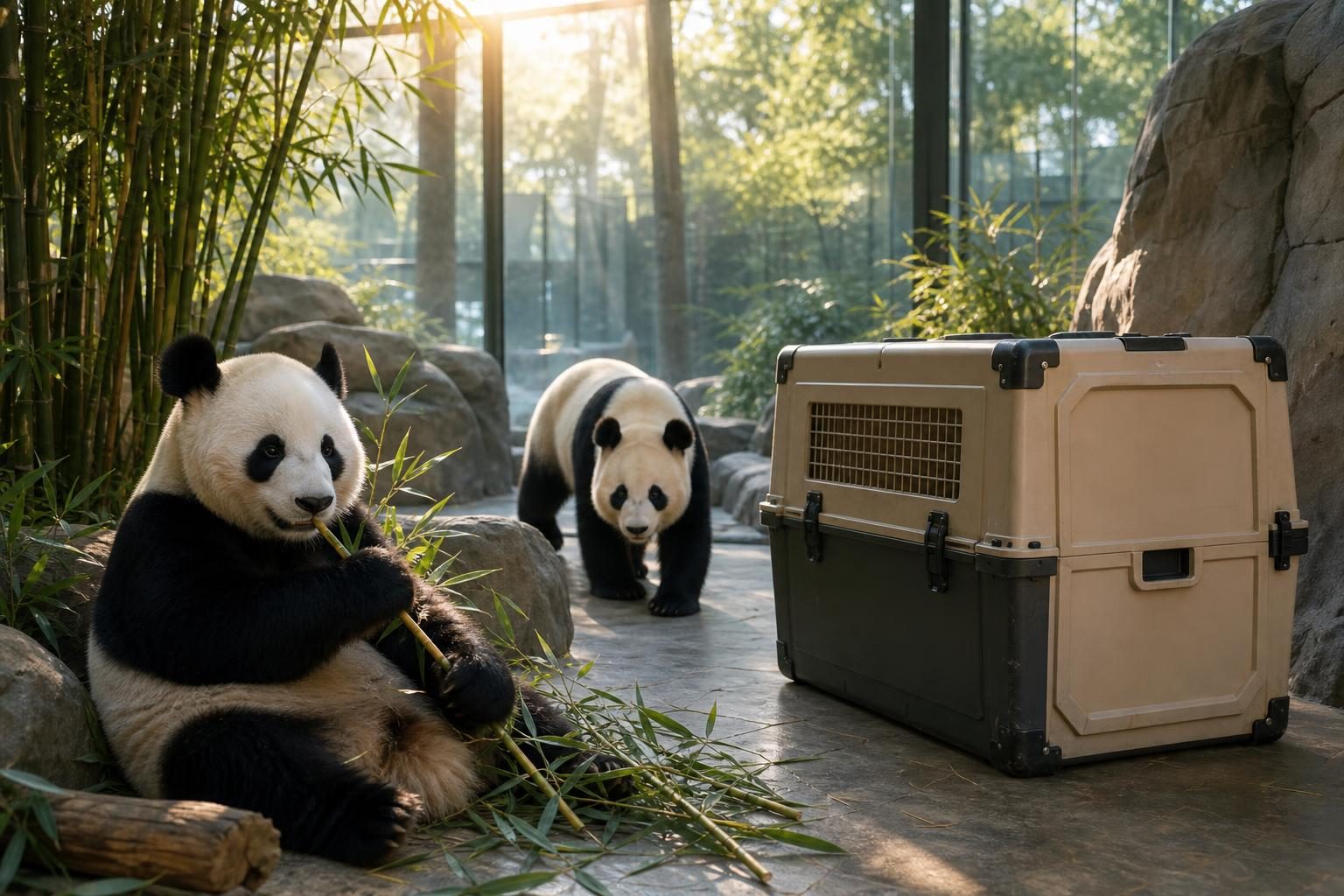
Two giant pandas arrived in Atlanta on Sunday morning under an agreement between the Chinese and American governments, according to Associated Press reporting carried by PBS NewsHour. The pandas, named Ping Ping and Fu Shuang, traveled from Chengdu in southwestern China on a dedicated aircraft. Their arrival makes Zoo Atlanta one of three zoos in the United States now housing giant pandas, along with the San Diego Zoo and the Smithsonian’s National Zoo in Washington, D.C.
The story matters because the bears are not only zoo animals. They are also part of diplomacy, which means the way governments manage relationships with one another without using force. China has long used giant panda loans as a public sign of goodwill toward other countries. When relations are warmer, pandas may be sent or loan agreements may continue. When tensions rise, those agreements can expire without renewal. That makes the arrival of two animals in Georgia a small but visible event in a much larger relationship between two powerful countries.
Ping Ping and Fu Shuang will not go on public display right away. Zoo officials said they will spend about a month in quarantine, which is a period of separation used to protect animal and public health. They will be kept in a biosecure area, meaning a controlled space designed to reduce the chance that diseases or contaminants move in or out. Zoo Atlanta has not announced an opening date for visitors to see them in the zoo’s new giant panda complex.
The pandas’ arrival followed a three-day summit between Chinese President Xi Jinping and U.S. President Donald Trump. A summit is a high-level meeting between government leaders. According to the AP report, the panda loan was one of the few concrete outcomes of the visit. The leaders expressed goodwill, but the meeting did not resolve the long-standing disagreements between the two countries. That is the central tension in the story: a friendly symbol can be real and meaningful, while still leaving the biggest problems untouched.
The new agreement between Zoo Atlanta and the China Wildlife Conservation Association will keep the pandas in Atlanta on loan for 10 years. Both pandas were born in 2020 and previously lived at the Chengdu Research Base of Giant Panda Breeding. Ping Ping is male, and Fu Shuang is female. Atlanta had said goodbye to its previous pandas in 2024, leaving the zoo without the animals until this new arrangement.
For supporters of panda diplomacy, the value is partly that it creates a shared point of public interest in a relationship often defined by suspicion and competition. A panda at an American zoo can draw families, local attention and media coverage in a way that an official statement rarely does. It can also keep channels of cooperation open between institutions, such as zoos and wildlife organizations, even when governments disagree on bigger issues. In that view, symbolic gestures are not meaningless; they can make future cooperation easier by reminding both sides that contact is still possible.
The opposing concern is that a highly appealing symbol can make thin progress look larger than it is. If a summit produces pandas but no solutions to the issues that divide the countries, the public may see a warm photograph or a happy zoo announcement and miss the limits of what actually changed. The AP report notes that the state visit brought expressions of goodwill but no fixes to long-standing differences. That does not make the panda loan fake, but it does make it incomplete as a measure of diplomatic success.
There is also a practical tension inside the zoo story itself. The public excitement is immediate, but the zoo cannot simply place the animals in front of visitors the day they arrive. The quarantine period and lack of a confirmed opening date show that animal care moves on a different schedule than politics or publicity. A diplomatic announcement can happen at a summit, but living animals require health checks, controlled spaces and time to adjust.
The pandas’ arrival is therefore both a local event and an international signal. In Atlanta, it means two rare animals will eventually become part of the city’s zoo experience again. In U.S.-China relations, it means both governments were willing to create at least one visible sign of cooperation. The hard question is how much weight to give that sign. A panda loan can represent goodwill, but it cannot by itself prove that the deeper relationship has changed.
Written from reporting by PBS NewsHour, “2 giant pandas arrive in Atlanta under a U.S.-China government agreement”.
Discussion questions
- How much should the public value symbolic diplomatic gestures, such as panda loans, when major disagreements remain unresolved?
- If you were evaluating the summit, would you count the panda agreement as a success, a distraction, or something in between?
- What information would you need before deciding whether this panda loan benefits conservation, diplomacy, both, or neither?