
U.N. Says World Will Pass Key Climate Limit
The new question is whether countries can limit the damage, then cool the planet back below the danger line.
Print it — all four files
The student packet has no answers in it. The teacher copy is the same pages plus a note on each question and the answer keys. Both languages carry the same story, the same picture and the same vocabulary.
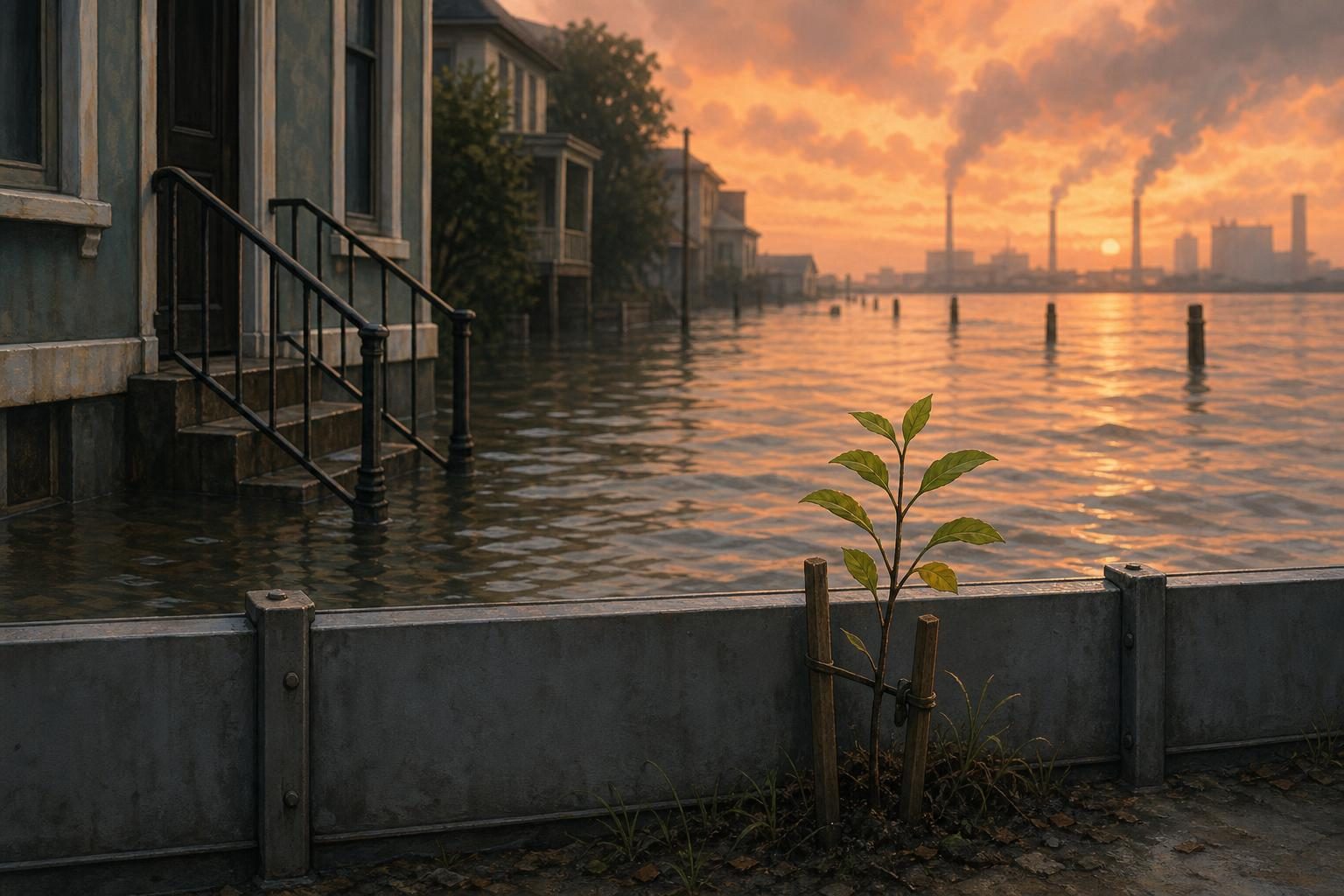
The United Nations now says the world is likely to pass the major global warming limit countries promised to try to avoid, according to reporting by Phys.org on a new U.N. Environment Programme report released Wednesday. The report says Earth will cross 1.5 degrees Celsius of warming above pre-industrial levels, meaning the average climate before large-scale burning of coal, oil and gas, within the next few years.
That number matters because it came from the 2015 Paris climate accord, the international agreement in which countries set a shared goal of limiting warming. Scientists found that the damage at 2 degrees Celsius would be much worse than at 1.5 degrees, so 1.5 became a symbol of the safer path. The world is already at about 1.4 degrees Celsius above pre-industrial levels, based on a 20-year average rather than one hot year.
The U.N. is not saying that 1.5 degrees is suddenly unimportant. It is saying the strategy has changed. Instead of preventing the crossing, the report describes a future in which the planet goes above 1.5, reaches a higher peak, and then eventually cools back below that line. Climate scientists call that path overshoot: going past a target for a period of time and then trying to return to it later.
That shift creates the central tension in the report. On one side, admitting that the old goal cannot be met may make climate policy more honest. Governments, cities and communities can prepare for conditions that are now likely, including more extreme weather, higher seas, melting ice and damage to ecosystems. On the other side, there is a risk that calling overshoot the new plan could sound like permission to delay. If people hear that the world can go past the limit and come back later, they may underestimate the harm done during the years above it.
The report gives reasons for both urgency and realism. In the most optimistic scenario described by the U.N., warming peaks at 1.8 degrees Celsius around mid-century if countries pursue ambitious climate goals. Under governments’ current policies, however, warming reaches 2.6 degrees Celsius by 2100. One report co-author said every five years of delay in cutting emissions adds at least one-tenth of a degree to the peak. Emissions are heat-trapping pollution released into the atmosphere, especially from burning fossil fuels.
The problem is that the overshoot period is not just a line on a graph. The report says the world may spend many decades above 1.5 degrees. During that time, climate-related harms are expected to increase: more people may die or get sick from extreme weather, food production may fall, hunger and water shortages may worsen, economies may be hurt, and some species, including coral, may go extinct. The report also warns that poor communities are hit hardest because they often have fewer resources to move, rebuild, insure property or recover after disasters.
That is why the U.N. calls for both reducing warming and adapting to it. Adaptation means changing how people live and build in order to reduce harm from conditions that cannot be avoided, such as preparing for hotter days, stronger floods or rising seas. Some climate advocates worry that too much focus on adaptation can distract from cutting fossil fuel use. But the report argues that some damage is already locked in, so refusing to prepare would leave people more exposed.
The report also points to a harder long-term requirement: bringing temperatures back down would mean ending fossil fuel use and developing ways to remove carbon dioxide from the air. Carbon dioxide is a heat-trapping gas released when coal, oil and gas are burned. The source article does not describe which removal methods would work at the scale needed, and that uncertainty is part of the debate. If future cooling depends on technology that is not yet ready or widely deployed, today’s leaders may be making a promise that future generations have to keep.
Another major worry is tipping points, which are climate changes that can become self-reinforcing and difficult or impossible to reverse. The report names possible examples, including the loss of the Greenland and West Antarctic ice sheets, the loss of the Amazon rain forest and the shutdown of an Atlantic Ocean circulation system that helps keep much of Europe warm. Overshoot is more dangerous if crossing a temperature line increases the chance of setting off changes that cannot simply be undone later.
The report’s message is bleak, but it is not the same as giving up. Its argument is that every tenth of a degree still matters, even after a target is missed. The fight becomes less about preserving a perfect outcome and more about limiting how high warming peaks, how long the planet stays above 1.5 degrees, and who is protected while the world tries to get back below it.
Written from reporting by Phys.org, “Global warming will exceed limit, UN says in a report that maps path to get back below danger zone”.
Discussion questions
- Does publicly admitting that the 1.5-degree target will be exceeded make climate action more realistic, or does it risk weakening public pressure to act?
- How should governments balance money and attention between cutting emissions and adapting to harms that now seem unavoidable?
- Is it responsible to rely partly on future carbon removal to return below 1.5 degrees, or should policy assume that technology may not arrive in time?