
UN Warns Climate Adaptation Is Falling Behind
A new report says poorer countries need far more help to prepare for floods, heat, storms, and other climate impacts.
Print it — all four files
The student packet has no answers in it. The teacher copy is the same pages plus a note on each question and the answer keys. Both languages carry the same story, the same picture and the same vocabulary.
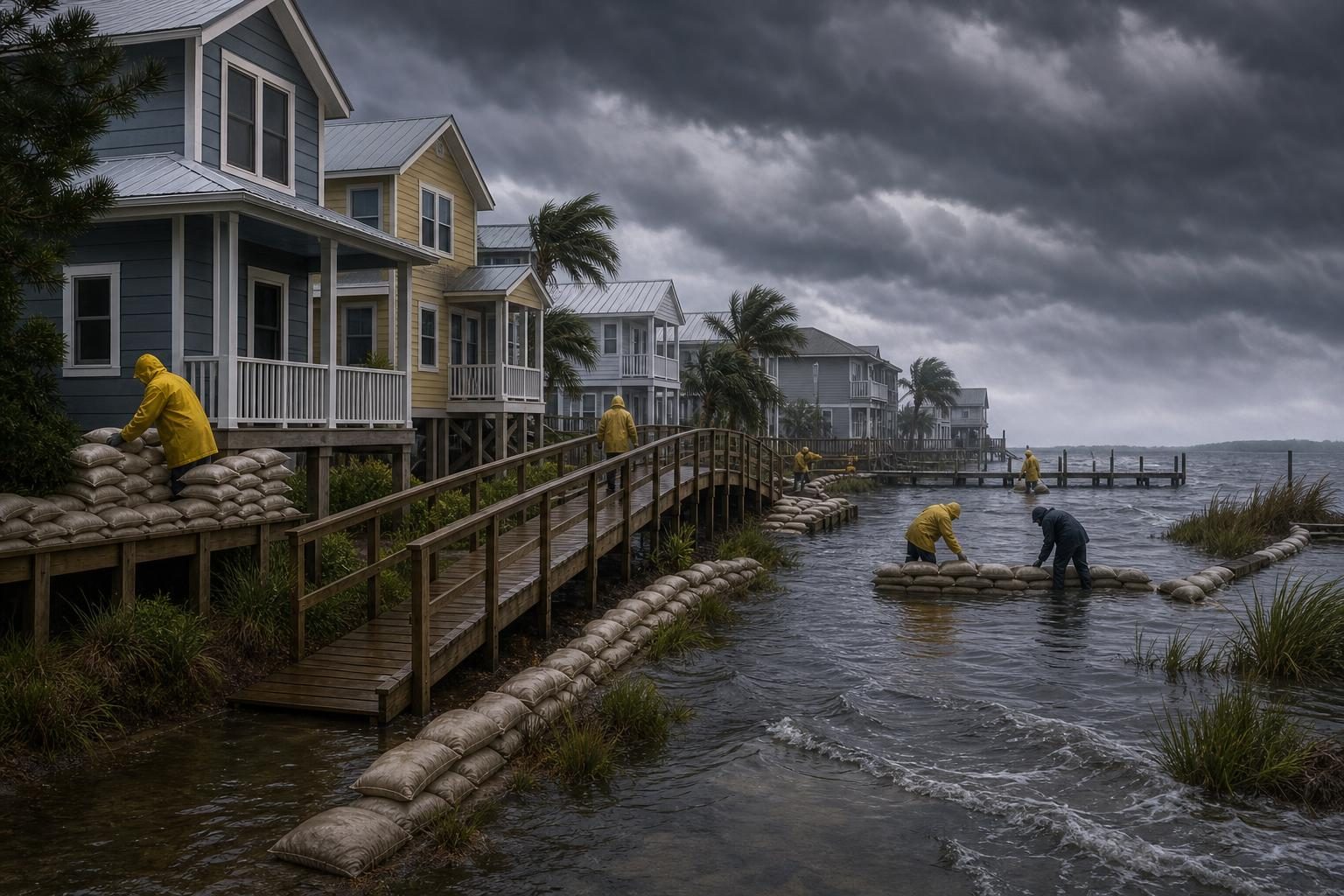
A new United Nations report says the world is not spending nearly enough to help developing countries adapt to climate change, even as warming, extreme weather, and related damage are increasing. According to a Phys.org report on the U.N. Environment Programme’s 2026 Adaptation Gap Report, developing countries will need about US$305 billion each year by 2035 for adaptation, but current international public funding is far below that level.
Adaptation means changes that reduce harm from climate impacts that are already happening or are expected soon. It can include stronger flood defenses, heat plans for cities, drought-resistant farming, better warning systems for storms, or moving key infrastructure away from areas at high risk. It is different from mitigation, which means cutting greenhouse gas emissions so future warming is less severe. The report’s warning is that the world needs both, but adaptation is not keeping pace.
The tension is not just whether climate change is a problem. It is about who should pay, how much they should pay, and whether money alone can solve the problem. Developed countries have been asked to provide public finance to developing countries, which often face severe climate risks while having fewer resources to prepare. In 2024, those international public adaptation flows reached US$28.2 billion to US$31.7 billion. That was only about US$1 billion more than the year before.
The report says that even if countries meet a goal from COP30, the U.N. climate conference where governments negotiate climate action, to at least triple adaptation finance by 2035, the money would still cover only 20% to 29% of estimated needs after inflation. In other words, tripling sounds dramatic, but it would still leave a large gap between what countries say is needed and what they are on track to provide.
That gap matters because climate impacts are not waiting for perfect agreements. The report says global warming is set to exceed 1.5°C, a major climate threshold often used to measure how far human-caused warming has gone. Higher temperatures can make some disasters more likely or more damaging, and adaptation becomes more expensive when communities wait until after roads, water systems, farms, and homes are already under stress.
There is another complication: not all countries face the same level of risk. The report says funding to least developed countries, meaning the world’s poorest countries as defined in U.N. development categories, and small island developing states rose in real terms between 2019 and 2024, but has declined from a 2022 peak. Small island states are often especially vulnerable to sea-level rise and storms, while least developed countries may have limited tax bases, weaker infrastructure, and less access to loans.
The report also points out that money from developing countries to other developing countries has grown. These South-South finance flows, meaning support that moves between countries in the Global South rather than from wealthy donor countries, rose from US$3.8 billion in 2019 to US$9.6 billion in 2024. Private finance is growing too, but the report says it often pays for the private sector’s own adaptation needs or may still have to be paid for by developing countries themselves. It may reduce the gap for public adaptation projects by only 15% to 20%.
That raises a difficult fairness question. If a coastal country needs seawalls, drainage systems, or safer housing because of climate damage, should that cost fall mainly on its own taxpayers, on private investors, on richer countries that have more money, or on some combination? The answer depends partly on what people think responsibility means. Some argue that wealthy countries should provide more because they have greater resources and have benefited from industrial economies. Others argue that all governments must make hard budget choices and that funding should be tied to clear plans, accountability, and results.
The U.N. report does not say finance is the only barrier. It says institutions also matter. That means the laws, agencies, planning systems, and public offices that turn money into real projects. A country may receive funding but still struggle to use it if agencies do not coordinate, if local governments lack trained staff, or if the process for accessing aid is too complex. The report says governments are working on climate framework laws, policy-learning platforms, coordination across sectors and levels of government, and systems to manage climate finance.
The report also discusses losses and damages, a term for climate-related harms that happen when adaptation is not enough or does not happen in time. The first round of the Fund for responding to Loss and Damage received requests worth US$2.8 billion, far more than its initial funding envelope of US$342 million. That does not reveal the full global gap, but it shows that demand is already much larger than available support.
The central conflict is that adaptation is both urgent and incomplete. Spending more on preparation can save lives and reduce future costs, but governments disagree over how large the commitment should be and who should carry it. Waiting can make disasters more expensive, but paying now requires choices about budgets, priorities, and trust between countries. The report’s message is not that adaptation can stop climate change. It is that a warmer world is already testing whether countries can prepare fast enough, fairly enough, and practically enough.
Written from reporting by Phys.org, “Adaptation isn't keeping up with global warming, UN warns”.
Discussion questions
- If adaptation funding will still fall short even after a major increase, how should governments decide which projects or countries receive help first?
- Should wealthy countries have a greater responsibility to fund climate adaptation in developing countries, or should each country mainly pay for its own preparation?
- The report says money is not enough without strong institutions; how should that affect the way climate aid is designed?