
Nobel buzz puts weight-loss drug science on the job board
Research behind GLP-1 medicines shows how lab discoveries become clinic, pharmacy, and manufacturing work.
Print it — all four files
The student packet has no answers in it. The teacher copy is the same pages plus a note on each question and the answer keys. Both languages carry the same story, the same picture and the same vocabulary.
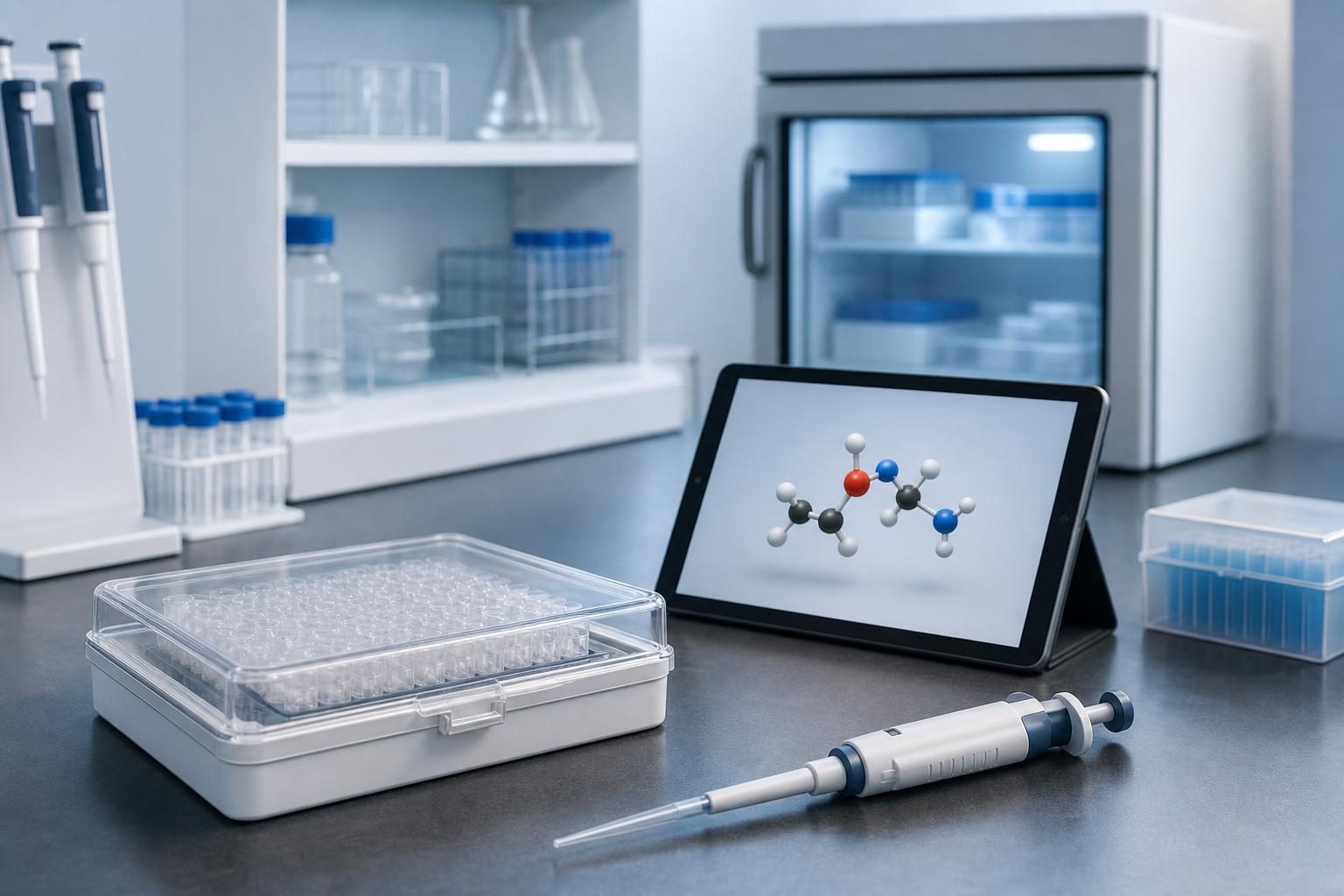
As Nobel Prize week opened, research behind today’s major weight-loss drugs was being discussed as a leading contender for the 2026 medicine prize. According to AFP reporting published by Phys.org, Nobel watchers said the award could recognize discoveries about hormones that regulate appetite, including work on GLP-1, the hormone that drugs such as Ozempic and Mounjaro imitate.
That matters beyond the awards ceremony because it shows how a discovery about the body can turn into a whole chain of work. GLP-1, short for glucagon-like peptide 1, is released by the intestine after a person eats and helps signal satiety, or the feeling of being full. A medicine that mimics GLP-1 is not just a chemistry idea. It becomes a job for researchers, clinical staff, quality-control workers, pharmacists, medical assistants, data analysts, and doctors who have to understand what the drug does and how it should be used.
The article names several kinds of scientists whose work may be connected to the prize. An endocrinologist is a physician who specializes in hormones and glands, including the pancreas, thyroid, and the systems that affect appetite and metabolism. A chemist studies matter at the molecular level and can help identify, build, or test compounds that might become medicines. A physician-scientist works in both patient care and research. A data analytics firm, Clarivate, was also quoted because it tracks how often research is cited by other scientists; citations are one way to see which discoveries have influenced a field.
Three researchers are regularly mentioned in connection with GLP-1 work: Canadian endocrinologist Daniel Drucker, Danish physician Jens Juul Holst, and Yugoslav-born American chemist Svetlana Mojsov. The point for a career classroom is not only their names. It is that the work required different specialties. One person might study how the body sends hunger and fullness signals. Another might isolate or describe a molecule. Another might connect that science to treatment. In a workplace, that same pattern shows up as cross-functional teams: people with different licenses, certifications, and technical skills solving one problem from different angles.
The story also mentions related appetite research involving leptin and ghrelin. Leptin is a hormone connected to satiety, while ghrelin is connected to hunger. It also mentions microbiome research; the microbiome is the community of bacteria and other microorganisms that live in and on the body, including in the gut. For health care and biotech workers, these terms are not vocabulary for a test only. They shape what patients ask about, what lab teams measure, what product teams develop, and what safety teams monitor.
Other possible Nobel fields in the article point to different career pathways. Optical coherence tomography is a noninvasive imaging technique, meaning it looks inside tissue without cutting into the body; it uses reflected light to create high-resolution cross-sectional images, especially of the retina and optic nerve in the eye. That connects to ophthalmology clinics, biomedical equipment work, imaging technology, and device maintenance. The article also mentions adhesion receptors in the immune system. These are molecular grips on immune cells that help the cells stick to blood vessels and move into tissue where infection or inflammation is happening. That field connects to immunology, the study of the immune system, and to treatments for inflammatory and autoimmune diseases, where the body’s defenses may overreact or attack its own tissues.
For people thinking about hiring, the lesson is that breakthrough medicine depends on both high-level research jobs and disciplined technical work. A laboratory technician has to measure accurately, label samples correctly, follow a standard operating procedure, or SOP, and document results so another worker can trace what happened. A clinical research coordinator helps keep a study organized, communicates with participants, and maintains records. A pharmacy technician may not decide whether a patient should take a drug, but accuracy, confidentiality, and inventory control are part of the job. In manufacturing, quality assurance means checking that a process meets required standards before a product reaches patients.
The Nobel Prize focuses attention on a few famous names, but the actual labor behind a medicine is wider than that. A discovery has to survive testing, review, production, distribution, and daily use in clinics. Each step needs workers who can read technical information, follow safety rules, communicate clearly, and understand why small mistakes can have large effects. The article is also a reminder that health care technology keeps changing the work. When a new type of drug becomes widely used, workers in clinics and pharmacies need updated training, and employers look for people who can learn new procedures without losing the basics.
Nobel week will include prizes in medicine, physics, chemistry, literature, peace, and economics from October 5 through October 12. Whether GLP-1 research wins or not, the current attention around it shows what modern medical work looks like: biology, chemistry, patient care, data, imaging, and manufacturing all connected. For a CTE pathway, that is the useful part of the story. The future job may not be “Nobel scientist,” but it may still sit somewhere on the same production line from question, to experiment, to treatment.
Written from reporting by Phys.org, “Research into weight-loss drugs tipped for Nobel as award week opens”.
Discussion questions
- The Nobel Prize tends to honor a small number of researchers, while medicines depend on large teams of technical workers. Is that a useful way to recognize scientific progress, or does it distort how the work really happens?
- If a CTE health or biotech program wanted to prepare workers for fast-changing fields like GLP-1 medicines, what should it emphasize most: scientific theory, hands-on procedure, documentation, patient communication, or adaptability?
- What important information is missing from this article for someone deciding whether to pursue a career connected to this field?