
Seagrass Meadows Are Workplaces for Millions
A new study finds overlooked underwater habitats support coastal fishers in extreme poverty across the Indo-Pacific.
Print it — all four files
The student packet has no answers in it. The teacher copy is the same pages plus a note on each question and the answer keys. Both languages carry the same story, the same picture and the same vocabulary.
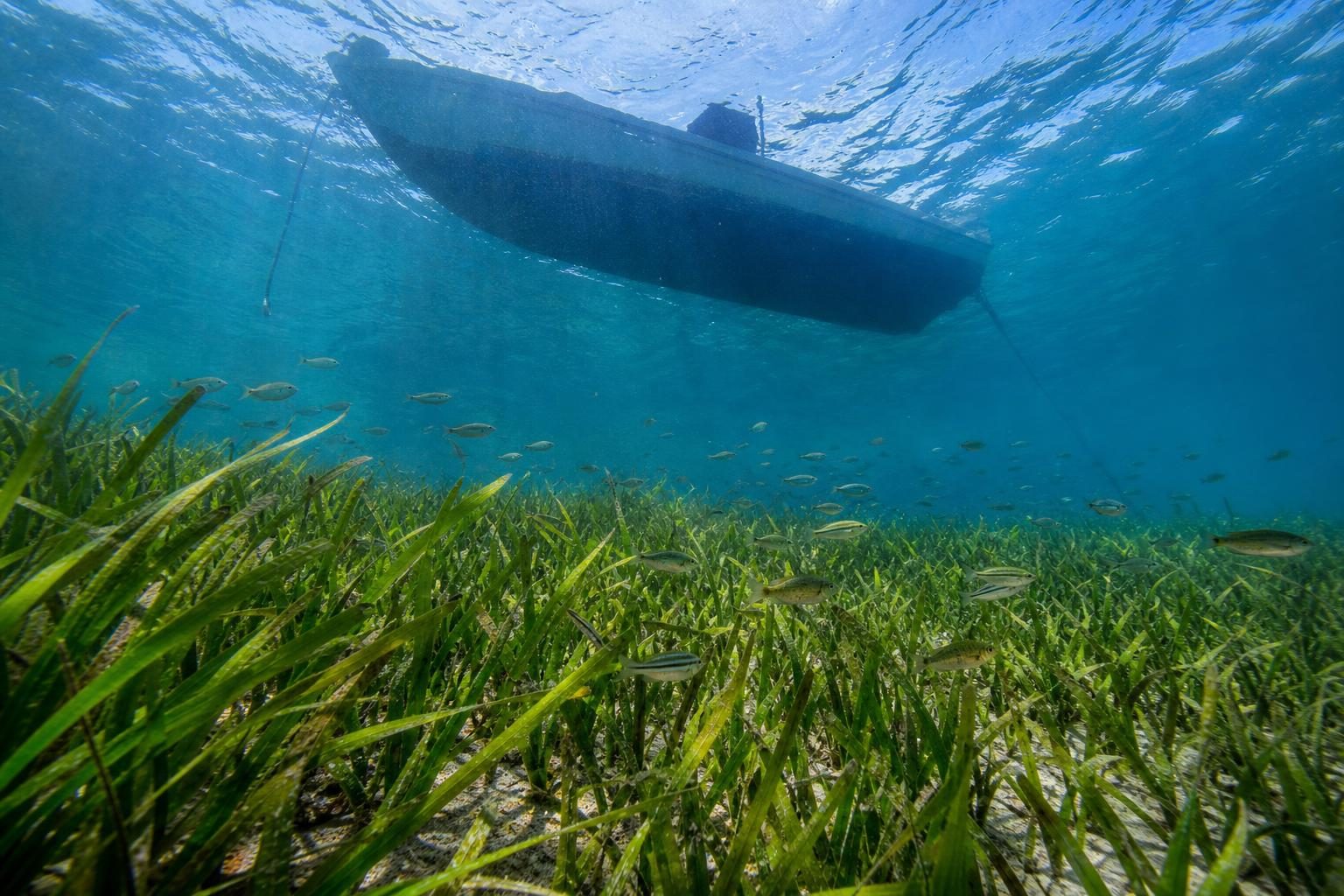
A new study says seagrass meadows are not just marine habitat; they are workplaces and food sources for millions of coastal people living in extreme poverty. According to Phys.org’s report on research published in Nature Sustainability, at least 18 million people in poverty across the Indo-Pacific fish in seagrass meadows, and 6.5 million are entirely dependent on those areas for subsistence and fishing-related income.
Seagrasses are flowering plants that grow in shallow saltwater and form underwater meadows near coasts. In a fishery, meaning the people, places, gear, and rules involved in catching fish or other aquatic animals, those meadows can function like a low-cost job site. The source reports that people can often reach them on foot or with limited equipment, which matters when a household cannot afford a larger boat, fuel, or more expensive gear.
The study was led by scientists from Project Seagrass, a conservation organization focused on those habitats. The researchers connected household-level poverty data with estimates of people living near seagrass. That kind of work is not only biology. It also involves data handling, field knowledge, mapping, and an understanding of how income is earned in small coastal communities. The result made visible a workforce that often does not show up clearly in development plans or conservation debates.
The finding that stands out for work and careers is dependence. The report says households in extreme poverty were more likely to rely entirely on seagrass meadows for fishing, and seagrass-dependent households earned 23% less than other fishers. Subsistence means catching food mainly to feed a household rather than to sell for profit. Fishing-related income can include selling catch or doing related work connected to the fishery. When one habitat is both the grocery aisle and the paycheck, damage to that habitat becomes an economic risk.
The study describes a possible coastal poverty trap. A poverty trap is a cycle in which people have too few options to move into better-paying work, so they stay dependent on low-income work that may itself be insecure. In this case, the trap is tied to a vulnerable ecosystem. If seagrass declines, fishers with few other choices may lose food, income, and bargaining power at the same time. If the habitat is protected without considering local livelihoods, rules could also make survival harder for the people most dependent on it.
The article says women and other marginalized groups often play central roles in these seagrass fisheries. That detail matters for workforce planning. A coastal development project, a pollution rule, or a conservation program can affect different workers differently depending on who has access to boats, permits, markets, land, credit, or decision-making meetings. A good fisheries manager or coastal planner would need to know not only what species live in a meadow, but also who works there, who gets paid, and who has the least room to adapt.
Several jobs connect directly to this issue. Small-scale fishers harvest from the meadows with limited gear. Conservation scientists study the health of the habitat and the species that use it. Fisheries officers and local managers may help set rules for harvest so the resource lasts. Coastal planners review development near shorelines. Aid and food-security workers design programs meant to reduce hunger and poverty. In each role, technical skill matters, but so does listening to the people whose work depends on the site.
The threats named in the report are coastal development and land-based pollution. Coastal development means building or expanding things near the shore, such as housing, ports, roads, or tourist facilities. Land-based pollution means harmful material that starts on land and reaches the water, often through runoff. The study notes that the communities most dependent on seagrass often have little influence over decisions causing the damage. That is a workplace safety issue in a broad sense: the condition of the worksite is being changed by people who may not work there.
For a career and technical education class, this story is a reminder that environmental work is also infrastructure and labor work. A seagrass meadow is not a factory, but it can still be a production site where food and income are generated. Managing it well requires practical questions: What gear is being used? Who depends on the catch? What alternatives exist if access changes? Which repairs or protections are realistic? The study argues that seagrass conservation should be part of poverty reduction and food-security planning, not treated as a separate nature project.
The hiring path into this kind of work depends on the role. Fishers often learn through family, community practice, and local knowledge. Technicians and conservation workers may need skills in field sampling, boat safety, data entry, water-quality testing, habitat restoration, or community outreach. Planners and program managers need the ability to read technical reports and weigh trade-offs among jobs, food, habitat, and development. The common requirement is being able to see the underwater meadow as both an ecosystem and a workplace.
Written from reporting by Phys.org, “Underwater meadows sustain millions in extreme poverty”.
Discussion questions
- If a government wants to protect seagrass but local households depend on fishing there, what would a fair policy need to balance?
- Should seagrass conservation be funded mainly as an environmental project, a poverty-reduction project, or both? Defend the choice.
- What information would a fisheries manager need before changing rules for a seagrass fishery, and what could go wrong if that information is missing?