
U.S.-Canada Tariff Fight Hits Manufacturing Work
A stalled trade deal shows how politics can change costs, supply chains, and shop-floor decisions in skilled trades.
Print it — all four files
The student packet has no answers in it. The teacher copy is the same pages plus a note on each question and the answer keys. Both languages carry the same story, the same picture and the same vocabulary.
Trade talks between the United States and Canada broke down after officials thought they were close to a deal, according to a PBS NewsHour interview with Canadian trade representative Dominic LeBlanc. The dispute centers on tariffs, which are taxes charged on imported goods. LeBlanc said President Trump had set a Friday midnight deadline for 50 percent Section 338 tariffs, meaning tariffs imposed under a named section of U.S. trade law, on almost $28 billion of Canadian exports to the United States. Canada is now preparing to respond with its own tariffs.
This matters far beyond politics because the products being discussed are the raw material of many skilled trades: automobiles, steel, aluminum, paper products, auto parts, heavy trucks, and derivative products. A derivative product is an item made from a material, such as a fabricated part made from steel or aluminum. When tariffs change, the cost of a coil of steel, a truck component, or an aluminum part can change too. That can affect quotes, purchasing decisions, delivery schedules, and the price of finished work.
LeBlanc said negotiators were still stuck on several major issues when the talks failed, including what would be included in auto tariff reductions and how steel and aluminum derivative products would be treated. The U.S. trade representative, Jamieson Greer, said the United States had offered to reduce some tariffs, including cutting a 25 percent tariff on cars and reducing many steel and aluminum tariffs from 50 percent to 25 percent. LeBlanc argued that Canada started from the position that the USMCA, the trade agreement among the United States, Mexico, and Canada, had allowed zero tariffs in those sectors.
The auto example shows why this is not just a paperwork fight. LeBlanc said half of the cars made in Canada are made with American parts. That means the same vehicle may depend on workers, plants, suppliers, and inspectors on both sides of the border. A tariff on one part of the chain can create pressure somewhere else in the chain. In a manufacturing setting, that pressure may show up as a revised purchase order, a delayed shipment, a changed supplier, or a new cost calculation before a job can move forward.
For CTE pathways, the work affected by a trade dispute is not only assembly-line work. Welders, CNC machinists, industrial maintenance technicians, diesel technicians, collision repair workers, quality-control inspectors, warehouse workers, purchasing agents, and logistics coordinators all operate inside supply chains. A supply chain is the connected system that moves materials, parts, labor, and finished goods from one place to another. When a tariff changes, the people doing the work may not set the policy, but they still have to adjust to it.
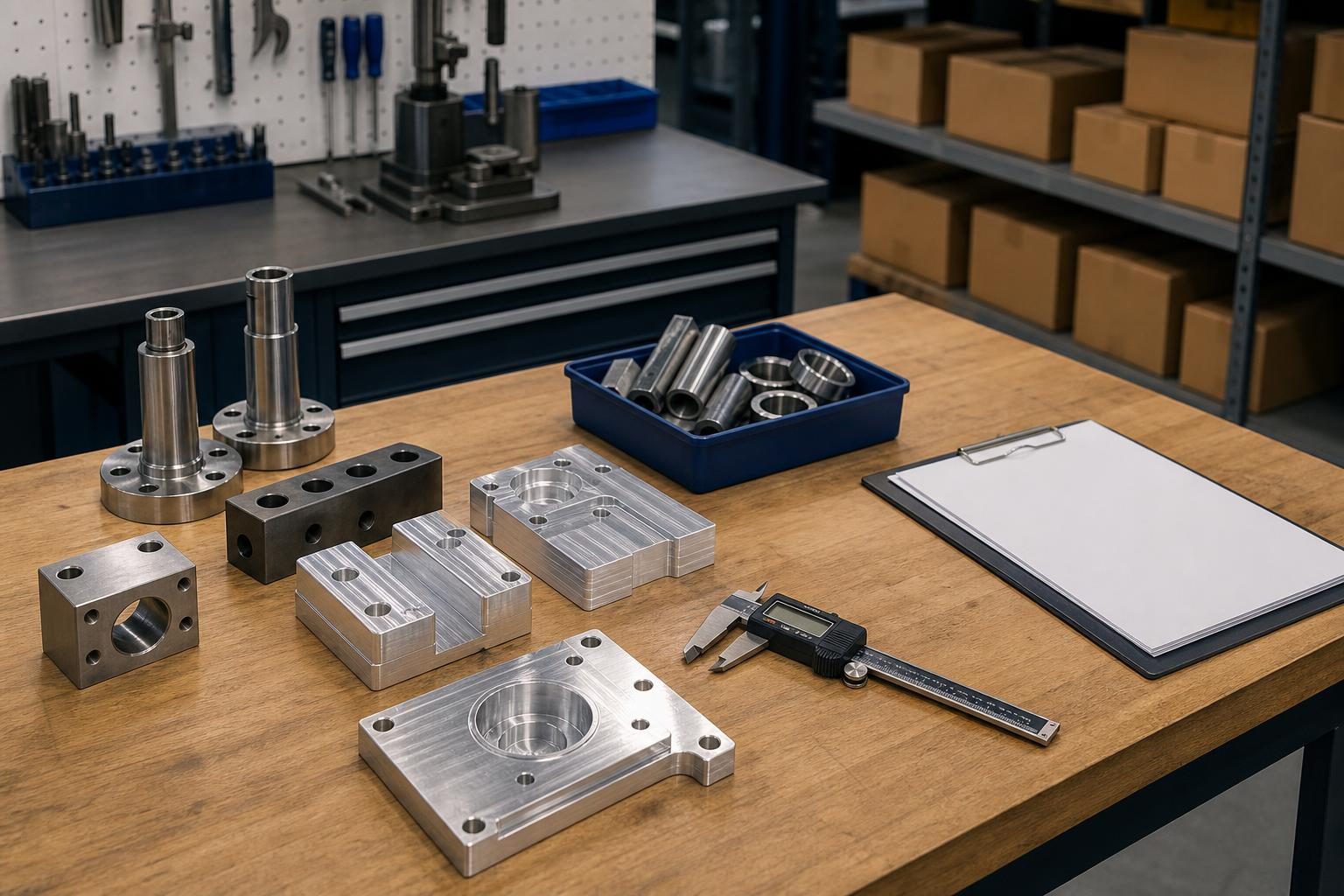
That adjustment can be technical. An estimator may need to update material pricing before submitting a bid. A machinist may be asked to run a different alloy if a buyer changes suppliers. A quality inspector may need to verify that a substitute part still meets a required specification, which is a documented standard for size, strength, material, or performance. A logistics coordinator may need to track whether a shipment crosses a border and what paperwork follows it. None of those tasks is a speech or a slogan; they are daily work decisions.
The dispute also shows why employers value trade skills plus business awareness. Being hireable in a modern shop is not only about running a machine, welding a clean bead, or turning a wrench, although those skills still matter. It also helps to read a work order carefully, understand bills of material, use measurement tools accurately, follow documentation, and communicate when a part, supplier, or deadline changes. In an integrated economy, a worker who understands both the tool and the process around the tool can solve problems faster.
LeBlanc said Canada and the United States still have common goals, including working together on steel from non-market economies, a term used for countries where government control strongly shapes prices and production rather than open market competition. But he also said Canada would try to prevent an unfair advantage for American exporters if new U.S. tariffs go forward. That is the hard trade-off in this story: protecting one industry can raise costs for another, especially when factories and suppliers have been built to work across borders for decades.
For people planning careers in the trades, the lesson is practical. A part is never just a part. It has a material, a drawing, a tolerance, a supplier, a price, a shipping route, and sometimes a tariff code. The person on the shop floor may not negotiate the trade agreement, but the agreement can still land on the bench, the lift, the loading dock, or the estimating screen.
Written from reporting by PBS NewsHour, “Canadian trade minister says reaching deal with U.S. in best interest for both countries”.
Discussion questions
- If tariffs protect some manufacturing jobs but raise costs for shops that use imported parts, how should a country decide whether the trade-off is worth it?
- In a shop or plant affected by changing material costs, which workers or departments should be involved before switching suppliers or substitute materials?
- What skills would make a skilled trades worker more valuable when supply chains become uncertain, and why?