
A Fossil Shows Insects Once Had Many More Legs
Scientists rechecked an old fossil and found a clue about how insects became the six-legged animals we know.
Print it — all four files
The student packet has no answers in it. The teacher copy is the same pages plus a note on each question and the answer keys. Both languages carry the same story, the same picture and the same vocabulary.
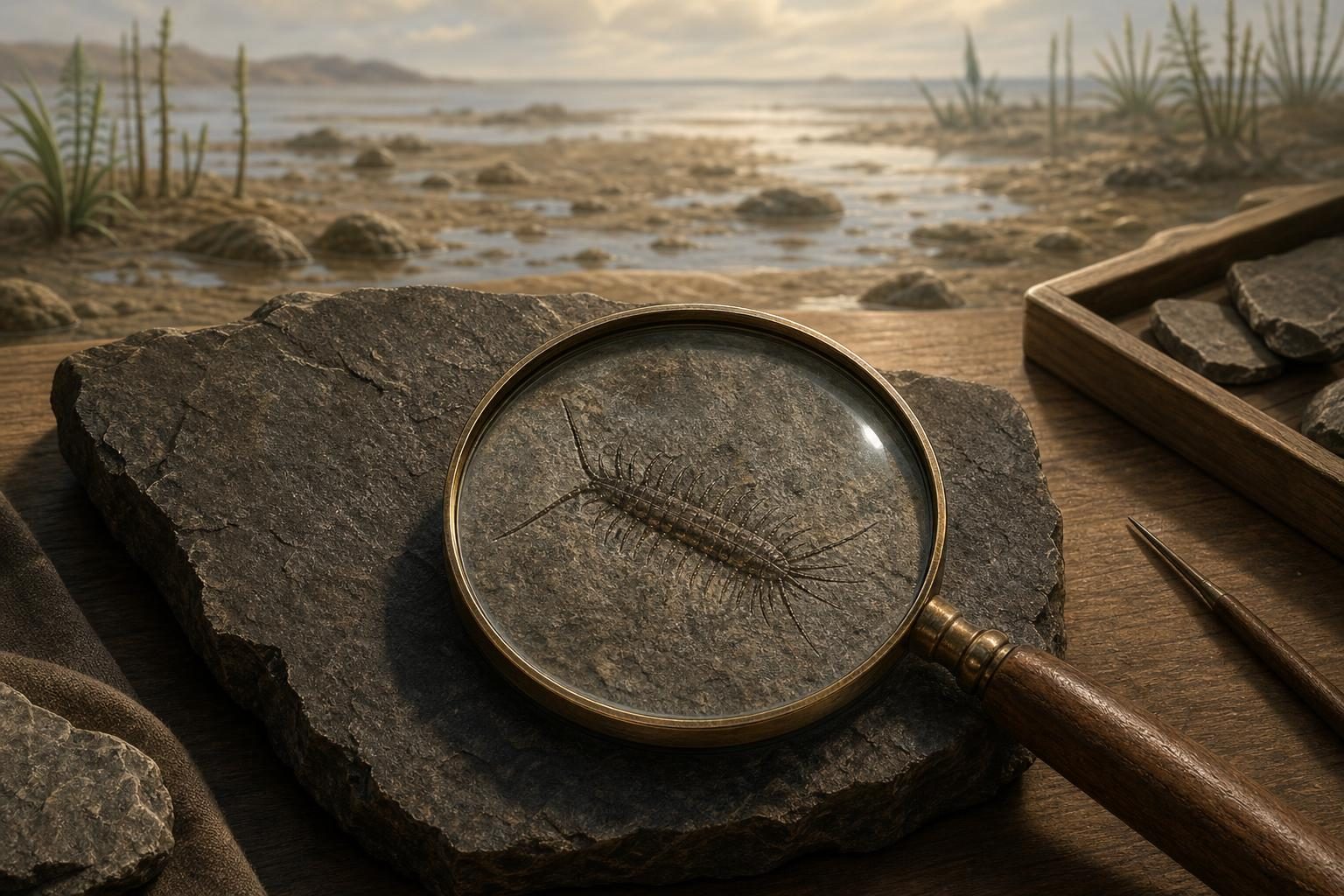
According to Science News Explores, scientists rechecked a 324-million-year-old fossil from west Texas and found something surprising. It looked like an early insect, but it had 24 legs. Insects today have six. The find helps scientists picture what insects were like before ants, beetles and butterflies filled the land.
A fossil is a trace of an ancient living thing saved in rock. This one was found in 1985 near Big Bend National Park. For years, it sat in a museum drawer in San Diego. Scientists had thought it was a young crustacean, an animal from the group that includes shrimp and crabs.
Then researcher Erik Tihelka noticed a drawing of it in an old science book. He went to see the real fossil. At first, it looked like a black smudge. Then he used special light filters that cut glare. The smudge began to show a body.
The fossil had three pairs of walking legs, like insects today. It also had extra short legs along its abdomen, the long back part of its body. Some of those legs were shaped like paddles. That clue suggests the animal may have moved through muddy, shallow water.
The animal was named Chosha praecursor. The name was inspired by a Navajo creation story and by words meaning insect and predecessor. A predecessor is something that came before. Scientists think Chosha sat just outside the group that includes all insects alive today. Tihelka also compared it with strange fossils from Scotland and Illinois. They seemed to fit near the same branch of the insect family tree.
That matters because insects did not simply appear as the six-legged animals we know. Over many, many generations, living things can change. That long change is called evolution. Chosha may show one step in the change from many-legged, water-loving animals to insects that lived on land.
Imagine finding this fossil in a drawer. It would not sparkle like a gem. It might look like a flat dark mark on stone. But with the right tools, that mark can become a clue. It can tell a story about Earth long before classrooms, playgrounds, or even dinosaurs. A small smudge can help explain why a ladybug has six legs today.
Written from reporting by Science News Explores, “Insects once had 24 legs”.
Discussion questions
- Was it a mistake for scientists to leave the fossil in a drawer for years, or was that a normal part of science?
- If a museum had money for only one project, should it search for new fossils or recheck old ones? Defend your choice.
- Should textbooks still say insects have six legs, even after this discovery? Why or why not?