
A Satellite Spots Autumn in Poland’s Mountains
NASA’s Landsat 9 saw red, gold, and tan hills as fall changed a national park in southern Poland.
Print it — all four files
The student packet has no answers in it. The teacher copy is the same pages plus a note on each question and the answer keys. Both languages carry the same story, the same picture and the same vocabulary.
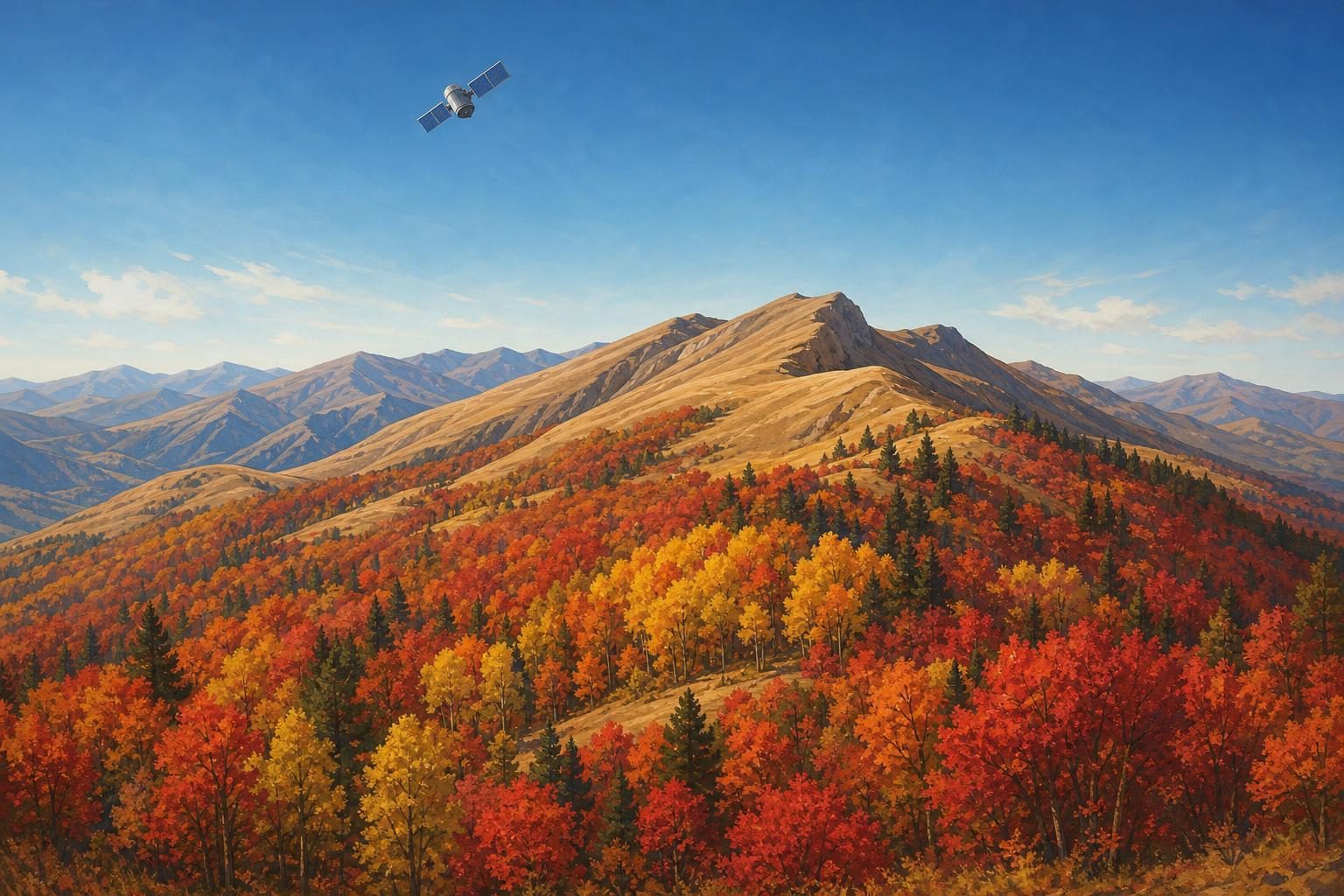
A NASA satellite photographed bright autumn colors in southern Poland this month. According to NASA Earth Observatory, Landsat 9 took the picture on October 8. The image shows Bieszczady National Park, a mountain park near Poland’s borders with Slovakia and Ukraine. Forested hills look red and gold. High meadows look tan, like grass at the end of summer.
A satellite is a machine that travels around Earth. Landsat 9 looks down from space and records light from the land below. That lets people compare faraway forests without walking every hill.
The picture matters because it shows a change many people know from their own neighborhoods. Leaves do not turn color by magic. Cooler air and shorter days tell many trees to slow down making chlorophyll. Chlorophyll is the green stuff plants use to make food from sunlight. When there is less chlorophyll, other colors in the leaves can show.
In this park, many of the trees are European beech trees. Beech trees can live in cool, mountain places. NASA says beech forests helped cover parts of Europe again after ice-age glaciers melted. Glaciers are huge, slow-moving sheets of ice. Some very old beech forests in this area are part of a protected network shared by 18 countries.
The satellite also spotted open mountain meadows called polonina. A meadow is a wide grassy place. These meadows sit above many of the trees. By October, their summer green had faded to tan. From the ground, a hiker might see hills, cold air, and leaves underfoot. From space, the same season becomes a pattern of colors across mountains.
The park is also home to wild animals. Brown bears feed more in autumn before winter sleep, called hibernation. European bison live there too. They once disappeared from the wild, but people brought them back to this area in the 1960s. Now they roam the hills by the hundreds, NASA says.
A satellite photo cannot tell every story. It cannot show the crunch of leaves or the smell of wet woods. But it can help people see big changes at once. That is useful for learning how forests, weather, seasons, and animals fit together.
Written from reporting by NASA, “Autumn Paints Poland’s Bieszczady Mountains”.
Discussion questions
- Which view teaches more about autumn: walking in the woods or seeing a satellite image from space? Defend your choice.
- Should people work hard to protect very old forests, even if they are far away from where they live? Why or why not?
- If your town had a satellite picture taken each season, what question would you want it to help answer?