
AI Can Help Learning—If It Does Not Do All the Work
New research suggests AI tools can build skills or weaken them, depending on whether people still do the thinking.
Print it — all four files
The student packet has no answers in it. The teacher copy is the same pages plus a note on each question and the answer keys. Both languages carry the same story, the same picture and the same vocabulary.
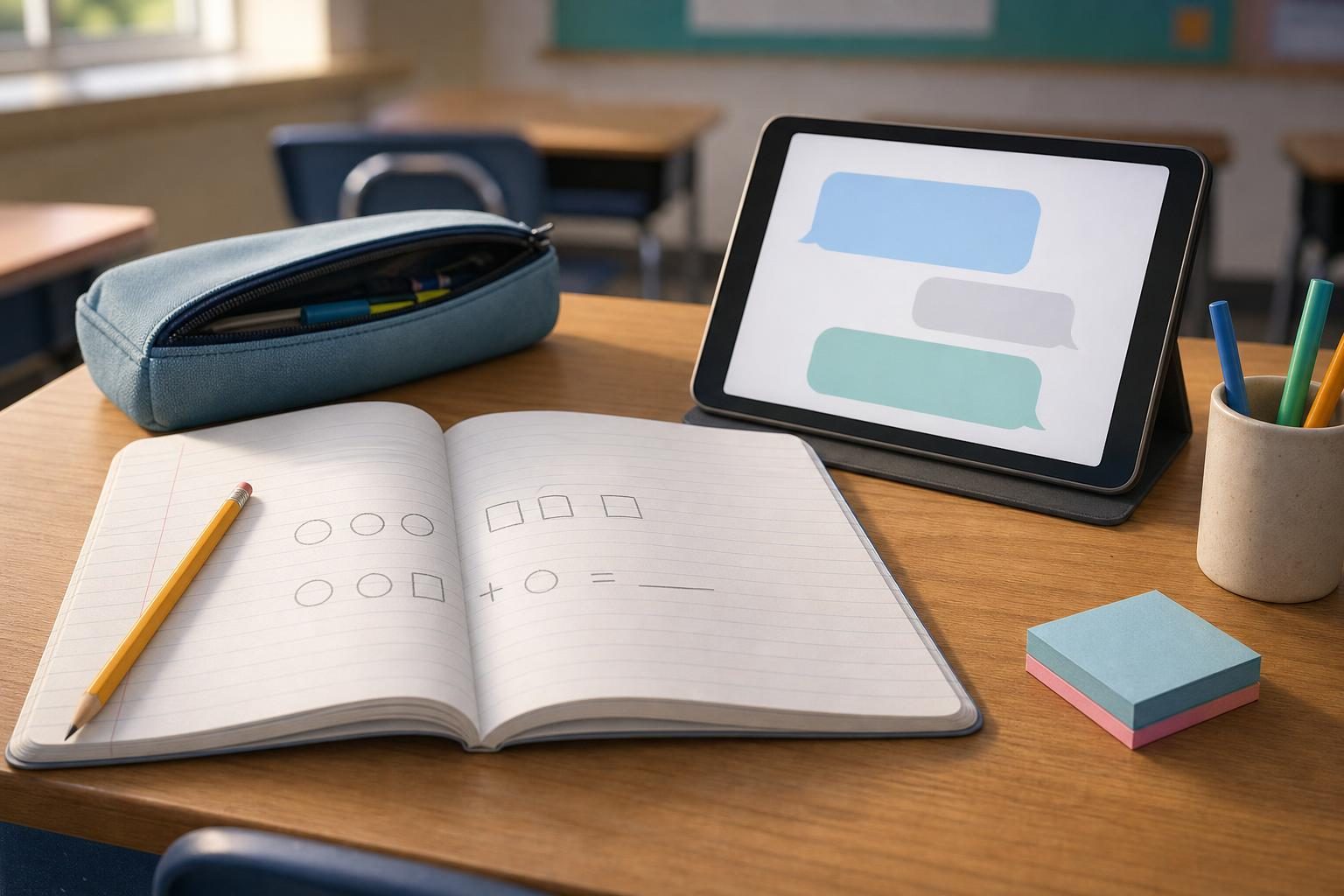
New research says AI tools can help people learn, but they can also make practice disappear. According to Science News Explores, the difference is how the tool is used. Artificial intelligence, or AI, is software that can make answers from patterns in data. Some AI tools can write, solve math, or explain ideas in seconds.
That can feel like magic during homework. A hard problem goes in. A neat answer comes out. But learning is not only about having the answer. It is also about trying, checking, fixing, and trying again.
Researchers found a warning sign in a study of high-school math. Some teens used an AI tool like ChatGPT for practice problems. It seemed helpful while the tool was there. Later, without the tool, those teens did worse than teens who had not used it. The tool may have carried too much of the thinking.
The same story can happen with reading. In one study, people practiced SAT questions with AI help. SAT questions are used on a college entrance test. When the AI was removed, people had more trouble answering. They also skipped more questions. That matters because sticking with a hard question is part of learning.
But AI is not always a shortcut. Another math tool gave hints instead of answers. It worked more like a tutor, which is someone who helps another person learn. Students still had to choose steps and think through the problem. In that study, they learned about as well as students using books.
Experts in the story said the key is staying active. A helpful AI tool might show an example. It might ask a question back. It might point out a mistake. A less helpful one may simply hand over the finished work.
This matters because AI is becoming normal in homes and schools. The choice is not just “use it” or “ban it.” The harder question is what kind of help builds a skill. A calculator can save time after someone knows number facts. But using it before practice can hide what is still shaky.
For writing, math, art, or coding, the rule may be similar. If a skill matters, people need chances to use it. AI can be a coach. It can also become the player. Those are not the same thing.
Written from reporting by Science News Explores, “Is AI making us dumber? Depends how it’s used”.
Discussion questions
- When should a learner be allowed to use AI for schoolwork, and when should they work without it?
- Is an AI tool that gives hints better than one that gives answers? Defend your view.
- What is one skill people should protect from AI, and why might that skill matter later?