
A Hidden Milky Way Shines Over Manhattan
A NASA image shows how special camera light can reveal stars above a bright city.
Print it — all four files
The student packet has no answers in it. The teacher copy is the same pages plus a note on each question and the answer keys. Both languages carry the same story, the same picture and the same vocabulary.
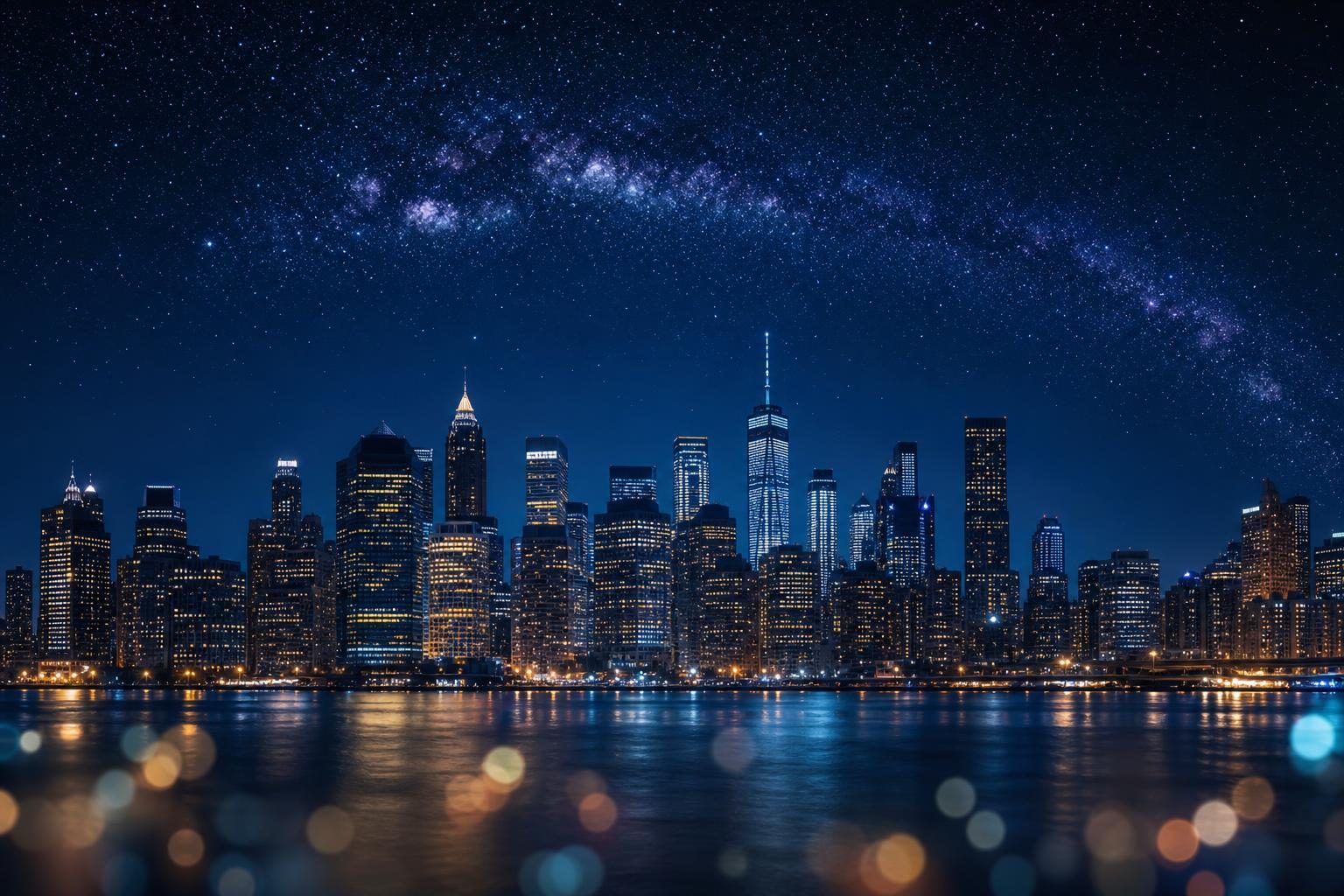
NASA shared a new space image today that shows the Milky Way over Manhattan. According to NASA’s Astronomy Picture of the Day, the picture was made with a special filter. The filter blocks most light that human eyes can see. It lets in near-infrared light, which is light with less energy than visible light.
That matters because Manhattan is a very bright city place. Its city lights make the night sky glow. That glow is called light pollution. It can hide stars, even when the stars are still there.
In the picture, the city has not moved away from the stars. The camera is just looking in a different way. Fluorescent and LED lights are not bright in near-infrared light. Older incandescent bulbs and some neon lights still shine that way. Stars also shine in near-infrared light. So the filter helps the camera notice the stars while ignoring much of the city glow.
The Milky Way is our home galaxy. A galaxy is a huge group of stars, gas, and dust held together in space. From Earth, the Milky Way can look like a pale river across a dark sky. In a very bright city, most people cannot see that river with only their eyes.
This image is interesting because it turns a familiar place into a surprise. Many people know Manhattan for tall buildings, busy streets, and lights that stay on late. NASA’s image reminds us that the same sky is above the city and the countryside. The stars did not disappear when the buildings appeared.
It also shows how tools can change what we notice. A microscope can show tiny things in pond water. A pair of binoculars can bring a bird closer. This camera filter shows light that our eyes miss. It is not magic. It is a smart way to gather information.
A person standing there might hear traffic and see windows glowing. That person might not see many stars. But above all that brightness, the Milky Way would still be there. The image helps us imagine a hidden part of the night over a place many people think they already know.
Written from reporting by NASA, “APOD: 2026 October 15 – The Milky Way over Manhattan”.
Discussion questions
- Should cities try harder to lower light pollution, even if people still need lights at night? Defend your answer.
- What does this story show about how tools can change what people understand about a place?
- Would this image make people in a bright city more interested in space? Why or why not?