
Scientists Listen for Clues in the Wild
New tools can help researchers find hard-to-see animals by recording roars, songs, and calls.
Print it — all four files
The student packet has no answers in it. The teacher copy is the same pages plus a note on each question and the answer keys. Both languages carry the same story, the same picture and the same vocabulary.
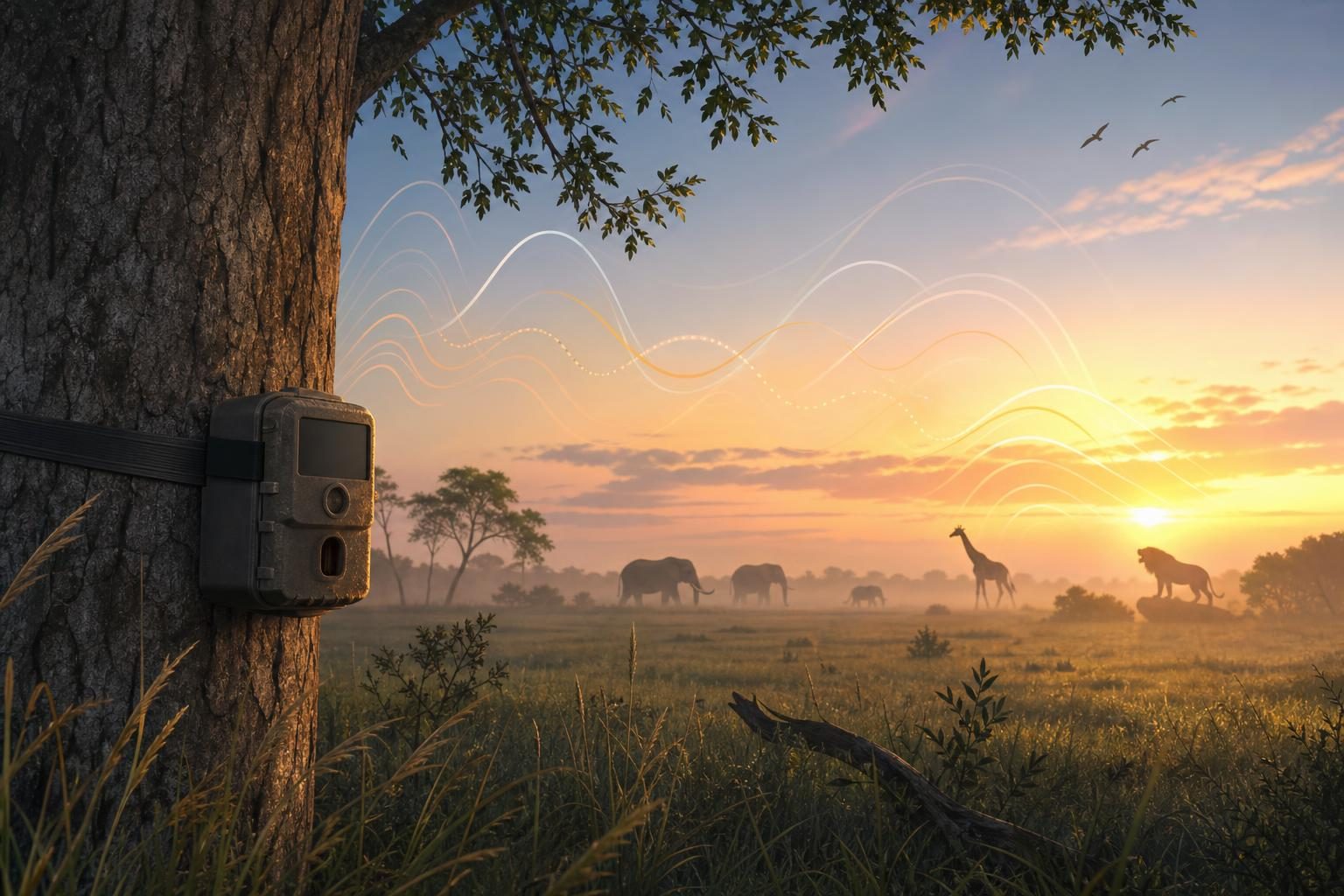
Scientists are using animal sounds to help protect wildlife, according to Science News Explores. They are not only looking for tracks or photos. They are listening for roars, songs, chirps, and calls.
The science is called bioacoustics. That means studying how living things make and use sound. A recorder can be tied to a tree or placed underwater. Then it can listen for hours without bothering animals.
This matters because many animals are hard to see. Some come out at night. Some hide in thick forests. Some live in places where people cannot walk easily. But sounds can travel far.
Imagine standing before sunrise in a wide grassland. The air is cool. You may not see a leopard. But a recorder might catch its deep, rough roar. That sound can be a clue that the animal was nearby.
Jonathan Growcott studies large meat-eating animals. In Tanzania, his team set out 50 sound recorders across a huge part of Nyerere National Park. They also used camera traps. A camera trap takes pictures when an animal passes by.
The team found that leopards do not all sound the same. Each leopard’s roar was special enough to help tell it apart. A computer model matched leopard roars with 93 percent accuracy.
The team also studied lions. They used artificial intelligence, or AI. AI is a computer tool that looks for patterns in information. Their tool could identify one lion by its full roar with more than 95 percent accuracy.
That is useful for conservation, which means protecting animals and their homes. If scientists know where animals are, they can count them better. They can also see whether a group is growing, shrinking, or moving.
Sound can help in forests too. The article describes Cao-vit gibbons, rare apes in Southeast Asia. Only 74 are known to remain. They live high in mountain rainforest trees, so they are very hard to watch. But pairs sing loud morning duets.
Listening does not answer every question. A sound may show that an animal was there. It may not show why the animal called. Still, these recordings give scientists a new way to notice lives that are often hidden.
Written from reporting by Science News Explores, “Calls of the wild offer sound guidance for protecting animals”.
Discussion questions
- If a park had money for either more cameras or more sound recorders, which should it choose, and why?
- What rules should scientists follow if they place listening devices near places where people also live or work?
- What information would you want before deciding that an animal group is safe because researchers heard many calls?