
Backyard Work Uncovers Viking Silver in Denmark
A terrace project turned into the largest known Viking Age silver hoard found in Denmark.
Print it — all four files
The student packet has no answers in it. The teacher copy is the same pages plus a note on each question and the answer keys. Both languages carry the same story, the same picture and the same vocabulary.
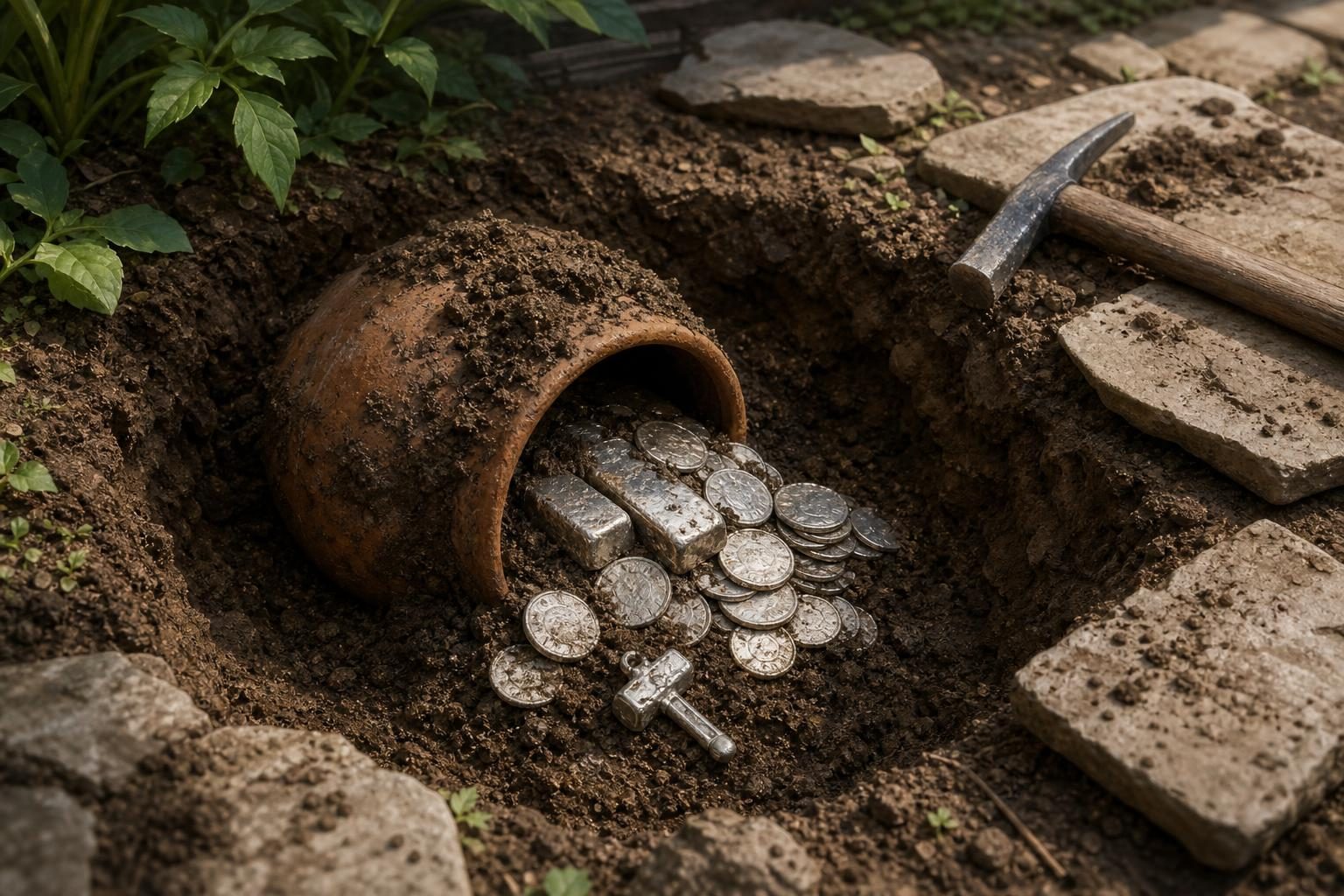
A homeowner in Denmark was making a backyard terrace this past spring when a strange sound came from the ground. According to reporting by Live Science, the person had hit buried silver from the Viking Age.
A terrace is a flat outdoor place made for sitting or walking. The Viking Age was a time from 793 to 1066, when Viking people lived, traded, sailed, and settled in many places. The find is a hoard, which means a hidden store of valuable things.
This hoard held more than 40 pounds of silver. That is about as heavy as a large bag of dog food. Researchers say it is the largest Viking Age silver hoard known in Denmark.
There were about 700 silver objects. Some were silver bars. Some were jewelry. There were 47 whole coins and coin pieces. One small object was shaped like Thor’s hammer. Thor was a god in Norse beliefs, the old stories and religion of many Viking people. A hammer charm could have meant protection.
About 320 objects were inside a clay pot. The rest were in the dirt nearby. Imagine scraping away grass and stones, then finding a pot from about 1,100 years ago.
The coins help tell the story. Two coins came from Anglo-Saxon England during the rule of King Edward the Elder. Some coins came from the Islamic world, meaning places where Islam was a main religion and culture. That mix shows Viking Age Denmark was connected to faraway places.
One silver bar had runes on it. Runes were letters used in Scandinavia during the Viking Age. The writing may spell Hutu. It might be a name or a mark showing who owned it.
The silver was not only pretty. In the Viking Age, silver could work like money. People used its weight to measure value. Researchers found that many bars and pieces fit into weight groups. That makes the hoard look organized, not like a random pile.
No one knows why it was buried. It may have been near a settlement, by an old road, or in a secret spot. The area is developed now, so a large dig is not possible there.
The hoard will be checked at the National Museum of Denmark. For now, it turns one backyard project into a window on trade, money, and everyday choices from long ago.
Written from reporting by Live Science, “'Biggest surprise of my life': Homeowner discovers Denmark's largest Viking Age silver hoard in their backyard”.
Discussion questions
- If someone finds ancient treasure on their land, what should matter most: the finder, scientists, or the public? Explain your choice.
- How does finding coins from faraway places change the way we might imagine Viking Age Denmark?
- Should people dig up a discovery right away, or sometimes leave it for the future? Defend your view.