
NASA Spots Early Fall Colors in Northern Canada
A satellite saw red, yellow, and orange tundra plants near a winding river in Nunavut.
Print it — all four files
The student packet has no answers in it. The teacher copy is the same pages plus a note on each question and the answer keys. Both languages carry the same story, the same picture and the same vocabulary.
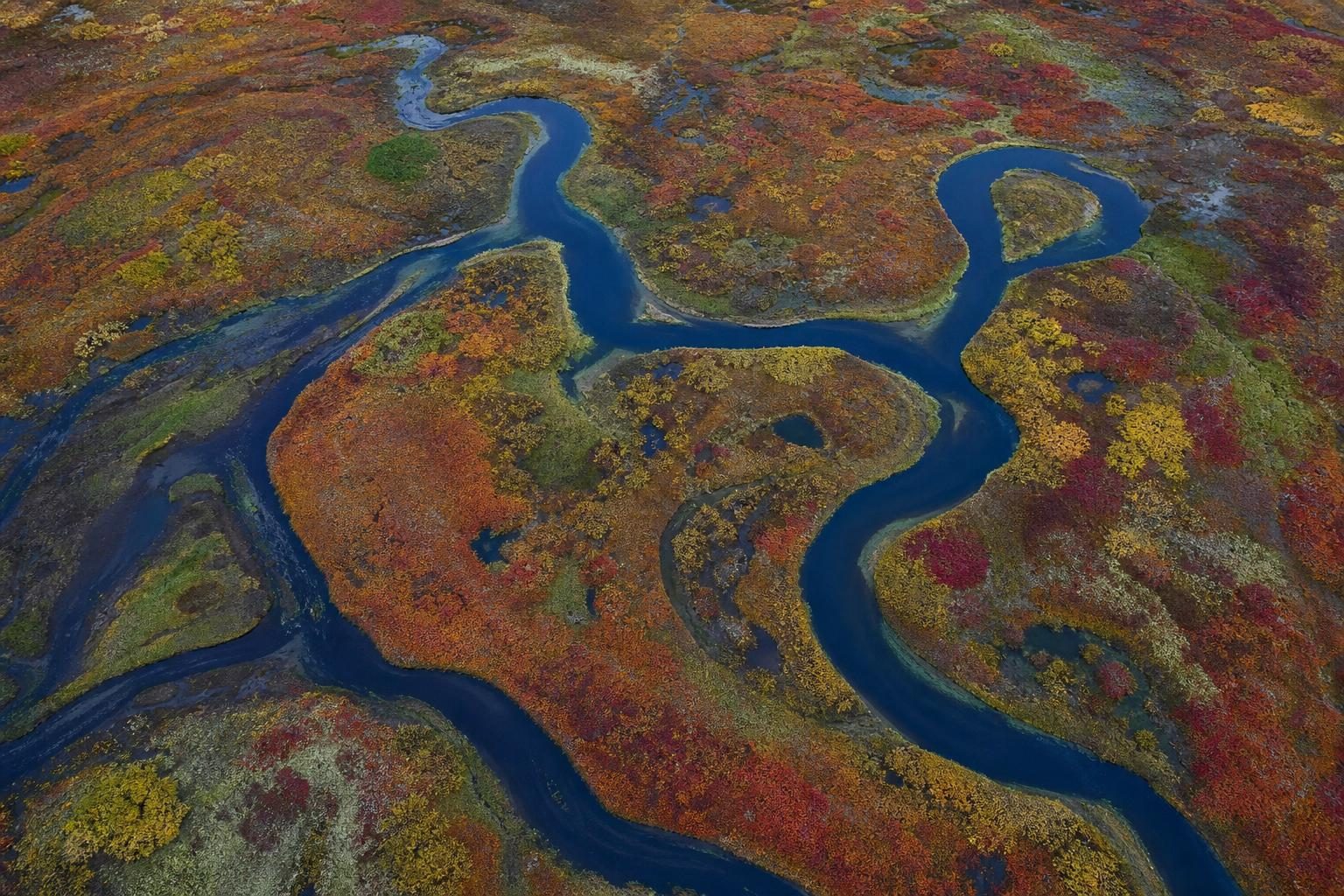
NASA shared a fresh view of fall arriving early in far northern Canada this week, according to NASA Earth Observatory. A satellite, a camera-carrying machine that circles Earth, took an image on September 6 near the Coppermine River in Nunavut, Canada. Reds, yellows, and oranges had spread across low shrubs and other tundra plants. Tundra is cold northern land where many plants grow low to the ground. Another image from July 27 showed the same area still green.
This matters because the change is fast and easy to miss. NASA says a study of seven years of satellite data found color usually starts there in early September. It often peaks by the middle of the month. Peak color means the brightest part of the leaf show. In some far northern places, that best part can last a week or less.
A person standing there would not be looking up at tall maples. The plants are low to the ground, including willow and birch shrubs. There are also plants such as blueberries and bearberries. The river would wind through patches of color. It is a different fall picture from a school sidewalk covered with crunchy leaves.
Leaves change because plants slow down as days get shorter and temperatures drop. Chlorophyll, the green material plants use to make food from sunlight, breaks down. When the green fades, other pigments can show. Pigments are natural coloring materials inside the leaves. Some make yellow colors. Others make red colors. That is why one plant can look different in July and September. NASA compared those two months in the same river area.
The story also shows how scientists study Earth without standing in every place. A satellite can watch a huge area from space. That helps when a place is far away or changes quickly. But a picture from space cannot answer every question. People on the ground can notice details, such as the exact color of one leaf. NASA says citizen scientists can help. These are people who help researchers by making careful observations. They can record leaf color for GLOBE, a science project.
Fall color is more than a pretty sign of a new season. It is a clue about how plants answer light and temperature. When the timing changes, scientists can compare records from many years. The same kind of careful watching can happen near home. A class could compare one tree or shrub each week and see how small changes add up.
Written from reporting by NASA, “An Early Look at Fall Color in Canada”.
Discussion questions
- Which would teach scientists more about fall color: pictures from space or notes from people on the ground? Defend your choice.
- Should scientists pay special attention to places where fall color lasts only a short time? Why or why not?
- If a class tracked one tree or shrub each week, what rules would make the observations fair and useful?