
Today’s Equinox Marks a Turn in the Sky
The September equinox helps mark a seasonal change, even if day and night are not perfectly equal.
Print it — all four files
The student packet has no answers in it. The teacher copy is the same pages plus a note on each question and the answer keys. Both languages carry the same story, the same picture and the same vocabulary.
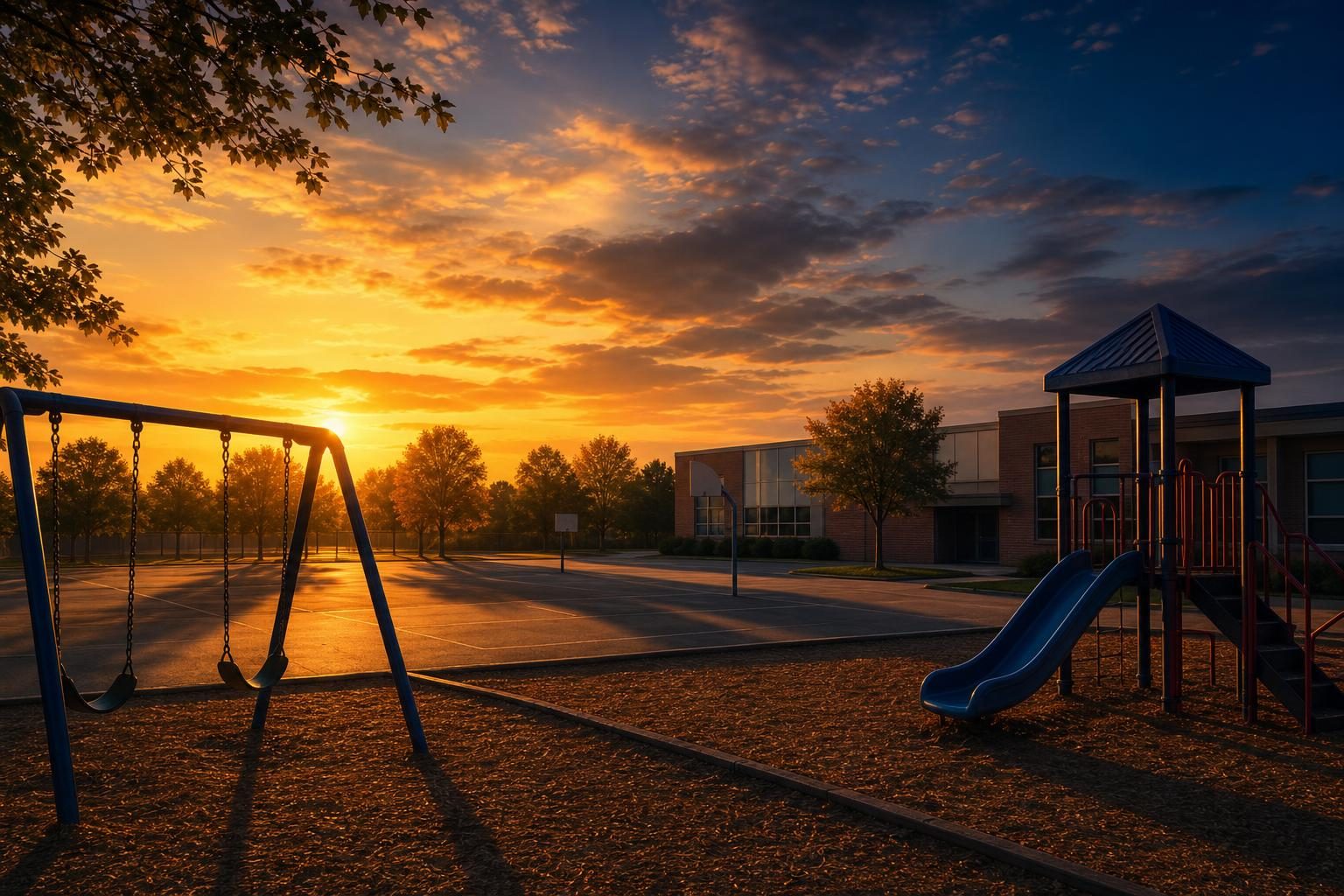
Today brings the September equinox, a sky event that helps mark the seasons, according to NASA’s Night Sky Network. In 2026, the exact moment comes at 00:05 UTC on September 23. UTC is a time used around the world. NASA lists the West Coast time as September 22 at 5:05 p.m. PDT. PDT means Pacific Daylight Time.
An equinox happens twice each year, once in March and once in September. The word comes from Latin, where it means equal night. It is not magic. It is geometry, the math of shapes and positions. At the equinox, the center of the Sun crosses the flat plane of Earth’s equator. A plane is like an invisible sheet stretching into space. The equator is the imaginary line around Earth’s middle.
If a person stood on the equator at noon that day, the Sun would be straight overhead. In other places, people would notice smaller changes. Shadows look a little different. Sunrise and sunset creep along the horizon over many days. The change is slow, but it is real. It is the same sky that hangs over playgrounds, bus stops, and bedroom windows.
The equinox matters because it shows Earth moving from one season toward another. After the September equinox, the Sun’s path keeps moving south in the sky, NASA says. In the Northern Hemisphere, the half of Earth that includes the United States, days usually get shorter. Nights get longer. In the Southern Hemisphere, the half below the equator, days usually get longer.
Many people have heard that day and night are exactly equal on the equinox. NASA says that is only almost true. The Sun is a big ball, not a tiny dot of light. Also, Earth’s atmosphere, the blanket of air around our planet, bends sunlight near sunrise and sunset. That bending is called refraction. Because of these things, places can get a few extra minutes of daylight.
Long before phones and calendars, people watched the Sun to learn the year’s pattern. Some ancient observatories, places built to study the sky, marked equinoxes and solstices. A solstice is when the Sun reaches its highest or lowest path for the year. Today, no stone tower is needed. A window, a shadow, and a careful eye can still show that the season is turning.
Written from reporting by NASA, “Embracing the Equinox”.
Discussion questions
- Should a class trust a calendar, the sky, or both for noticing a season change? Defend your answer.
- The name equinox means equal night, but day and night are not perfectly equal. Is that name helpful or misleading? Explain.
- If a family in Australia and a family in the United States talked about this equinox, how might their feelings differ?