
Spain’s Rent Crisis Turns One Eviction Into a National Fight
Protesters want stronger tenant protections, while lawmakers remain split over how far the government should go in the housing market.
Print it — all four files
The student packet has no answers in it. The teacher copy is the same pages plus a note on each question and the answer keys. Both languages carry the same story, the same picture and the same vocabulary.
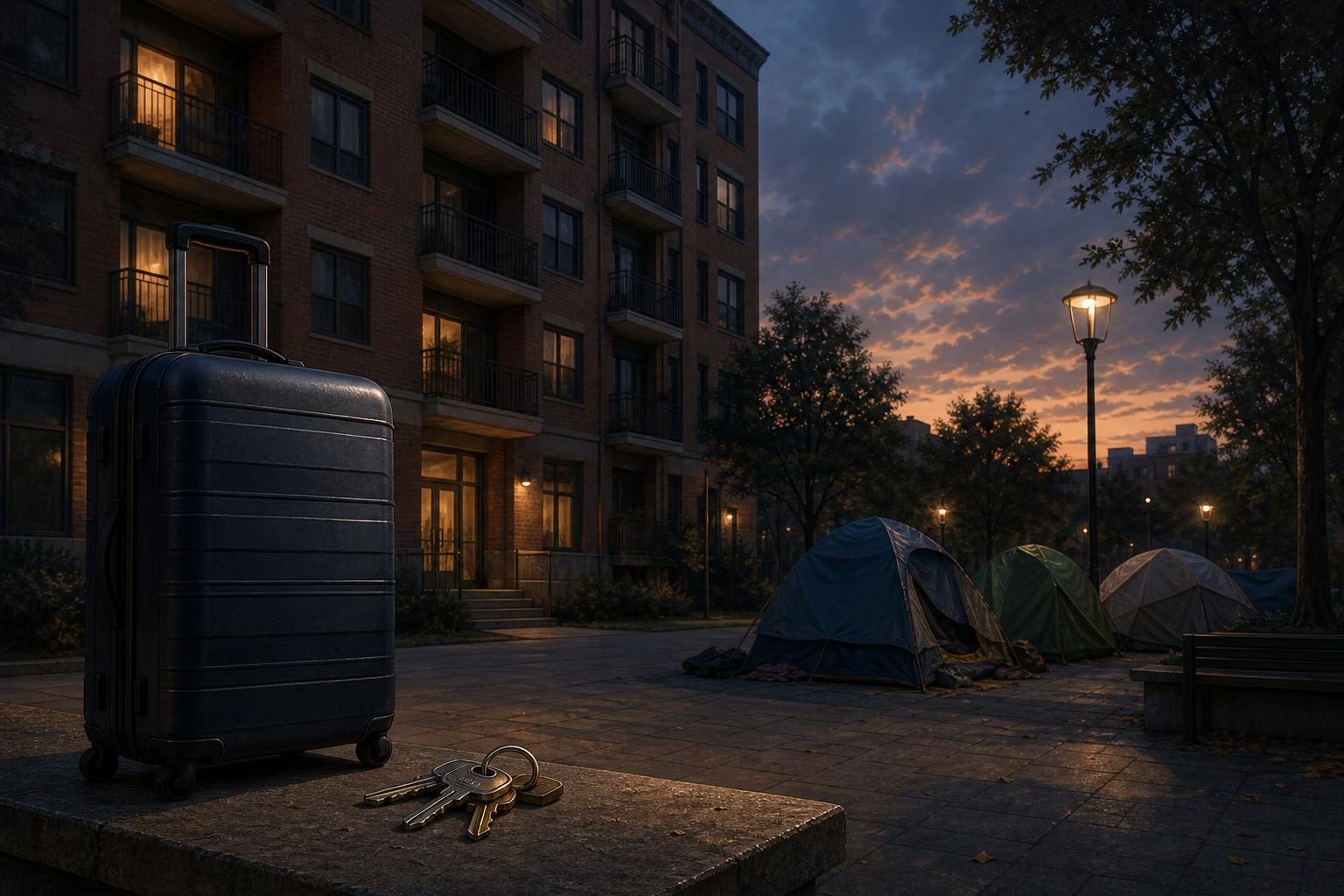
Tens of thousands of people have marched in cities across Spain to demand stronger protections for renters after lawmakers rejected emergency housing measures, according to PBS NewsHour, which published Associated Press reporting. The protests grew after the eviction of María del Carmen Abascal, an 87-year-old woman who had lived in her downtown Madrid apartment for seven decades. Her case became a symbol of a larger crisis: many people in Spain, especially young people and poorer renters, say housing costs have risen beyond what ordinary incomes can handle.
The immediate political fight is over what the government should do when rent becomes unaffordable for large numbers of people. Spain’s government proposed emergency measures that would restrict evictions, curb property speculation, and give renters indefinite leases. Property speculation means buying or holding real estate mainly to profit from rising prices, rather than to live in it or provide stable long-term housing. Indefinite leases would make it harder for landlords to end rental agreements after a set period. Supporters see these policies as necessary protection. Critics in parliament rejected the package, showing how contested the issue has become.
The protests have been visible and disruptive. In Madrid, about 1,000 protesters spent the past week camped in Puerta del Sol, a central public square. A similar encampment appeared in Barcelona’s Plaza Catalunya. In Valencia, protesters gathered near a real estate summit at the City of Arts and Sciences, and police used tear gas and rubber bullets after some protesters broke through a security perimeter. The report said there were no immediate reports of injuries. These scenes show that the fight is not only about rent prices; it is also about who gets heard when a basic need becomes a political emergency.
Spain’s housing problem has been building for years. The average rent has almost doubled in the last decade, according to figures from the real estate website Idealista cited in the report. The price per square meter rose from 8.20 euros in 2016 to 15.10 euros this year. The government says 26% of Spanish renters spend an average of 40% of their income on rent and utilities. That is a heavy burden because housing costs compete with food, transportation, savings, education, and health care. By comparison, the European Union average is 18% of renters spending that much.
One reason the crisis is especially hard for renters is that Spain has a small supply of government-owned rental housing. The report says such homes make up less than 2% of Spain’s available housing stock, compared with an EU average of 8%. Housing stock means the total supply of homes available in a place. When there are fewer public or subsidized rentals, more people must compete in the private market. If demand is high and supply is limited, rents can rise quickly. That does not automatically answer what policy should be, but it helps explain why many protesters are angry.
Abascal’s eviction became the spark because it gave the crisis a human face. She uses a wheelchair and was removed from her apartment after police cordoned off the street. Televised images of the eviction spread public outrage. The company that had sought to evict her so it could rent the property at a much higher price later reached an agreement for her to return, according to her lawyer. But by then, the case had moved beyond one apartment. Protesters used her story to argue that the rental system allows vulnerable people to be displaced even after a lifetime in one home.
The hard question is where protection ends and other consequences begin. Strong tenant protections can prevent sudden displacement and give families stability. They can also limit what owners may do with their property, and they may affect how willing people are to rent out homes if they believe leases cannot be changed or ended. Restrictions on evictions can protect people in emergencies, but they also raise questions about unpaid rent, building maintenance, and the rights of landlords who may not all be large companies. The source report does not detail the opposition parties’ reasoning, but the parliamentary defeat makes clear that not everyone agrees the government’s tools are the right ones.
Spain’s prime minister, Pedro Sánchez, announced early elections for Nov. 29 after the measures were rejected, saying voters would now weigh in during a moment of public anger. That raises another tension: housing is a long-term problem, but politics often works on short timelines. Protesters want immediate relief from rent pressure and evictions. Lawmakers must decide whether emergency rules can solve a shortage that has developed over many years. Spain’s fight is local in its details, but the larger question is familiar in many countries: when housing becomes unaffordable, should the priority be protecting renters now, encouraging more housing supply over time, or trying to do both at once?
Written from reporting by PBS NewsHour, “What to know about Spain's housing protests sparked by an 87-year-old woman's eviction”.
Discussion questions
- If a government can only act quickly in one way, should it prioritize stopping evictions, limiting rent increases, or increasing the supply of public housing? Defend your choice.
- How should policymakers balance the rights of property owners with the claim that stable housing is a basic social need?
- What important information is missing from this story that would help judge whether Spain’s rejected housing measures were likely to work?