
Study Links Teen Isolation to Later Work and School Struggles
New research suggests being cut off from peers may shape young people's futures, not just their feelings.
Print it — all four files
The student packet has no answers in it. The teacher copy is the same pages plus a note on each question and the answer keys. Both languages carry the same story, the same picture and the same vocabulary.
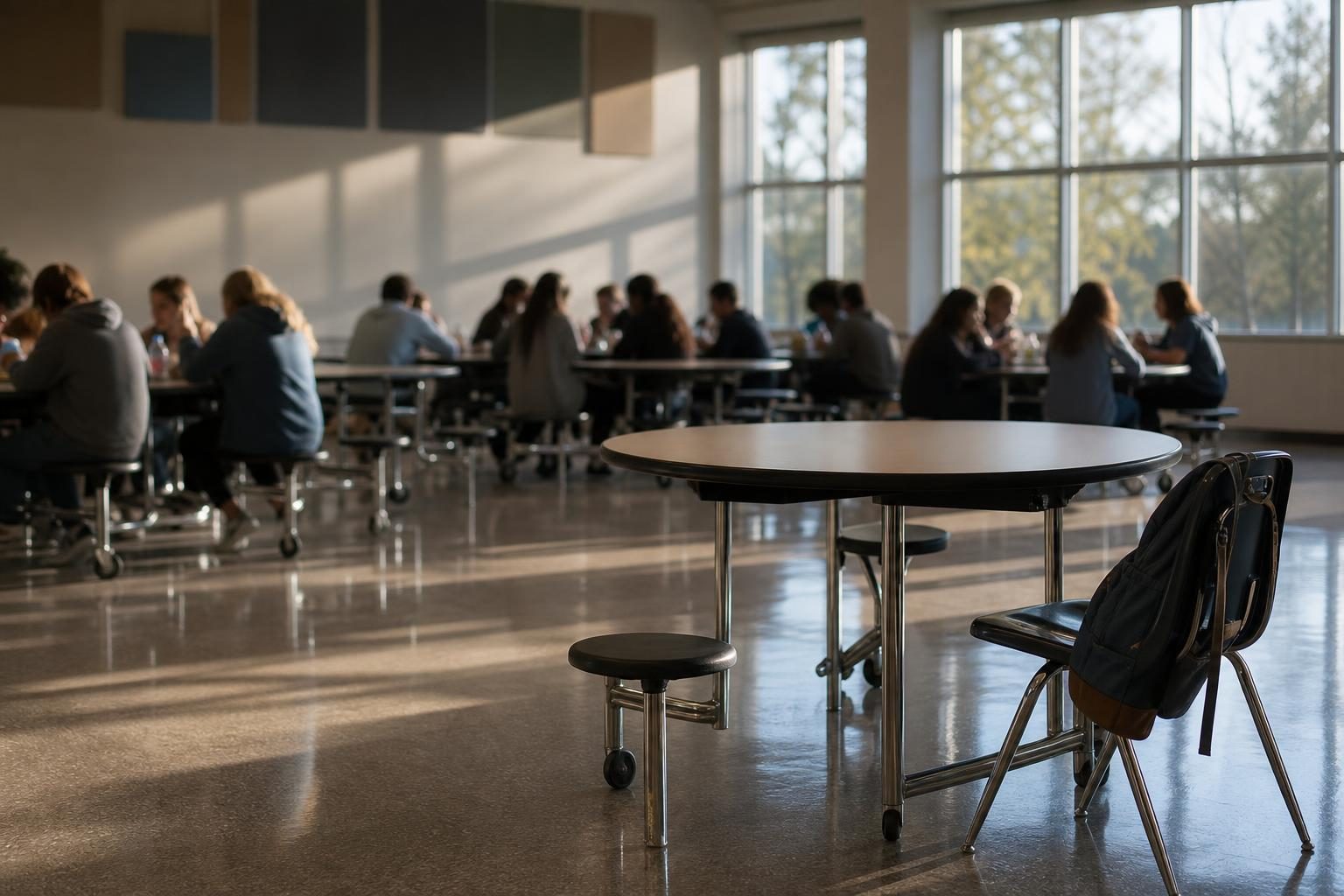
A new study following young people from childhood into early adulthood found that those who were more socially isolated at age 12 were more likely to be out of school and work by age 18. According to an article in Phys.org by the researchers, the study tracked 2,232 people from birth into young adulthood and measured loneliness and social isolation separately when they were 12.
The findings matter because governments usually try to help young people by improving job skills, test scores, training programs or access to openings. Those things still matter. But this research argues that another factor may be shaping who gets a fair start: whether a child has real relationships with peers during the school years.
The study is based in the United Kingdom, where about 1 million young people are NEET, meaning not in education, employment or training. That label is used by policymakers to describe young people who are not in school, not working and not enrolled in a training program. Being NEET can affect later income, health and independence, and it can also create costs for the wider economy.
The researchers make an important distinction between loneliness and social isolation. Loneliness is a feeling: the painful sense that the relationships someone has are not the relationships they want. Social isolation is more outward and practical: having few relationships or interactions. A teenager could have many classmates and still feel lonely. Another could be left out of activities or spend recess alone without describing themselves as lonely.
That distinction is not just technical. The study found that loneliness and isolation were both connected to later outcomes, but social isolation was especially powerful. More isolated secondary school students later had fewer qualifications and appeared less employable than their less isolated peers. The researchers reported that the most isolated children’s odds of being NEET at age 18 were about 2.4 times higher than those of their peers.
The article says these links were not explained away by earlier mental health, loneliness or family socioeconomic background. Socioeconomic background means factors such as a family’s income, education and social position. In other words, the researchers argue that isolation itself may play a role, rather than simply standing in for poverty, anxiety or other challenges.
That claim raises a real debate. One side of the argument is that schools and governments should treat social connection as part of preparing young people for adult life. If a student is regularly excluded from peer groups, that may not show up immediately on a report card. But it could affect confidence, information, habits and the informal practice of working with others. A school that notices isolation early might be able to help before the problem becomes a résumé gap.
The other side is that schools already have many responsibilities, and measuring friendship is not like measuring attendance or exam scores. There is a risk of turning ordinary quietness into a problem to be managed. Some young people prefer smaller circles or more time alone. A policy that treats every less-social child as at risk could feel intrusive, embarrassing or even unfair. It could also push schools to focus on what is easy to observe, such as who sits alone, without understanding the reasons behind it.
The study also challenges a comforting idea about loneliness. Some theories suggest loneliness works like hunger: it feels bad because it signals a need and motivates people to fix it. If that were true, isolated children who felt lonely at age 12 might be expected to reconnect by 18 more than isolated children who did not feel lonely. But the researchers found that they did not. The lonely isolated children were just as isolated later as the isolated children who did not report loneliness.
That finding matters because it weakens the argument that the problem will solve itself. A young person who feels left out may withdraw more, not less. Or they may try to reconnect but struggle because of anxiety, social difficulties or rejection. The researchers suggest that schools and youth services are often in a position to notice withdrawal or exclusion before it appears in job applications or test results.
Still, the study does not mean every isolated child will become NEET, or that friendship alone can fix youth unemployment. The researchers themselves place social connection alongside skills and opportunities, not above them. The trade-off is about attention and resources. If a government spends money only on job training, it may miss earlier barriers that form in childhood. If it spends too much effort trying to engineer social lives, it may overstep or stigmatize the very young people it wants to help.
The strongest takeaway is not that schools should become friendship police. It is that relationships are part of opportunity. For policymakers, the hard question is how to support connection without forcing it, and how to notice isolation without labeling young people as broken.
Written from reporting by Phys.org, “Growing up socially isolated linked to young people becoming NEET”.
Discussion questions
- Should schools treat social isolation as an early warning sign for future education and employment problems, or is that too personal for schools to monitor? Defend your position.
- If a government has limited money for youth employment, how should it balance job training, academic support and programs that build social connection?
- What evidence would you want before using this research to design a policy in another country, such as the United States?