
Weight-Loss Drugs Get a New Warning About Vision Risk
The FDA says GLP-1 medicines should carry a warning about a rare eye condition, raising questions about risk, benefit and informed choice.
Print it — all four files
The student packet has no answers in it. The teacher copy is the same pages plus a note on each question and the answer keys. Both languages carry the same story, the same picture and the same vocabulary.
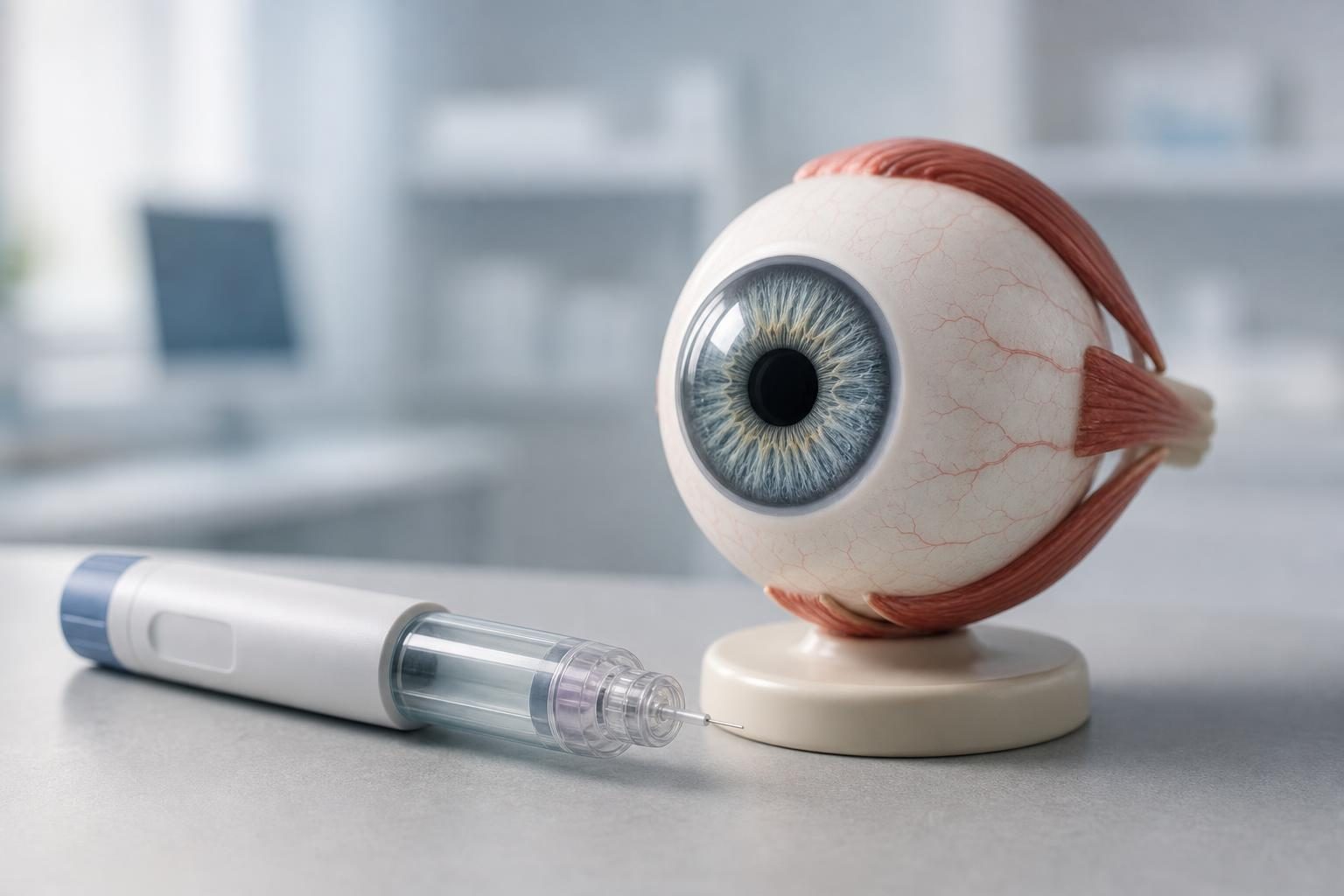
The U.S. Food and Drug Administration is requiring GLP-1 drugs to carry a warning about a possible link to a rare eye condition that can cause vision loss, according to an article in The Conversation by a physician and epidemiologist who studies these medicines. The FDA announced the label change on Nov. 9, 2026. The eye condition is called non-arteritic anterior ischemic optic neuropathy, or NAION, which means damage to the optic nerve from a sudden drop in blood flow.
GLP-1 drugs are medicines used to treat diabetes and obesity, and they are also used to reduce the risk of cardiovascular disease, which means disease involving the heart and blood vessels. They have become widely used: The Conversation article says 30 million people in the United States take them. For many patients, these drugs can be important tools for managing serious health problems. That is why the new warning is not a simple story of safe versus unsafe. It is a story about how medicine often works: a treatment can have real benefits and still carry a risk that patients deserve to know about.
NAION is sometimes described by doctors as a stroke of the eye. The optic nerve connects the eye to the brain, and if blood flow to that nerve suddenly falls, a person may have painless blurry vision, dark patches, partial vision loss or blindness. The symptoms often last and can cause permanent visual impairment. The article notes that people often first notice symptoms when they wake up, because the condition tends to happen more often at night, when blood pressure is naturally lower.
The evidence behind the warning points to a real but low risk. The FDA reviewed 126 randomized, controlled clinical trials, which are studies that compare patients assigned to a treatment with patients assigned to a comparison group. In those trials, 134,253 patients were included. Among people taking GLP-1 drugs, NAION occurred at an average rate of 6.4 cases per 100,000 people per year. Among people given a placebo, which is an inactive treatment used for comparison, or another medication, the rate was 3.8 cases per 100,000 people per year. That works out to 2.6 extra cases per 100,000 patients taking GLP-1 drugs.
The FDA also looked at real-world safety data from its own monitoring systems, which track problems reported after approved medicines are already in use. In that analysis, people with type 2 diabetes who started GLP-1 drugs were compared with people who started another common type of diabetes medicine called DPP-4 inhibitors. Over one year, NAION occurred at a rate of 32 per 100,000 among those taking GLP-1 drugs and 26 per 100,000 among those taking DPP-4 inhibitors. That difference equals 6 extra cases per 100,000 patients.
Other research has found a similar pattern, though the size of the risk varies depending on which group of patients is studied. The author and colleagues tracked nearly 600,000 U.S. veterans with type 2 diabetes for three years after they started either a GLP-1 drug or another drug. In that study, the rate of the eye disorder was about 390 cases per 100,000 people among patients on GLP-1 drugs, compared with 290 per 100,000 among patients on an alternative medication. The article says differences across studies may reflect differences among patient groups, such as age or other health conditions that may raise risk.
The tension is that both sides of the decision are serious. For a person who develops NAION, the outcome is not minor. Vision loss can change daily life, school, work and independence. At the same time, the total risk appears small, and the medicines are being used for conditions that can also carry major health risks. The Conversation author argues that for people using a GLP-1 drug for an FDA-approved condition such as diabetes or obesity on a doctor’s advice, the warning should not automatically deter them from using it.
The policy question is what a warning label should do. If it is too soft, patients may not understand a rare but life-changing danger. If it is too alarming, people may avoid a treatment that could help them manage a serious disease. The FDA’s action tries to land in the middle: not banning the medicines, but making sure doctors and patients discuss the risk. That means the practical effect of the warning will depend partly on conversations in exam rooms, where patients have to weigh a small chance of severe harm against the expected benefits of treatment.
Written from reporting by The Conversation, “GLP-1 drugs carry risk of rare but serious eye condition – a physician studying these medicines explains the potential side effect”.
Discussion questions
- When a medical treatment has large benefits for many people but a rare severe risk for a few, what should regulators require: a warning, tighter prescribing rules, or something else?
- How should a patient think about numbers like “6 extra cases per 100,000” when the possible harm is as serious as vision loss?
- What information is still missing from this story that would help patients and doctors make better decisions about GLP-1 drugs?