
Senators Question Kennedy’s Account of Samoa Vaccine Trip
A new inquiry asks whether the health secretary misled Congress—and what oversight should look like when public health and politics collide.
Print it — all four files
The student packet has no answers in it. The teacher copy is the same pages plus a note on each question and the answer keys. Both languages carry the same story, the same picture and the same vocabulary.
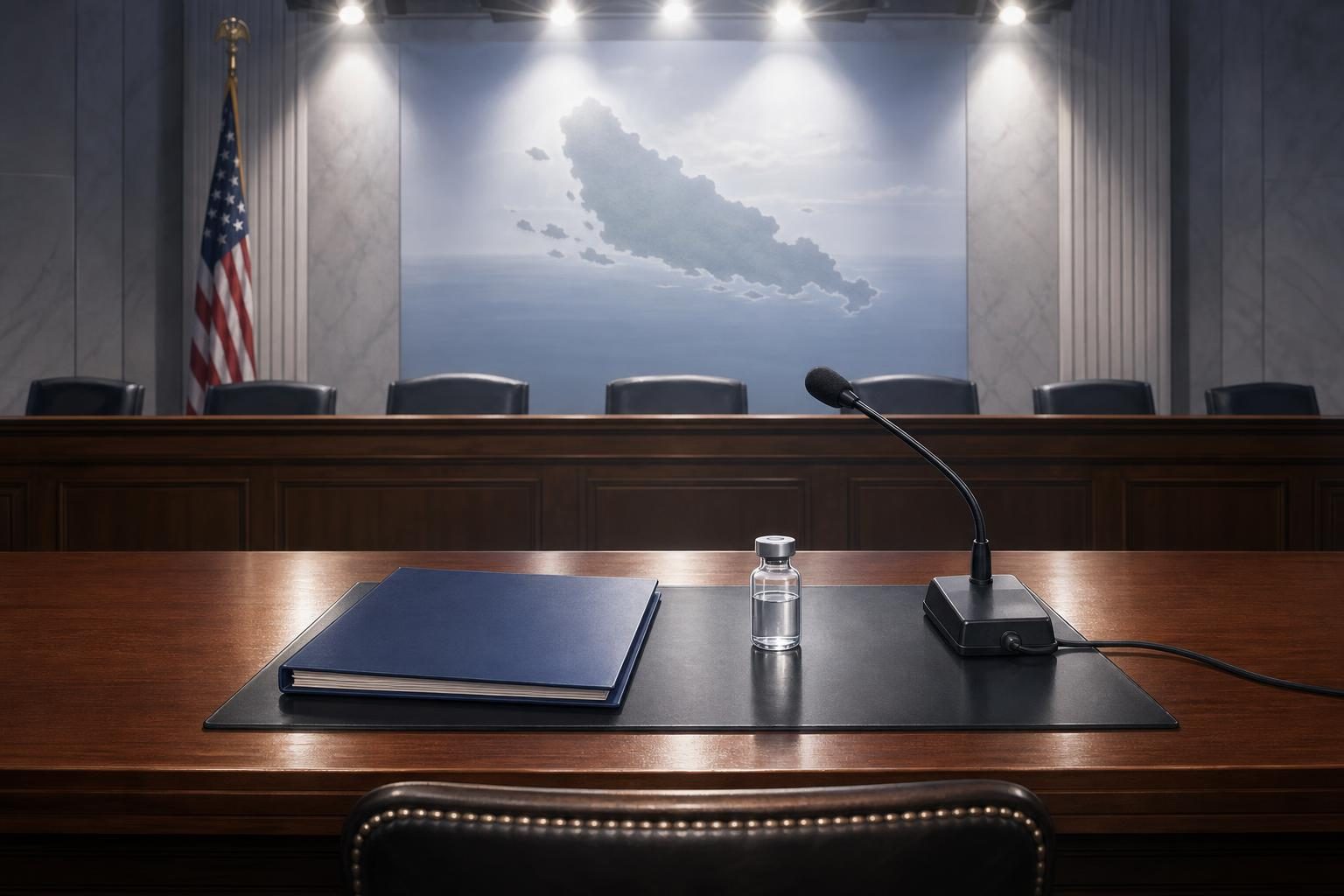
Two Democratic senators have opened an investigation into whether Health Secretary Robert F. Kennedy Jr. gave Congress a false account of why he traveled to Samoa in 2019, according to Associated Press reporting published by PBS NewsHour. The question is not only what Kennedy did years before he entered the Cabinet. It is also how much honesty the Senate can demand from people it confirms to powerful public offices, and how much a congressional investigation can be trusted when it targets a political opponent.
Kennedy now leads the Department of Health and Human Services, the federal agency that oversees major health programs and public health policy. During his confirmation process last year, senators asked about his 2019 visit to Samoa, which took place before a measles outbreak there. Measles is a highly contagious viral disease that can be prevented by vaccination but can be especially dangerous for young children. Kennedy repeatedly told senators the trip had “nothing to do with vaccines.”
The AP and The Guardian reported in August that a letter Kennedy sent before the trip appears to contradict that account. In the letter, addressed to Samoa’s then-prime minister, Kennedy used the words vaccine or vaccination eight times. He wrote about wanting to study Samoa’s use of the MMR vaccine, which protects against measles, mumps and rubella. The AP reported that Kennedy raised the possibility that deaths in Samoa might be linked to issues with vaccine lots, and that his team wanted to use health data to examine the question.
The new Senate inquiry was announced by Sen. Ron Wyden of Oregon and Sen. Angela Alsobrooks of Maryland. They sent a letter Wednesday to Children’s Health Defense, a nonprofit group known for anti-vaccine activism that Kennedy formerly chaired. Anti-vaccine activism refers to organized efforts that question, discourage or oppose vaccination, sometimes against the conclusions of mainstream medical research. The senators asked the group for documents connected to Kennedy’s Samoa travel, his 2024 presidential campaign and his Senate confirmation process. They set a Dec. 4 deadline.
The senators argue that the issue matters because Congress relies on truthful answers when deciding whether to confirm someone for a federal office. A confirmation hearing is a Senate process in which nominees for major government jobs answer questions before senators vote on whether to approve them. Kennedy was not under oath during his hearing, meaning he was not formally sworn in the way a witness may be in court. But the AP notes that knowingly giving material false testimony to Congress can still be a crime. Material means important enough to affect Congress’s work, not a minor mistake or forgotten detail. Such cases are rarely prosecuted.
Kennedy’s department has rejected the accusation. The Department of Health and Human Services has maintained that the Samoa visit was unrelated to vaccines and, in response to AP questions in August, called claims that Kennedy lied false and defamatory. Defamatory means damaging to someone’s reputation in a way that is claimed to be untrue. Spokespeople for the department and for Children’s Health Defense did not immediately respond to AP requests for comment Thursday.
The dispute is sharpened by what happened in Samoa after Kennedy’s visit. The country later suffered a measles outbreak that killed 83 people, most of them children under 5. Critics have said Kennedy’s visit helped fuel anti-vaccine sentiment there. The AP also reported that, while in Samoa, Kennedy met with anti-vaccine activists, including one who helped arrange the trip with a U.S. Embassy employee. Public health experts have said anti-vaccine activists made it harder to respond to the outbreak. The letter reported by the AP and The Guardian, however, did not specifically discuss anti-vaccine activism.
That last point is part of the tension. The senators do not need to prove that Kennedy caused Samoa’s outbreak in order to ask whether he described his trip honestly. But the public health context makes the question more serious. If a top health official downplayed a past role in vaccine-related advocacy, senators may argue they were denied information relevant to judging his fitness for the job. On the other hand, Kennedy’s defenders can argue that an old trip is being reframed by political opponents and that a letter about studying vaccine data does not prove the trip’s purpose was anti-vaccine activism.
The investigation is also part of a larger shift in Washington. Democrats regained control of the House and Senate in the midterm elections, and the AP reports that a wide array of investigations into the Trump administration is planned. That timing cuts both ways. Congressional oversight is one of the tools the Constitution gives lawmakers to check the executive branch, including Cabinet officials. But when control of Congress changes hands, investigations can also look like payback or partisan theater, especially when the target is already a controversial political figure.
The core question is what standard should apply when public officials answer Congress. If the standard is too loose, nominees can avoid hard questions and still gain power over agencies that affect millions of people. If the standard is treated as a weapon, every ambiguous statement can become a scandal, and oversight loses credibility. In this case, senators are asking for documents that could show whether Kennedy’s account matches the paper trail. The fight over those documents will test whether the inquiry clarifies what happened or mostly deepens distrust among people who already disagree.
Written from reporting by PBS NewsHour, “Senators probe RFK Jr.'s reason for Samoa trip after letter refuting his testimony published”.
Discussion questions
- When should Congress investigate a public official’s past statements, and what evidence should be required before that investigation is seen as legitimate rather than partisan?
- How should lawmakers treat a statement that may be technically defensible in one narrow sense but misleading in a broader public context?
- In public health debates, how much should a leader’s past advocacy affect whether the public trusts that leader’s current decisions?