
El Salvador’s Haiti Push Tests a Hard-Line Security Model
A new anti-gang offensive raises a hard question: can force restore safety without creating new dangers?
Print it — all four files
The student packet has no answers in it. The teacher copy is the same pages plus a note on each question and the answer keys. Both languages carry the same story, the same picture and the same vocabulary.
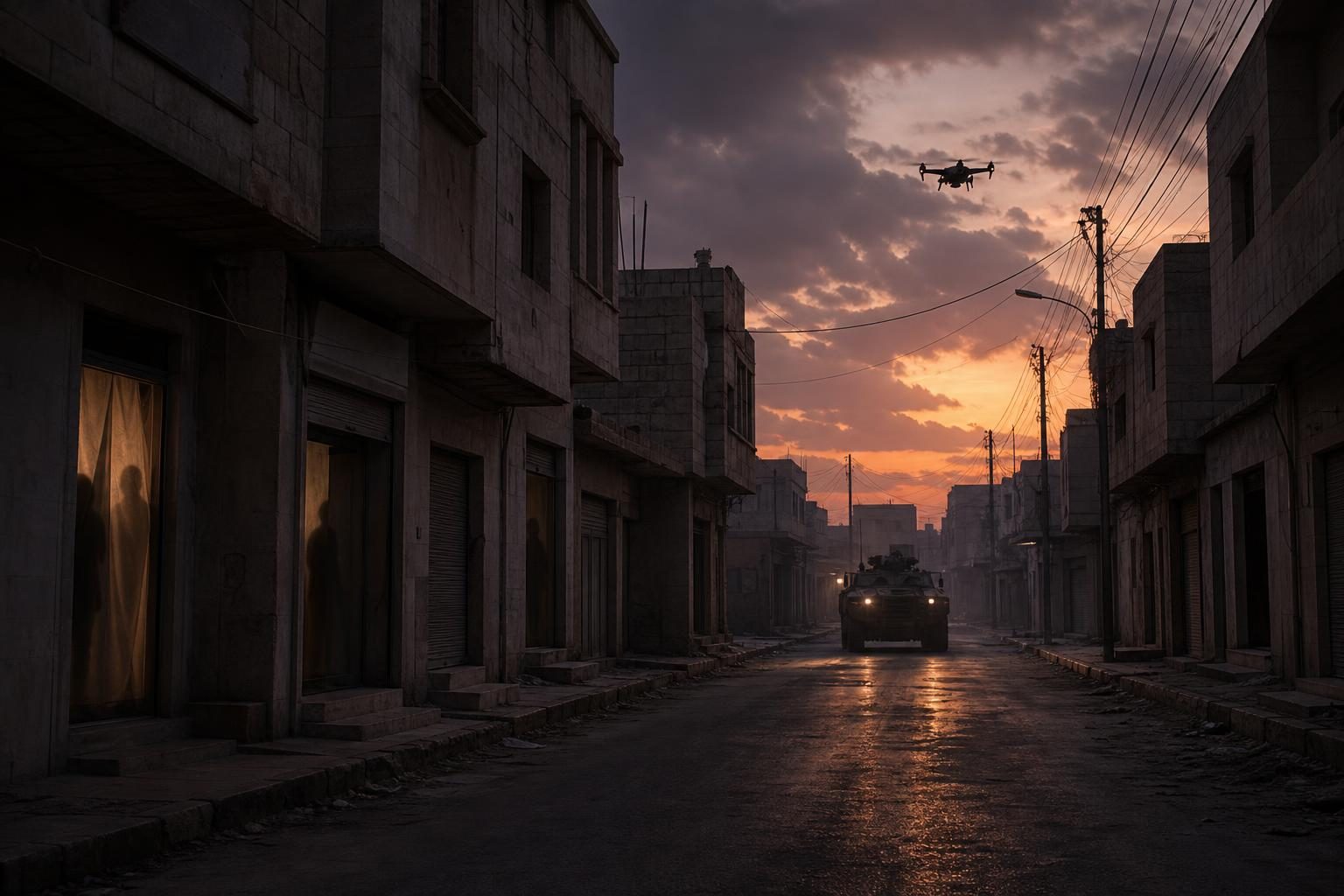
El Salvador has sharply expanded its military role in Haiti, joining Haitian police in anti-gang operations near the capital, Port-au-Prince, according to an analysis published by The Conversation. On Nov. 10, 2026, Salvadoran President Nayib Bukele posted footage of attack helicopters firing on a compound he described as belonging to Wilson Joseph, the leader of the 400 Mawozo gang. Bukele said the operation had destroyed Joseph’s residence and gang headquarters, though Joseph was reportedly not there.
The operation is part of a wider escalation in Haiti’s fight against armed gangs, which control large parts of Port-au-Prince and operate beyond the capital. A few days earlier, a Haitian special task force killed Mathias Saintil, leader of the Boston gang in Cité Soleil, in a drone strike. These actions show how Haiti’s anti-gang campaign is shifting toward heavier military tactics, including helicopters and explosive drones, rather than only police raids or arrests.
The trade-off is urgent and difficult. Haiti faces extreme insecurity: The Conversation reports that almost 6,000 people were killed in 2025, more than 4,000 were killed in the first nine months of 2026, and nearly 1.5 million Haitians had been displaced by August 2026. For people living under gang control, outside help can look like a chance to survive, move freely, and reclaim neighborhoods. Some Haitians have publicly welcomed Salvadoran soldiers.
But the same operations that may weaken gangs can also endanger civilians and blur legal lines. El Salvador is exporting what is often called the Bukele model, meaning an aggressive security approach associated with Bukele’s government and focused on using state force against gangs. Supporters see that model as decisive and necessary when ordinary policing cannot match heavily armed groups. Critics worry that it can treat whole neighborhoods as enemy territory, making it easier for innocent people to be harmed or for governments to avoid accountability.
El Salvador already had a limited presence in Haiti through the Gang Suppression Force, or GSF, a United Nations-backed force authorized in 2025 to help Haitian authorities retake streets from gangs. UN-backed means the United Nations approved or supported the mission, but the force is not directly commanded by the UN. After four Salvadoran aviation technicians attached to the GSF disappeared in an Oct. 18 gang ambush, Bukele sent roughly 2,500 troops, armored vehicles, and attack helicopters to Haiti, first describing the deployment as a rescue mission.
That created another problem: who is in charge? The GSF was authorized to deploy up to 5,550 personnel and currently has roughly 2,000 on the ground. Most of the Salvadoran troops now in Haiti are operating outside its command. Haiti’s prime minister says Haiti directs the operations, but neither government has publicly released an agreement explaining Salvadoran authority, rules of engagement, or how long the deployment will last. Rules of engagement are the official instructions that say when military or police forces may use force.
The United States has also shown concern. Secretary of State Marco Rubio said the U.S. was not actively involved in the Salvadoran offensive and warned that poor coordination could lead to friendly fire, meaning forces accidentally attacking their own allies or other friendly units. U.S. diplomats also protested risks to multinational troops and civilian personnel. Salvadoran authorities have denied American allegations that Salvadoran gunfire struck the U.S. embassy and endangered other forces.
A deeper legal question is whether Haiti’s fight against gangs should be treated mainly as policing or as armed conflict. An independent assessment by the Geneva Academy of International Humanitarian Law and Human Rights classified fighting between Haitian forces and the Viv Ansanm gang coalition as a noninternational armed conflict, a legal term for war inside one country, including civil wars. That label matters because the rules for lethal force differ. In war, fighters with combat roles may be targeted even when they are not posing an immediate threat. In policing, lethal force is generally justified only when necessary to protect lives.
Even if the law allows stronger force, that does not settle the argument. Explosive weapons used in populated areas can kill people who are not fighters, and overlapping roles for foreign troops, Haitian forces, vigilante groups, and private military contractors can make it hard to investigate mistakes. Private military contractors are companies hired to provide military or security services. Haiti’s crisis may demand action, but the central dispute is what kind of action can restore safety without weakening the very protections that make security worth having.
Written from reporting by The Conversation, “El Salvador is exporting the ‘Bukele model’ to Haiti – but the gang offensive is a gamble for both nations”.
Discussion questions
- When a government cannot protect people from armed groups, how much outside military help should it accept, and what conditions should come with that help?
- Should Haiti’s gang violence be treated more like a war or more like a policing problem? Defend your position using the consequences of each label.
- If a hard-line security model produces short-term gains but increases risks to civilians or weakens oversight, how should leaders judge whether it is worth using?