
Would More Nuclear Weapons Make the U.S. Safer?
A new report challenges the idea that expanding the arsenal is the best answer to China’s buildup.
Print it — all four files
The student packet has no answers in it. The teacher copy is the same pages plus a note on each question and the answer keys. Both languages carry the same story, the same picture and the same vocabulary.
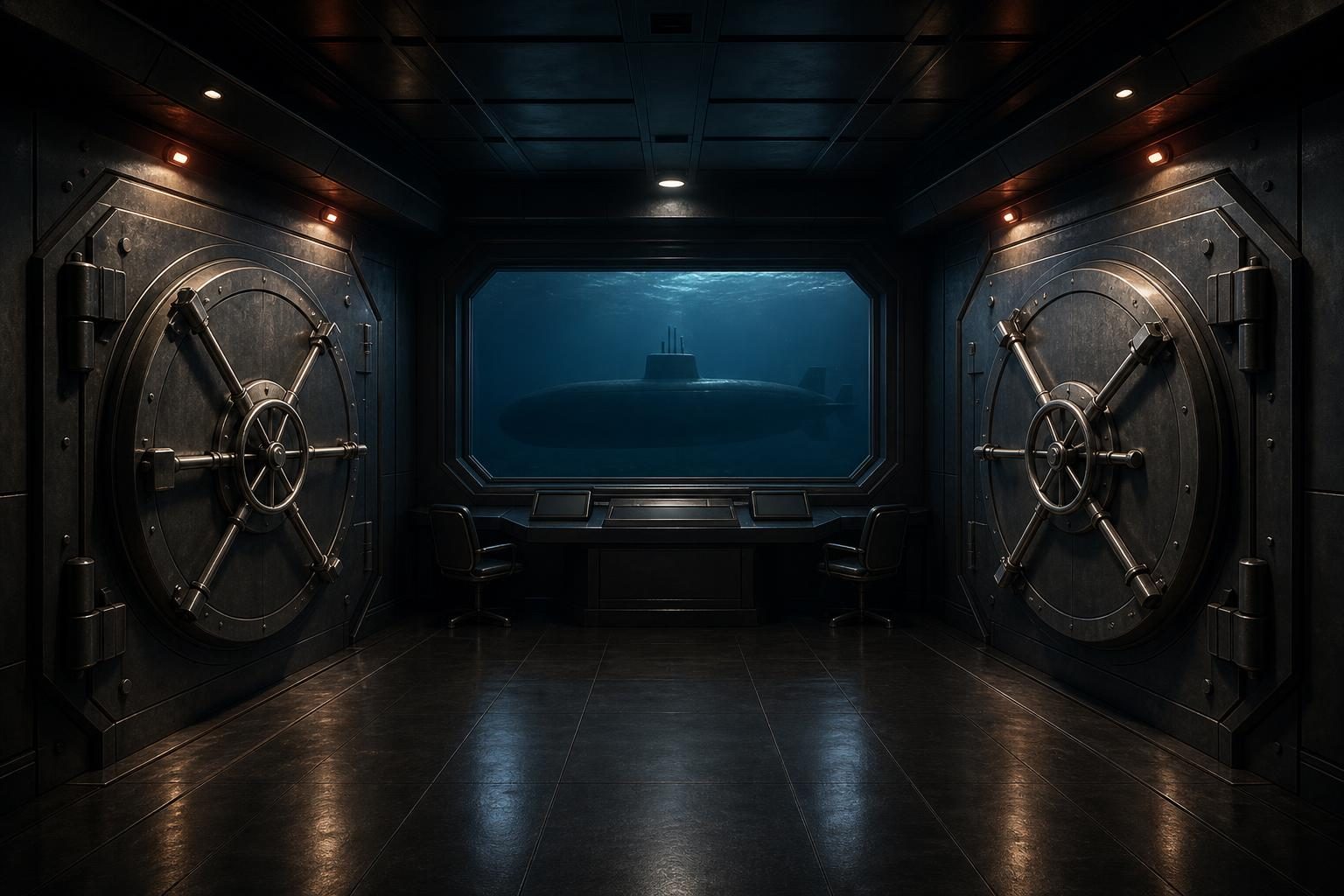
According to reporting by Phys.org, a new report from the Brookings Institution argues that expanding the U.S. nuclear arsenal could make nuclear crises more likely, not less. That conclusion pushes against a growing concern among some defense experts: that the United States may need more nuclear weapons as China increases its own arsenal and Russia remains heavily armed.
The issue matters because nuclear weapons are meant to prevent war through deterrence, which means convincing an opponent that an attack would bring costs so terrible that the attack is not worth trying. A nuclear warhead is the explosive part of a nuclear weapon, and a stockpile is the total supply a country has. For decades, the U.S. stockpile has stayed at about 5,000 warheads. Many experts have seen that as enough to convince rivals that any nuclear strike on the United States would be answered with devastating force.
The classic logic is called mutually assured destruction, a phrase that means both sides can still strike back even if one side attacks first. In theory, that makes starting a nuclear war irrational. The new debate is whether that logic still holds if the United States must deter both Russia and China at the same time. Russia has a nuclear arsenal roughly comparable to the United States, while China has far fewer warheads but is building up its forces. Some experts worry that a U.S. arsenal sized for the old balance may not look credible in a world with two major nuclear rivals.
The Brookings report, written by senior fellow Melanie W. Sisson, takes a different approach. Because no one can run a real-world test of whether a larger arsenal prevents nuclear threats, the report looks at past cases in which the United States either made or received nuclear threats. The examples include the Cuban Missile Crisis, confrontations with North Korea, and Russian threats involving nuclear weapons in Ukraine. The report found that nuclear crises were more common when one side had a substantial advantage over the other, usually the United States. They were less common when the United States and its nuclear adversary were closer to parity, meaning rough equality in nuclear capability.
That finding does not prove that more weapons automatically create danger. History is messy, and a crisis can be shaped by leadership, geography, alliances, conventional military forces, and plain miscalculation. But the report challenges the simple idea that more nuclear weapons always mean more safety. It also found no consistent link between crisis frequency and some other factors, including where warheads were deployed, how many were placed in particular locations, or the doctrines guiding U.S. nuclear policy. A doctrine is an official idea about when and how a military force might be used.
The numbers help explain the disagreement. According to the Bulletin of the Atomic Scientists, cited in the Phys.org report, the United States has around 5,000 nuclear warheads, Russia has a little less than 5,500, and China has around 600. China’s total is much smaller, but its buildup has changed the conversation. The Brookings report says the current U.S. arsenal would still be able to retaliate if attacked, even if China and Russia acted together. If that is right, then adding more warheads may buy less security than its supporters expect.
Instead of spending billions to expand the arsenal, Sisson argues, the United States should focus on making sure its existing nuclear force could survive an attack and still respond. That includes strengthening the nuclear submarine fleet, because submarines can be hard to find and therefore hard to destroy. It also includes protecting nuclear command and control systems, the networks leaders would use to communicate and authorize a response, from AI-enabled cyberattacks, meaning hacking efforts assisted by artificial intelligence software.
The trade-off is not between caring about national security and ignoring it. Both sides of the debate are asking how to prevent nuclear war. Supporters of expansion fear that a smaller U.S. force could look weak as China grows stronger and Russia remains a peer competitor. Critics fear that chasing numerical superiority could make leaders more willing to threaten nuclear use, or make rivals more nervous during a crisis. The report’s central challenge is that strength may depend less on having the biggest pile of weapons and more on making the weapons that already exist survivable, controlled, and credible.
Written from reporting by Phys.org, “Could expanding the U.S. nuclear arsenal make Americans less safe?”.
Discussion questions
- If a country already has enough nuclear weapons to retaliate after an attack, what argument could still justify building more, and what argument could justify stopping there?
- How convincing is historical evidence from past nuclear crises when deciding what to do about today’s China, Russia, and the United States?
- Should nuclear policy focus more on the number of weapons or on the systems that keep them secure and controllable? Defend a position.