
A Small Change in Harvest Height Could Clean Up Grass Seed
Oregon field trials suggest equipment settings may cut weed seed contamination in tall fescue without steady yield losses.
Print it — all four files
The student packet has no answers in it. The teacher copy is the same pages plus a note on each question and the answer keys. Both languages carry the same story, the same picture and the same vocabulary.
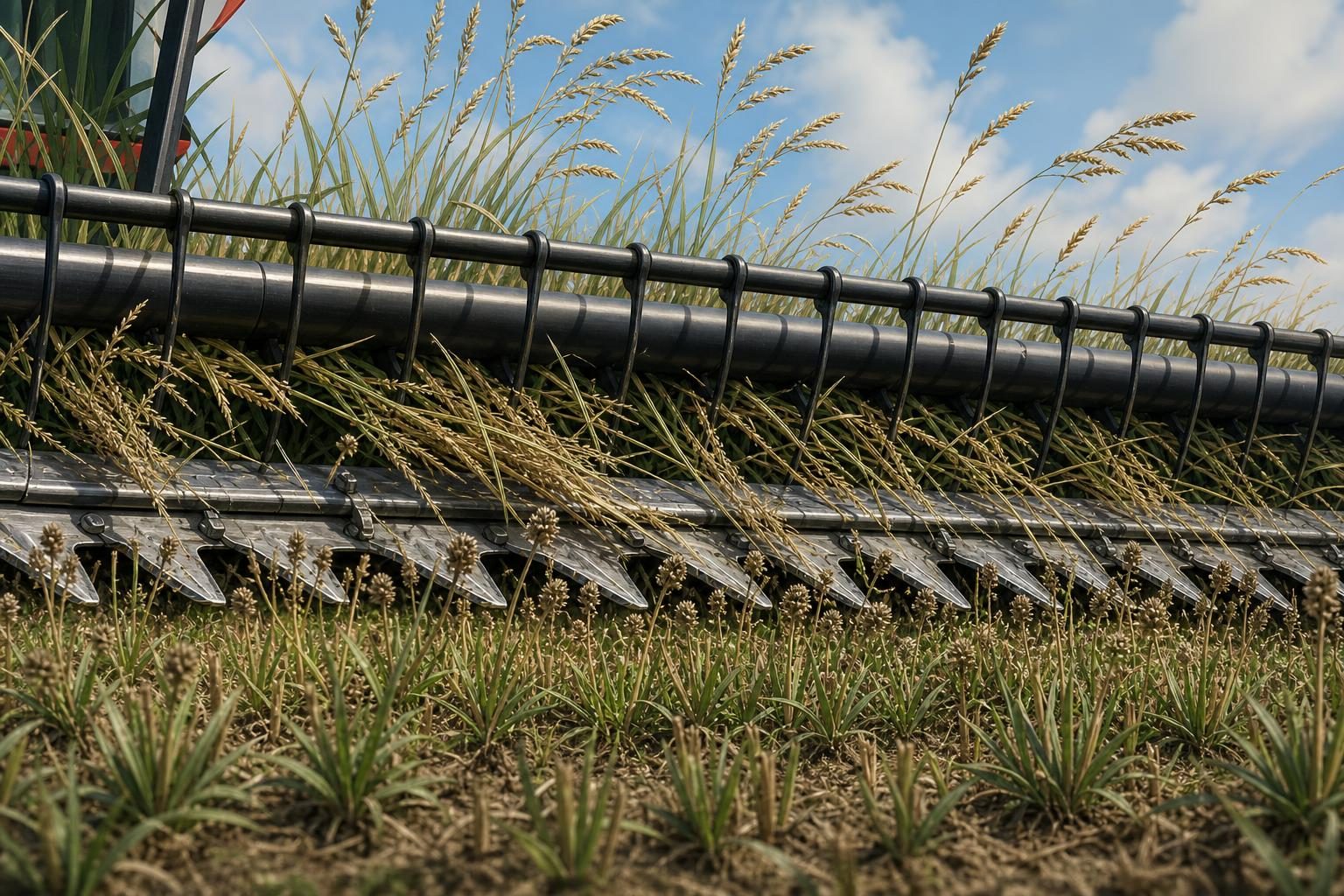
Oregon researchers found that cutting a tall fescue seed crop higher off the ground may reduce contamination from annual bluegrass, a common weed, according to reporting by Phys.org. In field trials, harvesting at 28 centimeters, or about 11 inches, collected less annual bluegrass than harvesting at 5 centimeters, or about 2 inches. Just as important, the higher cut did not consistently reduce the amount of tall fescue seed harvested.
That matters because this is not only a plant science story. It is a machinery, quality-control, and job-skill story. Tall fescue is a grass grown for seed, and the product being sold is not hay or turf but clean, usable seed. Annual bluegrass is another grass that can get into the crop as a weed. Its seed is hard to remove after harvest, so contamination can raise seed-cleaning costs and lower the value of the crop. Seed cleaning is the post-harvest process of using machines to separate the wanted crop seed from weed seed, chaff, and other material.
The research looked at a simple difference in plant height. Most annual bluegrass seed heads sit lower than the seed-bearing parts of tall fescue. A seed head is the part of a grass plant that holds the seed. Tall fescue seed is held in panicles, which are branched seed clusters. If the cutter bar passes above many of the annual bluegrass seed heads but still captures the tall fescue panicles, the harvester can leave some weed seed in the field instead of carrying it into the crop sample.
That idea sounds simple, but in field work the setting is never just one number. Operators have to manage cutting height, timing, crop moisture, machine speed, and field conditions at the same time. The research compared higher and lower cutting heights and also looked at harvest timing. Seed moisture means how much water remains inside the seed at harvest; a crop at 43% seed moisture is less dry than a crop at 27% seed moisture. Moisture affects whether seed stays attached, threshes cleanly, or breaks loose too early.
The 2024 trial could not show whether higher cutting reduced annual bluegrass contamination because annual bluegrass was absent from that trial. But the 2025 results did show less annual bluegrass collected when the crop was harvested at 28 centimeters rather than 5 centimeters. That suggests higher cutting could be added to existing weed-control practices, which already include careful crop establishment, herbicide use, and hand roguing. Hand roguing means walking the field and physically removing unwanted plants before they go to seed.
The yield results were more complicated. In 2024, swathing at 27% seed moisture did not reduce tall fescue yield compared with swathing at 43% moisture. Swathing means cutting the crop and laying it in rows, called windrows, before a later pickup and threshing step. The report also says that cutting with a combine at 28 centimeters and 27% moisture produced more seed than conventional swathing at 5 centimeters and 43% moisture. A combine is the machine that cuts, threshes, and separates grain or seed in one operation.
In the low-yielding 2025 crop, the findings were still broadly encouraging, but they showed a risk. When a swather was used at the 28-centimeter height, yield dropped as seed moisture declined. The researchers suggested this may have happened because higher reel speed increased seed shattering. The reel is the rotating part at the front of a harvester that guides crop into the cutter; seed shattering happens when ripe seed breaks loose and falls before it can be collected.
This is where the job skill shows up. A less experienced operator might hear “cut higher” and treat it as a fixed recipe. A skilled operator would understand that a higher cut can help only if the crop is standing well, the weed seed heads are low enough, and the reel is not knocking seed to the ground. Crop lodging, which means plants falling over before harvest, can change the whole plan because the seed heads may no longer be sitting at predictable heights. Annual bluegrass can also grow taller than expected, up to 40.6 centimeters, or 16 inches, which could put its seed heads back into the harvest zone.
For someone trying to be hired into seed production, custom harvesting, or crop advising, this story points to the value of practical measurement and adjustment. It is not enough to know how to drive a machine through a field. The work requires reading the crop, checking moisture, understanding how contamination affects the final product, and changing settings without causing losses somewhere else. The research is preliminary, so it is not a final rule for every field. But it shows how a small equipment decision can connect field operations to product quality and profit.
Written from reporting by Phys.org, “Higher cutting could reduce annual bluegrass contamination in tall fescue seed”.
Discussion questions
- If you were managing a seed harvest crew, would you adopt the higher cutting height now or wait for more research? Defend your decision using both quality and yield risk.
- What does this case suggest about the difference between operating a machine and managing a harvest process?
- Where else in a trade or technical workplace might a small settings change improve quality but create a new risk?