
Climate Risk Is Becoming Part of the Job
A new New Zealand report shows how hotter weather and extreme events are changing the skills employers need across hands-on industries.
Print it — all four files
The student packet has no answers in it. The teacher copy is the same pages plus a note on each question and the answer keys. Both languages carry the same story, the same picture and the same vocabulary.
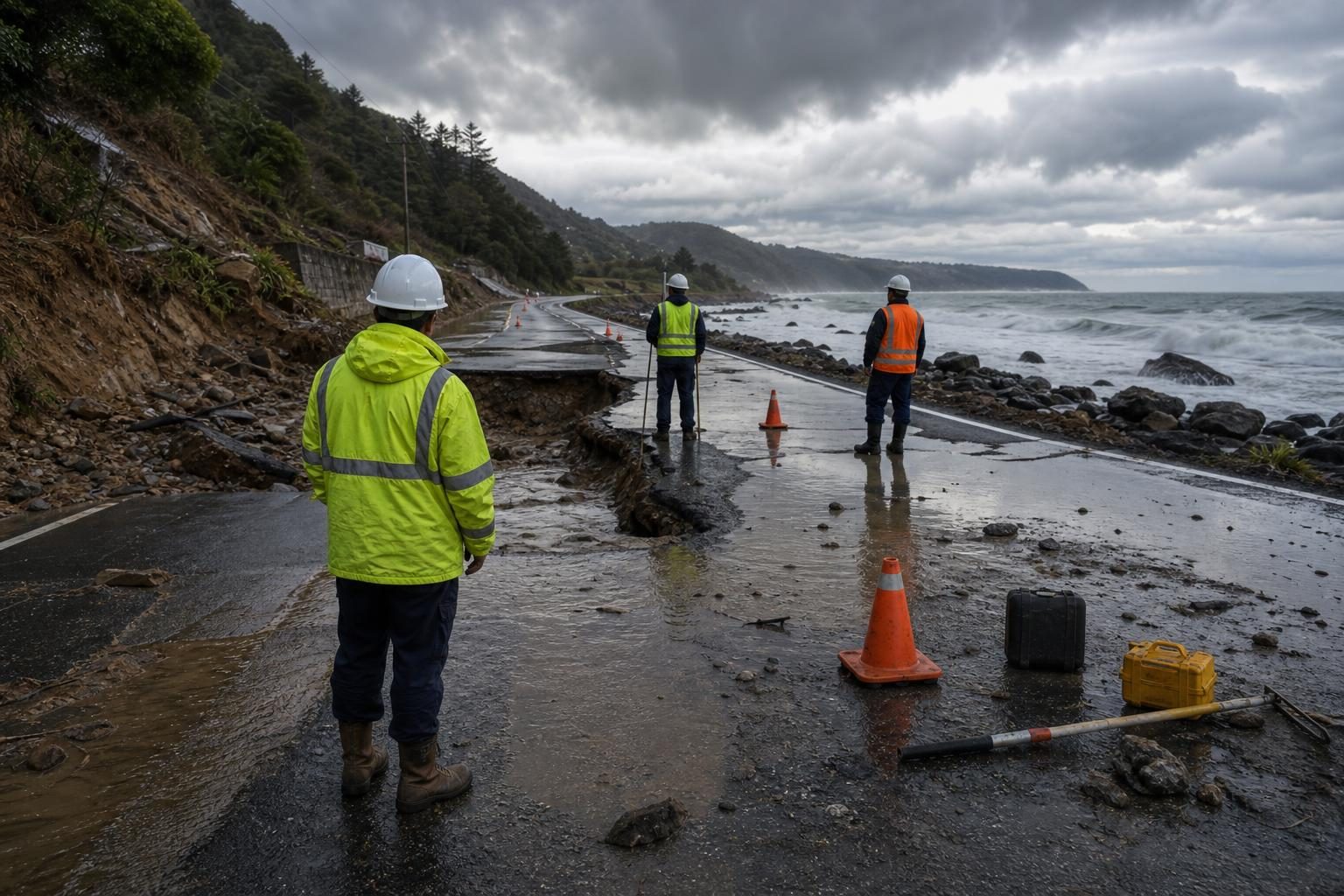
A new national climate assessment says New Zealand is facing hotter conditions, stronger extremes, and long-term changes that will affect the way major industries do their work, according to reporting by Phys.org on the Our Atmosphere and Climate 2026 report. The country has warmed by 1.36°C since records began in 1909, and seven of its 10 warmest years have happened since 2016. Carbon dioxide, or CO₂, the main heat-trapping gas from burning fuels and other activities, has risen 30% at a New Zealand monitoring station since 1972.
The report matters for CTE because climate change is not only an environmental issue. It is becoming a jobsite condition. The source describes effects on agriculture, horticulture, aquaculture, forestry, tourism, transport networks, energy networks, housing, and coastal infrastructure. Those are fields where people operate equipment, maintain systems, inspect damage, move goods, grow food, repair buildings, manage water, and keep customers safe. When the climate shifts, the task list shifts too.
One immediate issue is El Niño, a natural climate pattern in the Pacific Ocean that can change rainfall, wind, and temperature in many places. The article says a strong El Niño could bring a drier, windier summer to the north and east of New Zealand. But the report’s bigger point is that this weather pattern is now happening on top of long-term warming. In other words, workers and employers are not planning for a one-off bad season. They are planning for more frequent heat waves, droughts, fires, floods, and landslides, with fewer cold extremes.
Agriculture is one of the clearest examples. The report says drought can lower dairy production and raise the cost of water storage. For workers, that means climate risk shows up in practical systems: pumps, tanks, irrigation lines, soil moisture decisions, pasture management, animal health, and backup plans when water is short. Dryland agriculture, which means farming that relies mainly on rainfall rather than irrigation, is expected to become more important in some areas. That changes what equipment is useful, what crops or livestock can work, and how carefully a farm has to manage water.
Horticulture, the business of growing fruit, vegetables, and specialty crops, is also affected. The report says reduced winter cooling will affect where pome fruit, such as apples and pears, and stone fruit, such as peaches and cherries, can grow because they need winter chilling to flower and produce fruit successfully. It also says preferred regions are expected to shift for crops including kiwifruit, avocados, and blueberries. For people working in that field, employability may depend less on doing one routine the same way every year and more on understanding growing conditions, tracking plant performance, and adapting production methods as regions change.
Marine work faces a similar problem. Ocean surface temperatures around New Zealand have warmed faster than the global average, and the Tasman Sea region has become a hot spot for marine heat waves. A marine heat wave is a period when ocean water stays unusually warm long enough to stress sea life. The report says warming can move commercial fish stocks, likely reducing catches, and that algal blooms and marine heat waves will affect farmed salmon and shellfish. That matters for aquaculture technicians, deck crews, processing workers, and maintenance workers because the product they handle depends on water quality, temperature, and ecosystem health.
Infrastructure trades are also part of the story. The report says sea-level rise is accelerating around New Zealand’s coasts and will continue for centuries, with serious impacts where land is also sinking. It also warns that coastal floods will cause loss of infrastructure and private property during this century and beyond. Infrastructure means the built systems a community depends on, such as roads, bridges, power lines, ports, water systems, and buildings. For construction, electrical, civil maintenance, and transportation workers, climate adaptation can mean repairing flood damage, hardening sites against future events, rerouting supply chains, and planning for interruptions.
The report also notes that flooding and landslides can disrupt transport and energy networks, which can then affect supply chains. A supply chain is the path goods take from producers to customers, including shipping, warehousing, and delivery. When a road washes out or an energy system fails, the problem is not only local. Parts, fuel, food, and construction materials may arrive late or cost more. Workers who can troubleshoot under pressure, document damage, follow safety procedures, and coordinate with other trades become especially valuable in that kind of environment.
Tourism is another affected workplace. The report says tourist numbers are likely to fall, as happened after former Tropical Cyclone Gabrielle, and that future international travel may become more costly or less desirable. Tourism jobs often depend on reliable access, safe facilities, and the condition of natural attractions. If storms damage roads or landscapes, businesses may need workers who can shift schedules, repair facilities, communicate risk clearly, and operate with fewer predictable peak seasons.
The report also says climate impacts are not evenly distributed. Māori communities and business interests are especially exposed, and many marae, which are Māori community and cultural meeting places, are located on coasts or floodplains. More than 80% of Māori households are exposed to flood risk, according to the article. That detail matters for workforce planning because recovery and adaptation work is not just technical. It also involves trust, local knowledge, and respect for the communities where the work happens.
For CTE pathways, the lesson is not that every job becomes a climate job. It is that more jobs will include climate-related judgment. A strong applicant in these fields may need the usual trade skills plus the ability to read site conditions, understand risk, protect equipment, work safely in heat or after storms, and adapt when old patterns no longer fit. The work is still hands-on. The conditions around the work are changing.
Written from reporting by Phys.org, “NZ's climate in 'uncharted territory,' with more extreme weather events ahead”.
Discussion questions
- If an employer in agriculture or construction can afford to train workers in only one new area, should it prioritize emergency response after extreme events or long-term adaptation before damage happens? Defend your choice.
- Which CTE pathway mentioned in the article seems most likely to change its day-to-day work because of climate change, and which seems most likely to change its planning and management instead?
- What important information would a worker or job applicant still need before deciding whether to enter one of these climate-exposed industries?