
Seattle’s Coyotes Show How Wildlife Work Is Changing
A new study found far more coyotes in the city than in wild areas, raising practical questions for field crews and city staff.
Print it — all four files
The student packet has no answers in it. The teacher copy is the same pages plus a note on each question and the answer keys. Both languages carry the same story, the same picture and the same vocabulary.
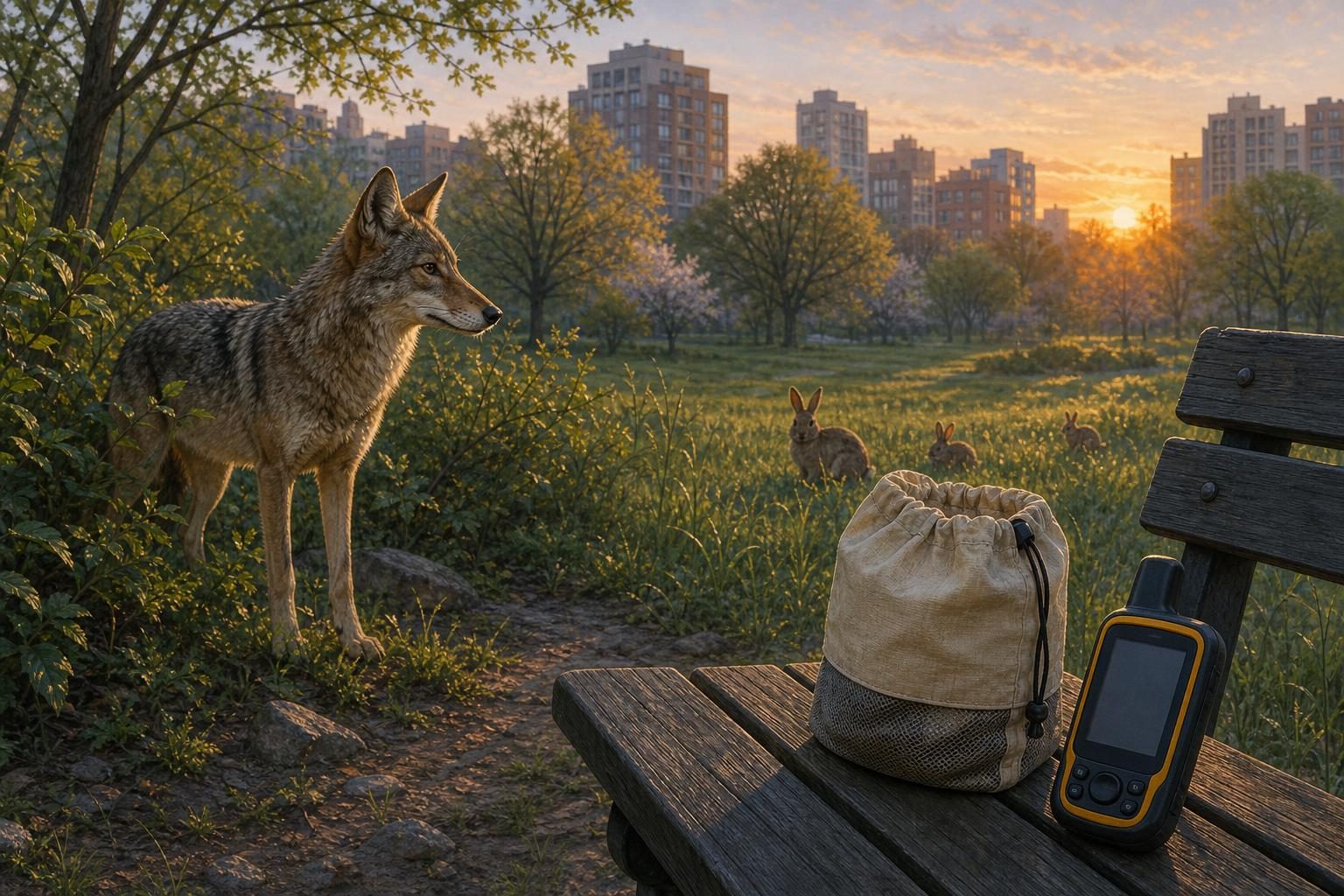
Researchers reported Sept. 10 that coyote density in Seattle is nine times higher than in more natural parts of Washington, according to reporting by Phys.org on a University of Washington study. Density means how many animals are living in a given area. The study matters because it shows that wildlife work is no longer only about forests, farms, and remote public land. Some of the most important fieldwork now happens in city parks, alleys, greenbelts, and neighborhoods where people, pets, traffic, trash, rabbits, and predators all share space.
The researchers studied coyote scat, which is animal droppings, collected in Seattle and in wild study areas near Winthrop and Chewelah. They analyzed 842 scat samples and identified 213 coyotes. By looking at how often samples came from the same animal, they estimated how many coyotes were using the different places. That is practical field science: crews have to find samples, avoid contaminating them, record where they came from, keep them organized, and turn messy outdoor evidence into usable data. It is not glamorous work, but it is the kind of work that makes wildlife decisions more than guesswork.
For a CTE class, the job angle is clear. This kind of project can involve wildlife biologists, field technicians, lab staff, geographic information system workers, and city or county employees who deal with parks, animal services, and public communication. A geographic information system, or GIS, is software used to connect data to places on a map. In this study, researchers compared coyote density with information about pollution, tree cover, buildings and roads, human population density, and income level. That means the work combines boots-on-the-ground sampling with computer-based spatial analysis.
The finding also changes how the public may think about city wildlife. Coyotes are often described as animals that avoid people, and the study still says they are wary of humans. But cities can give coyotes strong advantages. Food is easier to find, and the larger predators that kill coyotes in wild areas, such as wolves and mountain lions, are mostly absent. In a city, coyotes can function more like apex predators, meaning predators near the top of the local food chain. The source says the main regular dangers for urban coyotes are cars and disease.
The study found that Seattle coyotes had more than twice as diverse a diet as wild coyotes, though berries and rabbits were important for both. That matters for urban ecology, which is the study of how living things interact in a city environment. Seattle has had many rabbits in recent decades, and the article says that may have helped attract coyotes. This is the kind of connection a wildlife worker has to understand before recommending action. Removing one animal, changing landscaping, leaving pet food outside, or altering trash pickup can affect other animals in the same system.
The study also shows why wildlife management is partly a technical job and partly a public-facing job. Residents may worry about coyotes preying on pets or acting territorial, which means defending a space against other animals or perceived threats. At the same time, coyotes help control rabbits, which can damage gardens and young plants. A city employee or wildlife technician may need to explain risk without exaggerating it, collect reports without treating every report as proof of a trend, and recommend behavior that reduces conflict. Anecdotal evidence, meaning informal reports rather than controlled data, can point to a problem, but it cannot replace a well-designed survey.
Being hireable for this kind of work means more than liking animals. Employers need people who can follow a sampling protocol, which is a step-by-step method that keeps data consistent; work safely around traffic, waste, weather, and uneven ground; record locations accurately; use basic mapping tools; and communicate clearly with the public. The work may include early mornings, dusk observations, unpleasant samples, and careful paperwork. It may also require judgment: a coyote sighting is not automatically an emergency, but a pattern of bold behavior near homes may require a response.
The bigger shift is that urban wildlife is becoming normal, not unusual. Coyotes have colonized, or established populations in, every major metropolitan area in North America over the past century. The Seattle study does not say exactly how many coyotes the city can support, and it notes that long-term population data is limited. That uncertainty is part of the job. Good technicians and managers often work with incomplete information, then improve the information by collecting better data. The work is about making decisions in a real place where animals do not stay inside property lines and people do not all agree on what counts as too many coyotes.
Written from reporting by Phys.org, “Coyote density is 9 times higher in Seattle than in Washington's wildlands”.
Discussion questions
- If a city has more coyotes than nearby wildlands, should its first investment be in public education, animal control response, habitat changes, or more research? Defend one priority.
- How should wildlife workers balance residents’ concerns about pets with the ecological benefits coyotes may provide by controlling rabbits?
- What skills from a CTE pathway would transfer best to an urban wildlife project like this, and what skills would still need to be learned on the job?