
Fast-Growing Honeycrisp Apples Create a New Orchard Problem
A new study says bitter pit is tied to growth rate, not just apple size, changing when orchard crews may need to act.
Print it — all four files
The student packet has no answers in it. The teacher copy is the same pages plus a note on each question and the answer keys. Both languages carry the same story, the same picture and the same vocabulary.
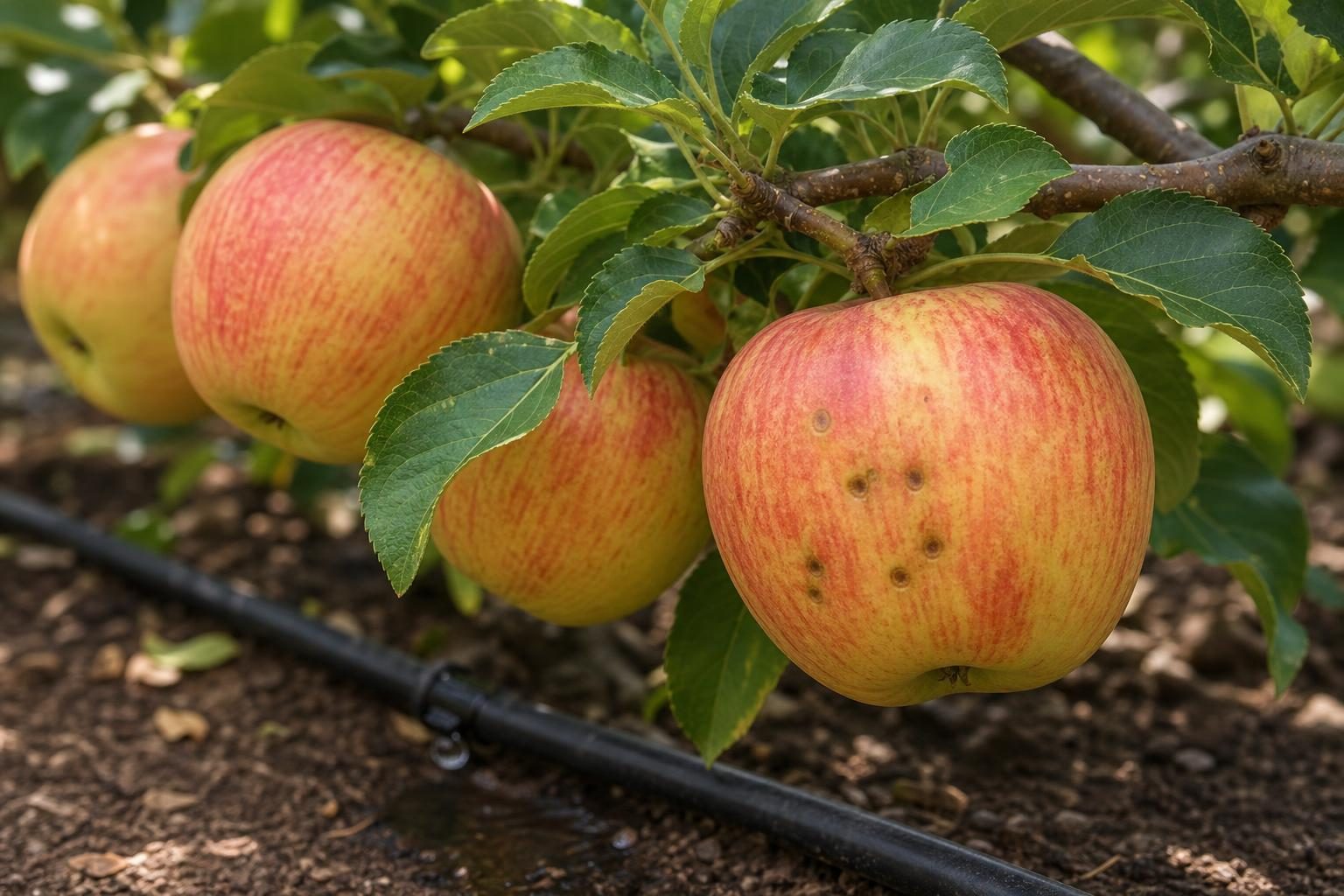
New research says Honeycrisp apples that grow too fast are more likely to develop bitter pit, a disorder that leaves dark spots of dead tissue in the skin or flesh and can make the fruit unsellable. According to Phys.org, reporting on a study published in the Journal of Experimental Botany, the problem is not simply that some apples end up larger. The key issue is the rate of growth while the fruit is still on the tree.
That matters because Honeycrisp is a major commercial apple, and bitter pit can show up or get worse after harvest while apples are in storage. The study author, Todd C. Einhorn of Michigan State University, estimated that U.S. Honeycrisp losses from fruit that cannot be marketed are easily in the tens of millions of dollars each year. For an orchard business, that is not just a biology problem. It affects packout, which is the share of harvested fruit good enough to sell, and it affects decisions about labor, irrigation, pruning, storage, and contracts with buyers.
Bitter pit is described as a calcium-deficiency disorder, meaning the affected tissue does not get enough calcium to develop normally. Calcium is not just important in human bones; in plants, it helps cell walls and membranes function. The study focused on the xylem, the plant tissue that moves water and dissolved minerals upward through the tree and into the fruit. If calcium transport through the xylem breaks down too early, the peel and nearby flesh can be left short of calcium even if the tree itself is not simply “out” of calcium.
The researchers tested Honeycrisp apples under three growth conditions by changing how many apples were on each tree and how many resources were available to each fruit. In orchard terms, this connects to crop load, which is the number of fruit a tree is carrying. The study used what scientists call sink:source resource ratios. A “source” is tissue, such as leaves, that makes sugars through photosynthesis, and a “sink” is tissue, such as fruit, that uses those resources to grow. Apples with a low sink:source ratio had more resources available per fruit, so they grew faster and larger. Those fast-growing apples had the highest incidence and severity of bitter pit.
The clearest work-related finding is about timing. In the fast-growing apples, xylem transport dropped by 50% almost two weeks earlier than it did in slower-growing apples. That earlier drop was linked to lower calcium in the peel and to bitter pit. The study also tested shaded apples. Shade temporarily slowed growth; when the shade was removed, those apples had growth surges, and those surges were associated with higher rates of xylem transport loss. In other words, a sudden push in growth may be part of the risk.
For people working in orchards, this shifts attention from only sorting bad fruit after harvest to managing growth before harvest. Postharvest means after the crop is picked, and storage crews still matter because bitter pit can worsen there. But the study suggests much of the disorder is already set up before the apples leave the tree. That puts more responsibility on field decisions made by growers, orchard managers, crop advisers, irrigation technicians, and crews doing pruning or thinning.
The study points to practical management strategies, including timely irrigation, root pruning, and photosynthesis inhibitors. Irrigation is the controlled application of water, often through drip lines or sprinklers. Root pruning means cutting some roots to change how strongly a tree takes up water and nutrients and how vigorously it grows. Photosynthesis inhibitors are materials used to reduce the plant’s sugar-making process, which can slow fruit growth. These are not casual choices. Used at the wrong time or too aggressively, any growth-control practice could reduce fruit quality below what customers expect.
That is where the job skills come in. The work is not just driving equipment or picking apples. It requires observing fruit development, understanding plant systems, following a crop plan, and keeping records precise enough that a manager can connect a field practice with a storage outcome weeks or months later. A person hired into this kind of operation may need to be comfortable with measurements, timing, irrigation systems, safety procedures for crop materials, and communication between field and storage teams.
The study does not offer a universal recipe for every orchard, and it focused on Honeycrisp apples. But it gives the industry a clearer target: control the growth rate during the preharvest period rather than blaming mature fruit size after the fact. For a crop where appearance, taste, and storage quality determine price, knowing when the damage begins can change the work schedule long before harvest day.
Written from reporting by Phys.org, “Costly dead-tissue disorder in apples caused by faster growth rates”.
Discussion questions
- If you managed a Honeycrisp orchard, how would you weigh the trade-off between pushing for larger fruit and reducing the risk of bitter pit?
- The study points to preharvest management rather than postharvest sorting as the key intervention point. What kinds of workplace changes would that require?
- Before an orchard adopts root pruning, irrigation changes, or photosynthesis inhibitors, what information would a responsible manager still need?