
Why pubs can close even when people still need them
A new analysis of British pub closures shows how debt, property values and fixed costs can reshape hospitality work.
Print it — all four files
The student packet has no answers in it. The teacher copy is the same pages plus a note on each question and the answer keys. Both languages carry the same story, the same picture and the same vocabulary.
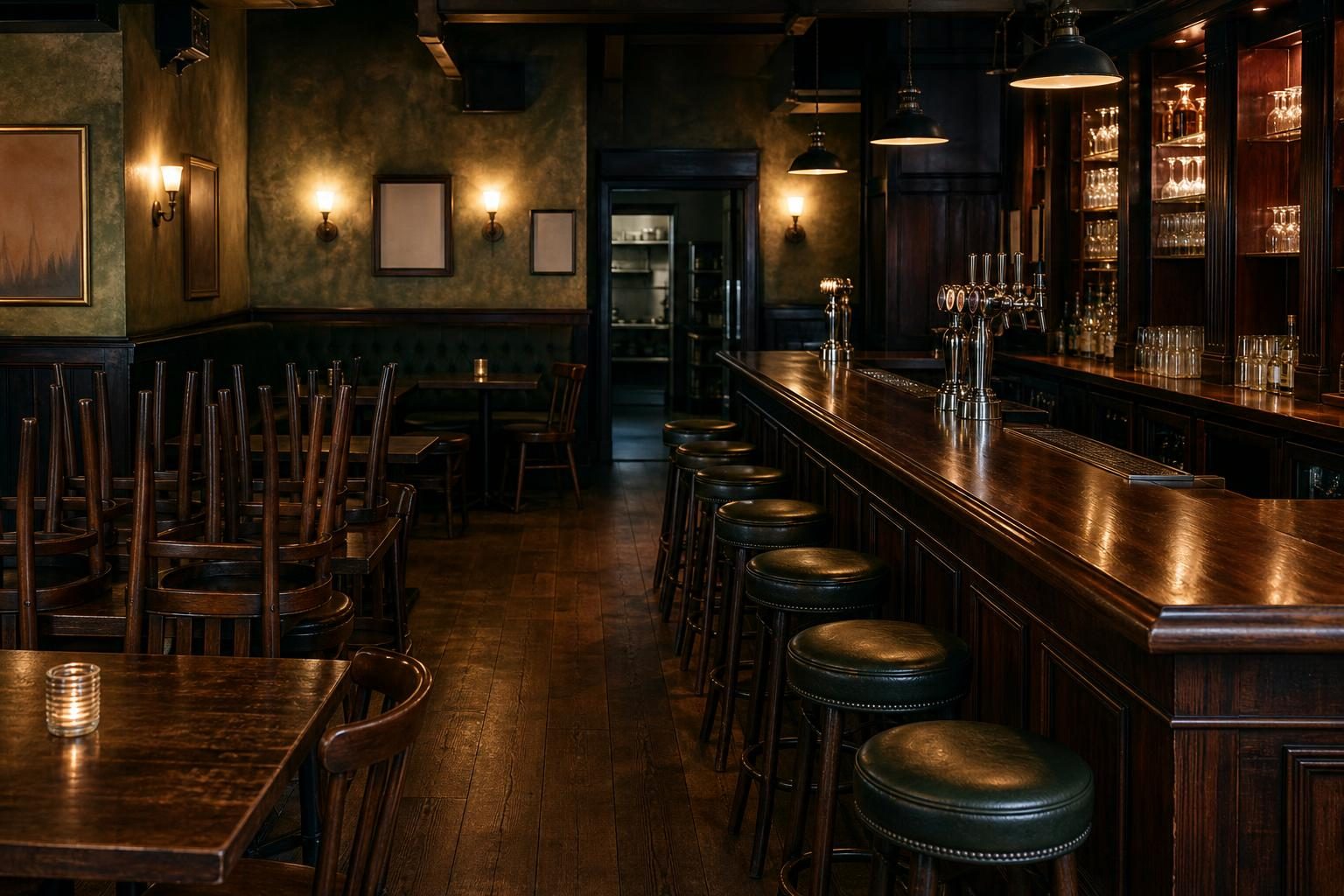
British pubs are closing at a fast pace, and the reason is not as simple as people deciding to stop going out. According to an analysis published by Phys.org and republished from The Conversation, around eight British pubs closed each week last year. The authors argue that the main pressure is the economics of operating a pub: rising costs, large debts and ownership structures that can make a building more valuable as real estate than as a working business.
That matters for anyone studying hospitality, culinary arts, business management, construction, real estate or entrepreneurship because the story is about how work changes when the business model changes. A pub is not only a bar. It can be a food-service operation, an event space, a maintenance project, a purchasing system and a local employer. The work may include managing staff schedules, ordering food and beverages, cleaning draft lines, maintaining kitchen safety, tracking cash flow and dealing with customers who treat the place as part of daily life.
The article points to the rise of large pub-owning companies, often called pubcos, since the 1990s. A pubco is a company that owns many pub buildings, even if individual pubs are run by tenants or managers. These companies built large property portfolios, meaning collections of real estate assets, by borrowing heavily. The idea worked better when interest rates were low and property values were rising. When borrowing costs rose, energy bills increased and customers had less money to spend, the debt became harder to carry.
Debt is not automatically bad. Many businesses borrow to buy equipment, renovate a space or open a new location. The problem described in the article is what happens when paying lenders becomes more important than keeping a local business open. Cash flow means the money coming into and leaving a business during normal operations. If too much cash must go to debt service, which means making loan payments, less may be available for wages, repairs, training, menu upgrades or marketing.
The pressure can be especially hard on tenants. In this context, a tenant is not just someone renting an apartment; it can be the person or business operating the pub under an agreement with the property owner. A tenant may be responsible for day-to-day service, staffing and customer relationships, while the owner makes decisions about the building as an asset. If the land can be sold to a developer for housing or another use, the owner may have a financial reason to sell even if the pub still has regular customers.
That creates a sharp difference between business value and community value. A balance sheet is a financial statement that lists a company’s assets, debts and ownership value. It can show the price of a building, the size of a loan and the cost of utilities. It usually does not show whether older residents have a warm place to meet in winter, whether a darts team has a home base or whether a book club, charity night or neighborhood gathering loses its regular location.
The article also explains that pubs face fixed costs. A fixed cost is an expense that must be paid even when sales are weak, such as rent, property-related taxes or some utility charges. In Britain, business rates are a tax on commercial property. Pubs also face energy costs, wage costs, National Insurance costs, which are employer payroll contributions in the United Kingdom, and alcohol excise taxes, which are taxes placed on alcoholic products. Supermarkets add another pressure because they can sell alcohol at lower prices and use large distribution systems that a single pub cannot match.
For a worker trying to get hired, this kind of pressure changes what employers may look for. Technical skills still matter: safe food handling, proper beverage service, customer service, basic maintenance and point-of-sale accuracy. But a tighter business environment also raises the value of workers who understand waste control, scheduling, inventory, upselling without pressuring customers and energy-conscious operations. A cook who reduces spoilage, a bartender who manages stock correctly or a shift lead who prevents overtime problems can affect whether a small operation survives.
The lesson is not that every pub should stay open forever. The authors of the analysis say some businesses may not be viable, meaning they cannot realistically keep operating with enough customers and revenue. The harder question is how to tell the difference between a business that truly has no future and one that is being pushed out by debt, tax rules or a property sale. For people entering trades and technical careers, that question is practical: the job is never only the task in front of you. It is also the cost structure, ownership decision and market pressure behind the task.
Written from reporting by Phys.org, “Why so many British pubs are closing down”.
Discussion questions
- If a pub is profitable enough to serve customers but the building is worth more as real estate, who should have the stronger claim: the owner, the tenant operator or the community? Defend your answer.
- Which skills would become more valuable for hospitality workers when fixed costs and debt pressure are rising, and why might those skills affect hiring decisions?
- How could a local government support valuable community businesses without simply protecting every struggling business from failure?