
A Space Cloud That Looks Like a Giraffe
NASA's new image shows a dark nebula and the pattern-finding power of the brain.
Print it — all four files
The student packet has no answers in it. The teacher copy is the same pages plus a note on each question and the answer keys. Both languages carry the same story, the same picture and the same vocabulary.
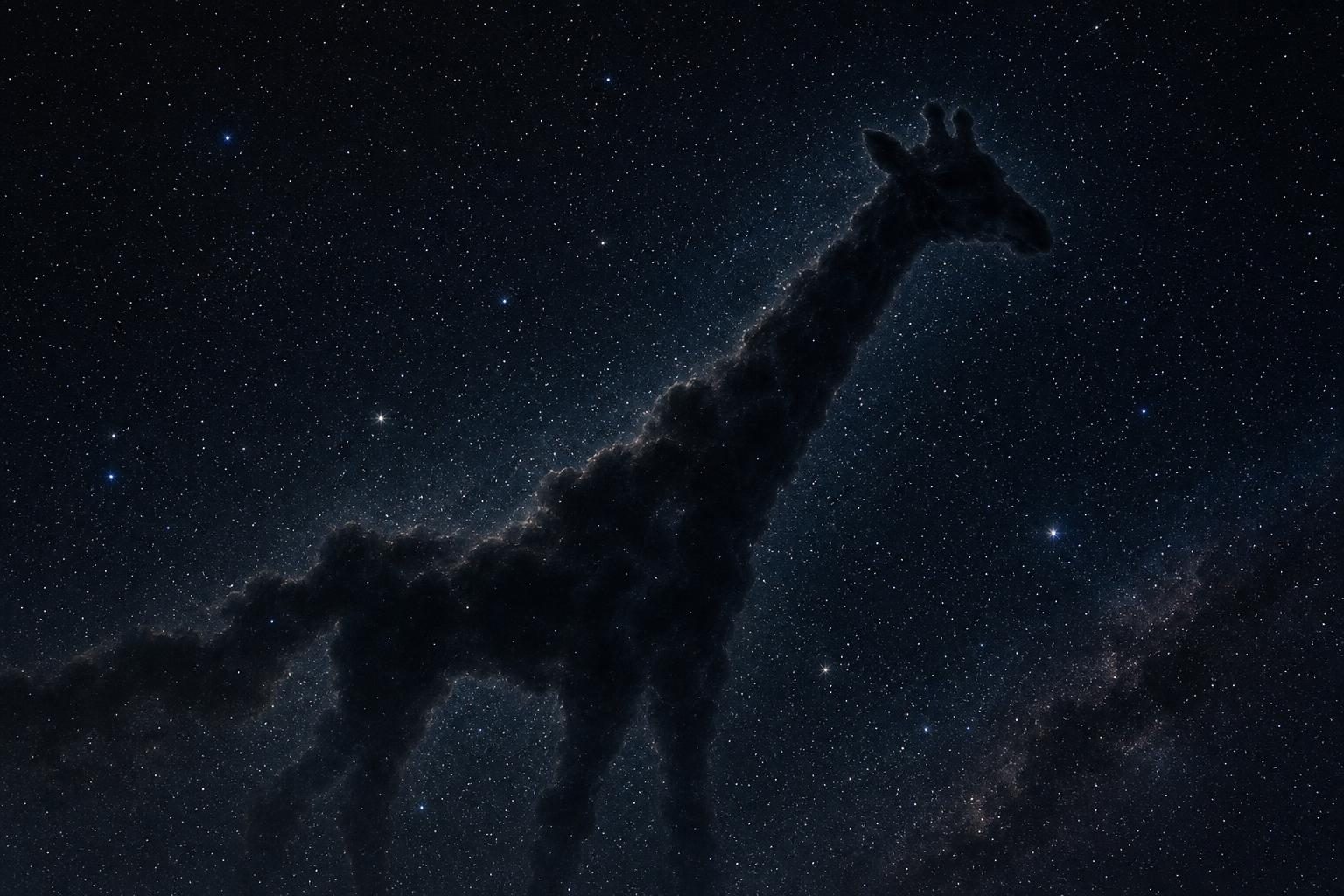
NASA shared a new space image on Sept. 10, according to NASA’s Astronomy Picture of the Day. It shows LDN 1295, a dark nebula. A nebula is a cloud of gas and dust in space. This one is nicknamed the Giraffe Nebula. In the image, many people see a giraffe facing right. Its neck seems tall. Its legs seem to be stepping forward. NASA says some people see a squirrel instead.
A dark nebula is not bright like many space pictures. It is dark because its dust blocks the visible light from stars behind it. Visible light is the light our eyes can see. That makes dark nebulas hard to photograph. They can be faint, so a space photographer needs patience and skill.
The object is in Cassiopeia, a constellation. A constellation is a star pattern that people named long ago. Cassiopeia is named for a queen from old stories. LDN 1295 is also listed in the Lynds Catalogue of Dark Nebulas. A catalogue is an organized list. American astronomer Beverly Lynds made that list in 1962. An astronomer studies space. NASA calls Lynds a pioneer for women in astronomy and astrophysics. Astrophysics means using science ideas, such as motion and light, to study space.
The giraffe shape is not really an animal in space. It is a trick of the human brain called pareidolia. Pareidolia means seeing a familiar shape in something random. It happens when a cloud looks like a dragon. It happens when toast seems to have a face. Our brains are good at finding patterns. That can be useful. NASA notes that spotting shapes may help animals notice danger, such as a predator nearby.
This picture matters because it shows two kinds of discovery at once. One is far away. Telescopes and cameras can reveal a dusty cloud that eyes might miss. The other is close to home. The same brain that reads a story or finds a friend in a crowd also turns space dust into a giraffe. Looking at the picture is a little like looking at clouds during recess. The fun question is not only what is out there. It is also what we bring with us when we look.
Written from reporting by NASA, “APOD: 2026 September 10 – LDN 1295: The Giraffe Nebula”.
Discussion questions
- If two people see different animals in the same nebula, can they both be careful observers? Explain your view.
- Should scientists use fun nicknames like “Giraffe Nebula” when they share discoveries? Why or why not?
- Where else do people find patterns, and when might that habit help or hurt us?