
NASA Watches Fall Colors From Space
A satellite is helping scientists follow red, yellow, and green leaves as autumn moves across Earth.
Print it — all four files
The student packet has no answers in it. The teacher copy is the same pages plus a note on each question and the answer keys. Both languages carry the same story, the same picture and the same vocabulary.
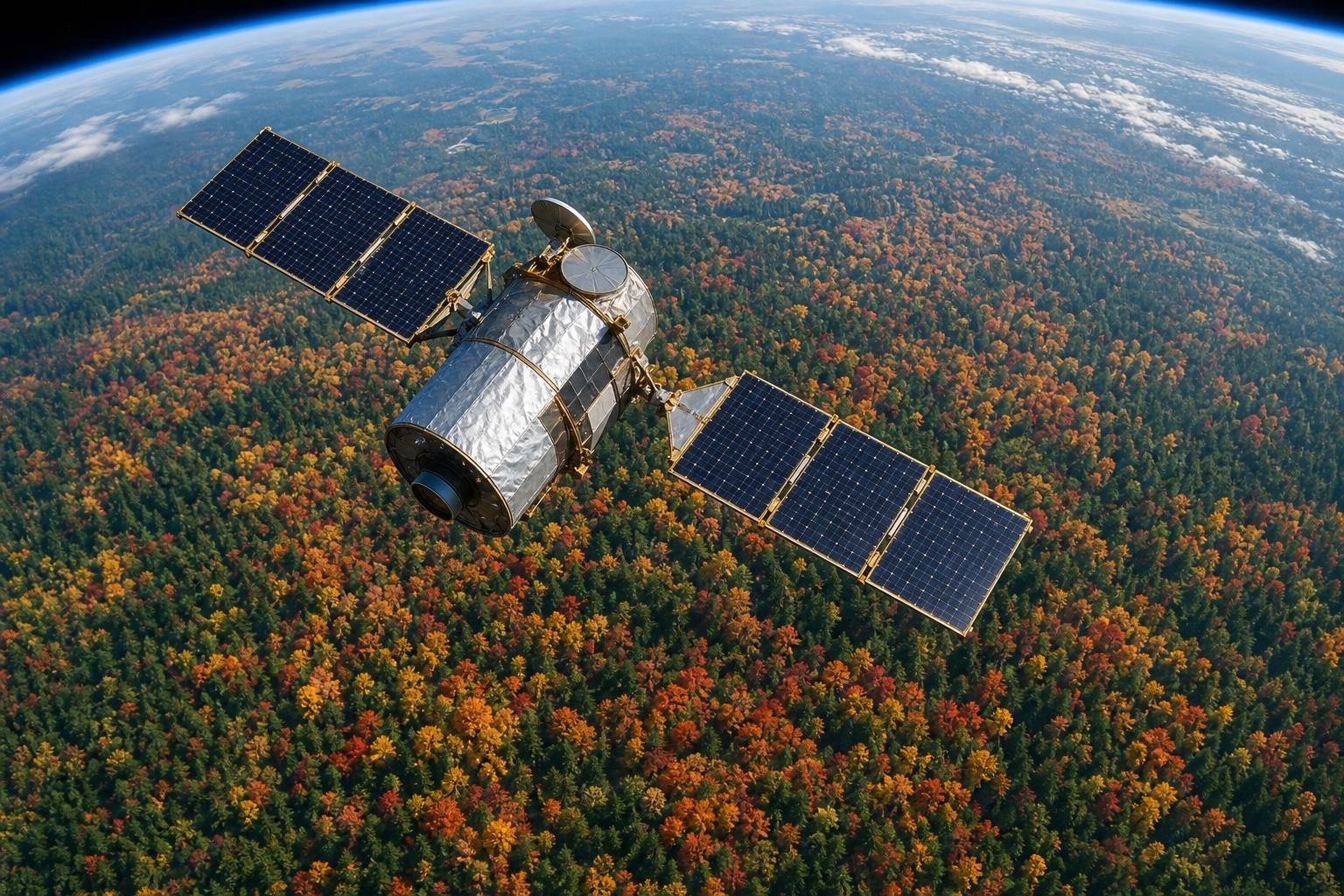
NASA scientists are using a satellite to watch fall leaves change color across Earth. According to NASA Earth Observatory, the PACE satellite can see the colors of plants every day or two.
That matters because autumn colors do not all arrive at once. They move like a slow wave. In August, red shows up in far northern places. In September and October, it shifts toward warmer places farther south.
On the ground, this can feel simple. You walk outside and see one maple blazing red. Nearby, another tree is still green. From space, scientists can compare forests, farms, tundra, and mountains at the same time.
PACE carries an instrument called OCI. An instrument is a tool that measures something. OCI looks at many kinds of light. Some light helps scientists spot leaf pigments. Pigments are the natural colors inside leaves.
Green comes from chlorophyll. Plants use chlorophyll to make food from sunlight. In fall, days get shorter and cooler. Leaves make less chlorophyll. Then yellow, orange, and red colors can show through.
NASA says PACE can track three important pigments across the whole planet. Anthocyanins make many reds. Carotenoids make yellows and oranges. Chlorophylls make greens. By comparing red, yellow, and orange with green, scientists can see where leaves are changing.
Recent satellite views showed strong redness in northern and eastern Russia, northern Alaska, and northern Canada. In New England and upstate New York, red began to fade during one October week. At the same time, it spread across much of the Midwest and Mid-Atlantic.
The colors do not always mean pretty fall leaves. NASA says crops can also look red as they age or after harvest. Clouds can hide places from the satellite. Plants may turn red when stressed by drought, insects, or disease.
That is why ground photos matter. NASA’s GLOBE program is asking people to send fall leaf pictures. GLOBE is a science program that lets the public help researchers. Photos taken from sidewalks, parks, and yards help scientists check what the satellite saw.
This work could help researchers study bigger changes. They want to learn how spring and fall timing is shifting. They also want to learn how plant changes affect carbon, a basic element found in air and living things, and wildfire risk.
Written from reporting by NASA, “Hunting Red Leaves with Satellites”.
Discussion questions
- If you were studying fall leaves, would you trust satellite pictures, ground photos, or both? Defend your choice.
- Should photos from ordinary people be used in real science? What rules would make those photos more useful?
- What other change in nature could scientists study from far away and up close at the same time?