
Cities Try a New Job for Trash
Some communities are repairing, reusing, and redesigning everyday things so less ends up buried.
Print it — all four files
The student packet has no answers in it. The teacher copy is the same pages plus a note on each question and the answer keys. Both languages carry the same story, the same picture and the same vocabulary.
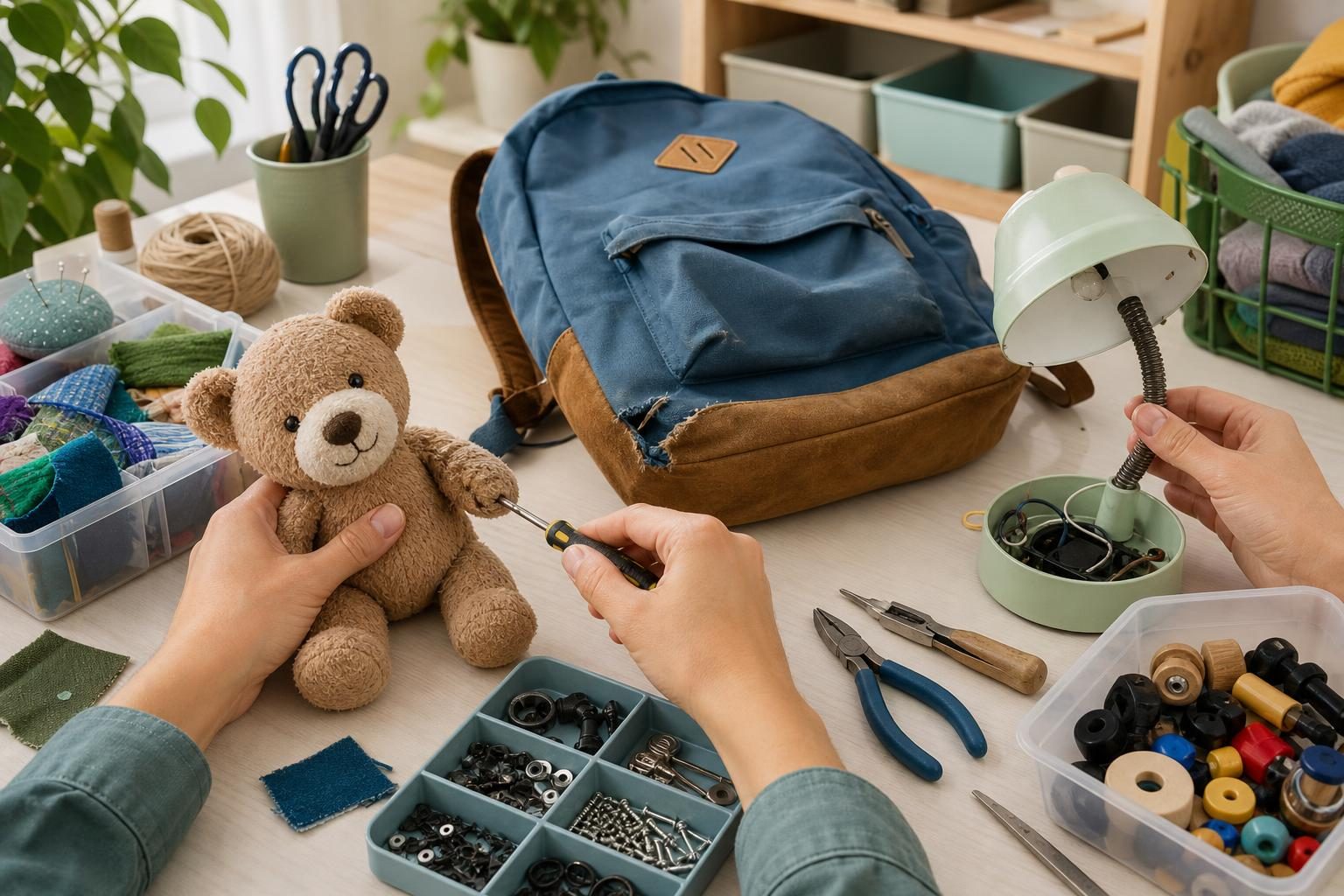
Science News Explores reported this week that about 100 communities are trying to become circular cities. A circular city is a place that keeps using materials again and again. The goal is simple. Fewer useful things should end up in a landfill, which is a place where trash is buried.
Imagine walking into a room with a broken toy. At one table, someone opens it with tiny tools. At another, a torn backpack gets a new strap. That is the idea behind repair events in Austin, Texas. The city offers toy-repair clinics, fix-it workshops, and videos. They help people keep favorite things out of the trash.
This matters because making new things takes materials, energy, and shipping. A shirt, a shoe, or a toy does not begin at a store. Someone must grow, mine, cut, build, pack, and move it. If people repair and share more, they may need fewer replacements. That can mean less pollution.
Landfills can also cause problems. Some give off methane, a gas that traps heat in the air. Some can leak harmful chemicals. Austin has a big goal. It wants to keep 90 percent of its waste out of landfills by 2040.
Other cities are testing different ideas. In Amsterdam, in the Netherlands, some sports fields use rainwater in a clever way. The water is caught under artificial grass, which is grass made from plastic. Later, the water moves upward and dries into the air. That helps cool the field. It also sends less rainwater into the city’s storm drains.
Circular thinking can happen far from city halls, too. In Nairobi, Kenya, Rummage Studio buys leftover clothes that might become trash. Workers turn strong fabrics, such as denim, into bags and backpacks. The studio tries to use as much of each old garment as possible.
This is not magic. A circular city must plan many steps. It must think about how goods are made, used, collected, repaired, and recycled. Recycling means turning old materials into something usable again. Cities can help because they buy many things. If a city asks for products that last longer, companies may listen.
A broken item can feel like the end of a story. Circular cities ask a different question. What else could this become?
Written from reporting by Science News Explores, “Circular cities go ‘green’ by reusing things over and over again”.
Discussion questions
- Should a city spend more money on repair clinics or on recycling programs? Defend your choice.
- What might make it hard for families to repair things instead of replacing them?
- If your school wanted to become more circular, what one change would help most?