
A Wetland in Scotland Stores a Giant Amount of Carbon
NASA’s new view of the Flow Country shows why a soggy, quiet landscape matters to Earth.
Print it — all four files
The student packet has no answers in it. The teacher copy is the same pages plus a note on each question and the answer keys. Both languages carry the same story, the same picture and the same vocabulary.
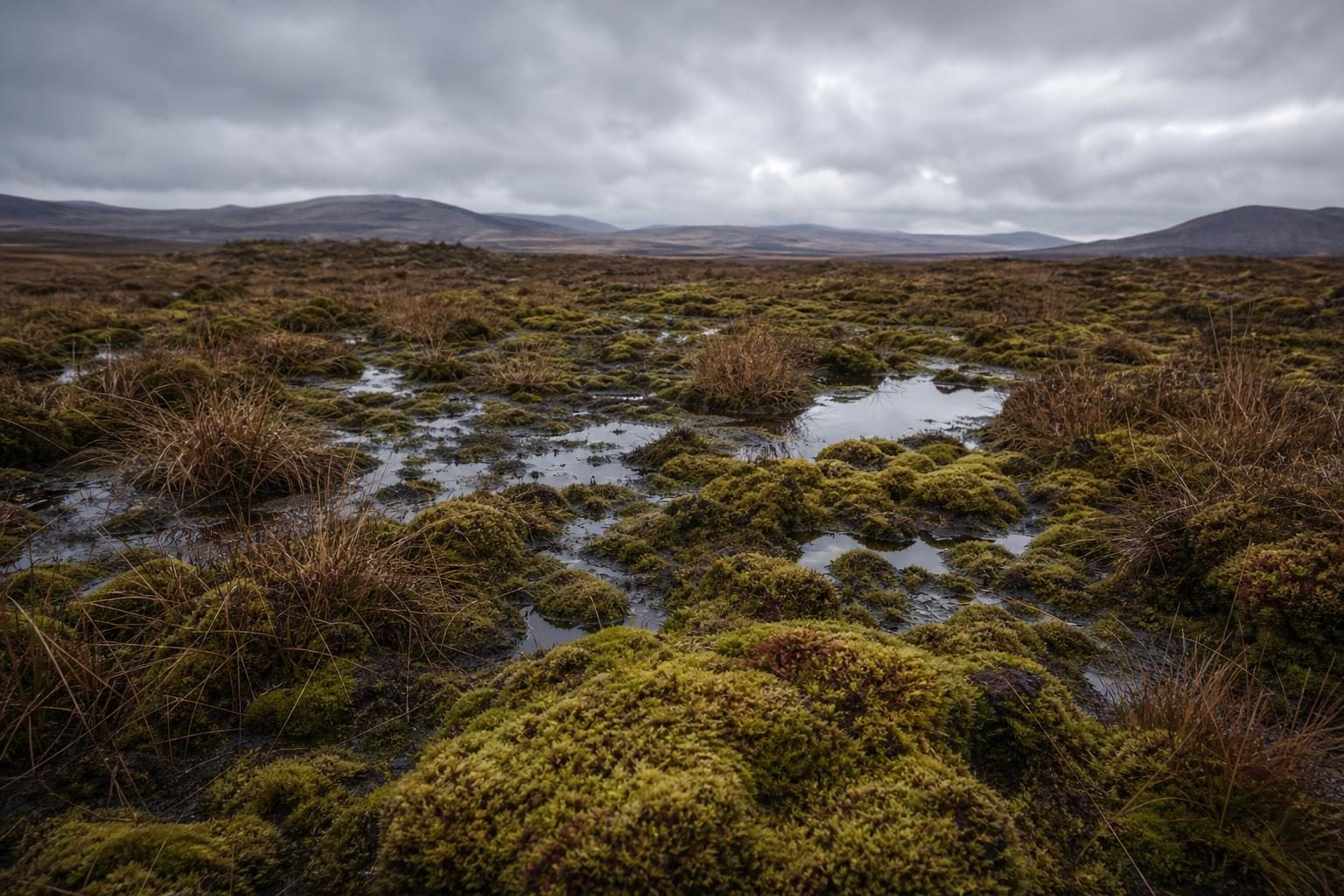
NASA Earth Observatory published a new satellite view of Scotland’s Flow Country this week, according to NASA Earth Observatory. The picture shows a wet, open land of dark bogs, lakes, and nearby farms. A satellite is a machine in space that takes pictures and measurements of Earth. From above, this place may look quiet and brown. On the ground, it would feel squishy under boots, with mosses, grasses, and heather instead of tall trees.
The Flow Country matters because its bogs hold carbon, a material found in living things and in air as carbon dioxide. Too much carbon dioxide in the air can warm the planet. In a normal forest, dead leaves and wood break down. Tiny living things called microbes help that happen. In these bogs, the ground is so full of water that microbes cannot finish the job. Dead plants pile up slowly. They become peat, a soft, dark soil made from partly rotted plants.
NASA says these places are called blanket bogs because wet peat spreads over the land like a blanket. They need lots of rain, poor drainage, and little drying from sun and wind. They are rare. NASA says blanket bogs cover less than one-tenth of one percent of Earth’s land. Northern Scotland has the largest one in Europe.
This is not a rainforest story. It is a soggy sponge story. The Flow Country has more than 30 kinds of sphagnum moss. That moss helps hold water. Some of its peat has been building for more than 9,000 years, according to UNESCO, a world group that names important places. In some spots, the peat is more than eight meters thick. That is taller than many two-story houses.
Peatlands cover only 3 percent of Earth’s land. Yet NASA says they store more than 600 gigatons of carbon. That is about twice as much carbon as all the world’s forests store. A gigaton is a billion metric ton.
That makes the Flow Country important, even if it looks plain from the ground. For scientists, NASA’s image is a way to see how a quiet wetland can help shape Earth’s climate over time.
Written from reporting by NASA, “Scotland’s Flow Country”.
Discussion questions
- If people wanted to use wet land for farms or trees, what should they weigh before changing it?
- What can a satellite picture show about a place, and what might it miss?
- Should plain-looking places be treated as important if they do an important job? Why or why not?