
Cold Turtles Get a Second Chance
When sea turtles get too cold to swim, beach patrols and animal hospitals work carefully to save them.
Print it — all four files
The student packet has no answers in it. The teacher copy is the same pages plus a note on each question and the answer keys. Both languages carry the same story, the same picture and the same vocabulary.
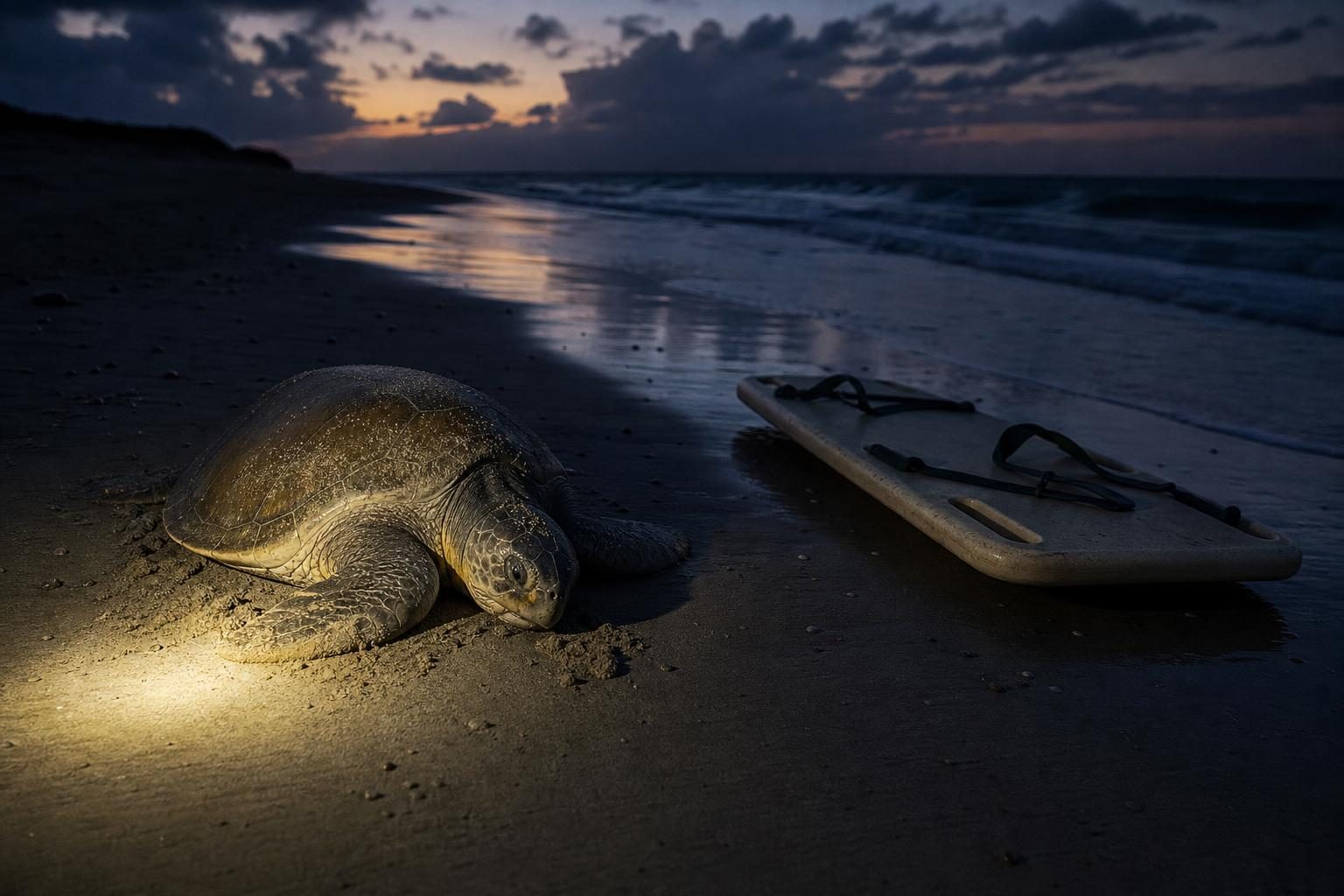
Rescuers are patrolling chilly beaches this season for sea turtles that are too cold to swim, according to Science News Explores. On Cape Cod in Massachusetts, volunteers go out near high tide. That is when stunned turtles may wash onto the sand.
Cape Cod is a peninsula, a long piece of land with water around most of it. In summer, some sea turtles swim north as the ocean warms. Later, they need to head south again. If cold water catches them first, their bodies slow down.
Sea turtles are reptiles, animals whose body temperature depends on their surroundings. They like water from about 62 to 85 degrees Fahrenheit. When the water drops below 50 degrees, they can become cold-stunned. That means they are dazed, numb, and weak.
A volunteer named Annemarie O’Connell found one cold-stunned loggerhead turtle on a dark beach in Truro, Massachusetts. It was about three feet long. Its eyes were swollen shut, but it moved its head. O’Connell and a journalist slid it onto a flat sled and got it to help.
The turtle was taken first to a wildlife refuge run by Mass Audubon, a conservation group. Then it went to a sea-turtle hospital run by the New England Aquarium in Quincy, Massachusetts.
Inside the hospital, the scene is busy and loud. Turtles swim in open tanks. Water pumps thrum as they keep the tanks clean. The first job is to warm each turtle slowly. Caretakers raise its temperature by about 5 degrees Fahrenheit each day. Warming too fast could shock its body.
Veterinarians, or animal doctors, check for problems. Some turtles have pneumonia, a lung sickness that can happen after breathing in seawater. Some have hurt bones, eye trouble, or damage like frostbite. Frostbite is harm from freezing cold.
The work takes patience. Sea turtles hide illness well. Their hard shells also make some treatments tricky. Doctors may use blood tests, X-rays, medicine, special food, or surgery.
The goal is simple. Help the turtles grow strong enough to return to the ocean. Some do not survive. But in recent years, about three out of four cold-stunned turtles rescued in Massachusetts healed and were released. For the people on the cold beach, a dark shape in the sand can become a patient with a real chance.
Written from reporting by Science News Explores, “Ocean cold snaps can imperil sea turtles. Rescuers can help”.
Discussion questions
- Should people spend time and money helping wild animals one at a time? Why or why not?
- What choices might rescuers have to make when many turtles wash up at once?
- How could a cold-stunned turtle rescue be similar to helping a classmate who is having trouble?